 F2P · Live
Lineage 2
Aden's castles never stay in the same hands for long, and Lineage II has built an entire twenty-three-year…
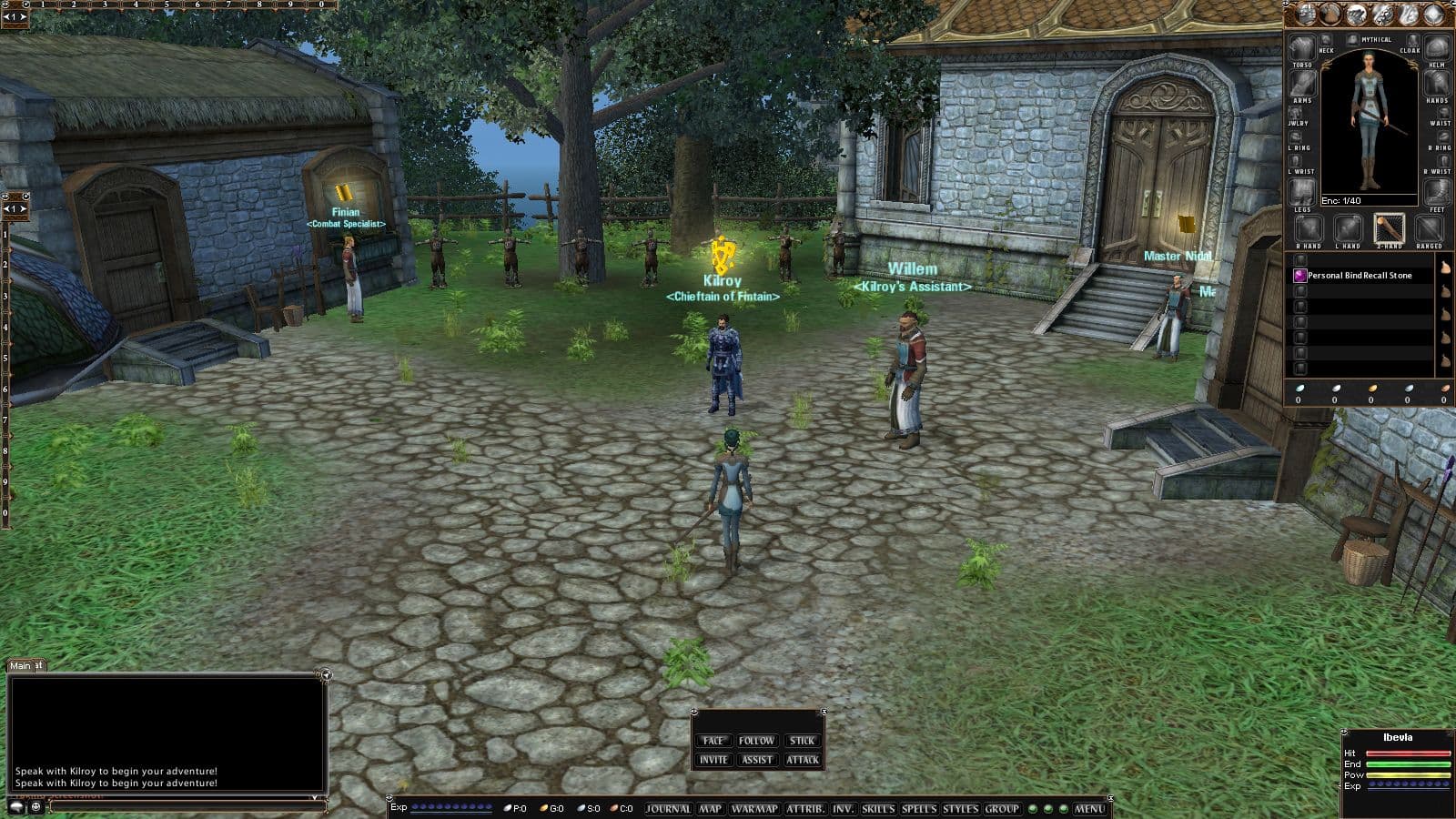
Dark Age of Camelot is the 2001 MMORPG that gave the genre Realm vs. Realm warfare: three rival kingdoms — Albion, Midgard and Hibernia — locked in a permanent war over keeps, towers and relics along ...
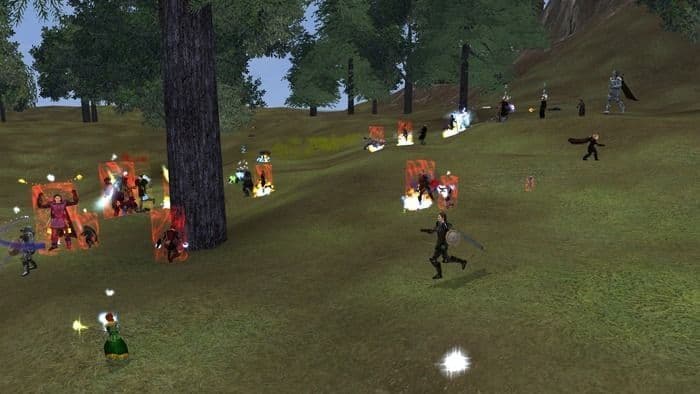
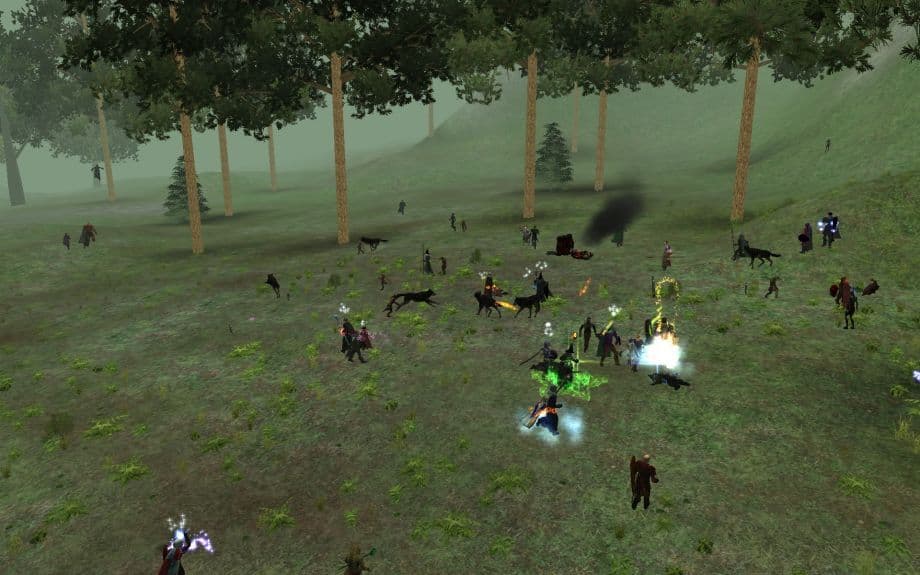
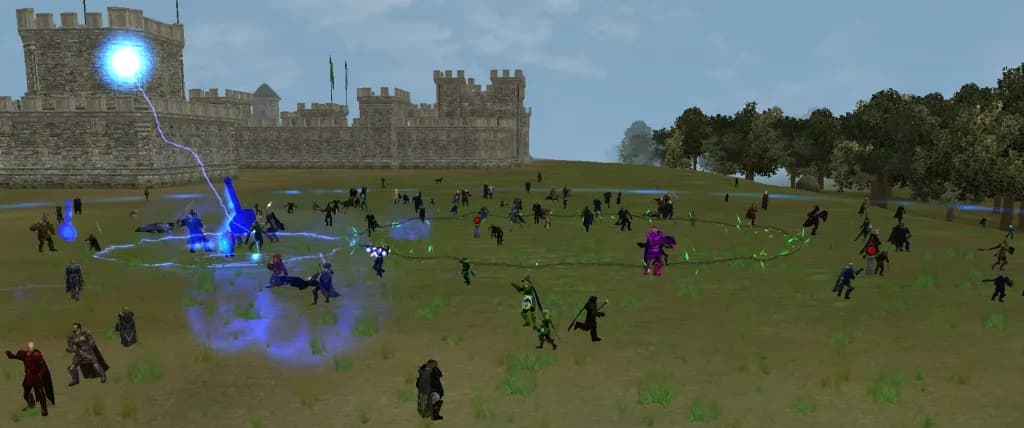
Dark Age of Camelot is a three-faction MMORPG built by Mythic Entertainment and released in North America in October 2001, and it is now operated by Broadsword Online Games under Electronic Arts. It gave the genre Realm vs. Realm warfare — three permanently hostile kingdoms fighting over keeps, towers and relics on a shared frontier — and nearly twenty-five years later that war is still the reason the servers have anyone on them. The game runs on a subscription, offers a permanent free account tier called Endless Conquest, and received its most recent major patch, 1.130a, in April 2026.
Quick take: Dark Age of Camelot still runs the most punishing three-way PvP system in any live MMO, and nothing released since has replaced it. Getting to it costs you a 2001 client, a long climb to level 50, and a gear-planning process that happens mostly in a browser tab. Endless Conquest makes the trip free, but caps your ceiling hard enough that serious Frontier play means paying.
Everything else in this game is preparation for the Frontiers. Albion, Midgard and Hibernia each hold a border region studded with keeps and towers, and those structures change hands constantly — a warband brings a ram to the outer door, catapults soften the walls, defenders drop boiling oil from the battlements, and whoever kills the keep lord takes the flag. Guilds can claim a captured keep and upgrade it, which gives them a reason to defend a specific patch of ground rather than roam.
Keep control is not cosmetic scorekeeping. Access to Darkness Falls — a large open dungeon shared by all three factions, and one of the best places in the game to earn bounty points — belongs to whichever realm holds the most frontier keeps. When the count flips, the losing realm gets a fifteen-minute grace window before its portals close, which produces a very specific kind of panic: a raid deep in the dungeon suddenly has to decide whether to finish the boss or run for an exit that may be full of enemies.
Above keeps sit the relics. Each realm guards strength and power relics behind milegates, and a raid that breaks through can carry an enemy relic home and install it in one of its own keeps, granting a damage or casting bonus to every single player in the realm. Relic raids are the closest thing the game has to a server-wide event, and they are scheduled, leaked, counter-scheduled and betrayed in Discord for days beforehand. Losing one is felt by players who were asleep when it happened.
Fighting in the Frontiers pays realm points, which convert into realm ranks and realm skill points spent on abilities you cannot get any other way — extra crowd-control resistance, an instant self-purge, group-wide speed. April's patch pushed the ceiling from Realm Rank 14 to Realm Rank 15, with 140 realm skill points, after Broadsword noted that a substantial number of veterans had already maxed out the old cap. That tells you something about the audience still playing.
Yes, though not in the way an action-combat player would recognise. Dark Age of Camelot uses tab targeting and a global cooldown that would feel slow to anyone coming from a modern MMO, and the skill lives entirely in target priority, timing and coordination rather than in aim or dodging. An eight-person group with the right composition beats a badly built group of the same size almost every time, and it beats a larger disorganised one more often than it should.
The reason is the crowd-control system, which is unusually harsh and unusually decisive. Mesmerise, stun, root and nearsight all exist, all land through tab targeting, and all grant an immunity period once they break. Community explainers have long described the arithmetic the same way: breaking a mez early hands the target a full minute of immunity, and a nine-second stun produces 54 seconds of immunity whether the victim sat through it or purged out after one second. Waste your area mez on a group your own damage dealers are about to hit, and you have just protected the enemy from your entire team for the next minute.
Interrupts do the rest. Any hit landing on a caster stops the cast, which means a single archer or assassin can neutralise a healer without killing them, and healers spend fights repositioning behind terrain rather than watching health bars. Groups run assist trains — everyone fires at whatever the main assist targets — because focused damage kills through a healer and spread damage does not. It is a system that rewards a group that has played together for years and quietly punishes pick-up groups, which is the honest reason new players bounce off the Frontiers before they understand what happened to them.
The three realms are drawn from three separate mythologies, and the split is more than decoration. Albion is Arthurian Britain — knights, friars, Camelot itself. Midgard is Norse, all trolls, kobolds and skalds. Hibernia is Celtic, leaning green and strange, with druids and a class that plants immobile mushroom turrets across a bridge. Across all three, 45 playable classes are on offer, and the realms are meant to feel foreign to each other: you cannot speak to the enemy, you cannot group with them, and on the traditional servers you cannot even read their chat.
That asymmetry is also the game's oldest balance headache. Class rosters were never mirrored, so each realm has tools the others lack — Albion's Minstrel speed and mez, Midgard's Savage burst, Hibernia's pet swarms — and twenty-five years of patch notes are largely a record of the team nudging those tools back into line. Patch 1.129b in September 2025 was typical: proc damage trimmed here, a Warlock ability duration cut there, spell ranges halved on a list of offenders.
Visually, the game is what you would expect from a NetImmerse title of its vintage. Character models are blocky, animations are stiff, and the world is zoned rather than continuous. The UI is at least fully customisable through XML, and the community has been shipping replacement interfaces for two decades, which is the main reason the game is tolerable to look at on a modern widescreen monitor at all. Nobody should come here for the graphics, and to Broadsword's credit, nobody in its marketing pretends otherwise.
The route to level 50 is signposted now, which was not true for most of the game's life. A new character starts in a tutorial area that runs to roughly level 10, then follows the New User Journey through a chain of quest hubs across the realm's classic zones, each with a Quartermaster who sells the previous hub's quest rewards in case you missed them. The journey deposits you somewhere in the early thirties and then stops.
From there the official suggestion is battlegrounds: Molvik from 35 to 40, Leirvik from 40 to 45, Cathal Valley from 45 to 50. These are level-capped RvR zones, and they exist so that players learn crowd control, interrupts and group positioning against real opponents before the Frontiers eat them. Battleground quests pay bounty points instead of gear, which fund purchases from bounty merchants at your teleport keep. Dungeons along the way are open rather than instanced, so you compete with other players for spawns — inconvenient in 2026, and also the only reliable way most people meet anyone.
Reaching 50 unlocks the actual progression treadmill, and it is long. Your realm's king hands out free epic gear, opens Champion Levels and gives you the Culmination quest, which points you at the item hunt that follows. Master Levels from the Trials of Atlantis expansion add ten more tiers of abilities on top, obtainable through Atlantis encounters or bought outright with Atlantean glass and bounty points — the community figure for buying the full ML1–10 set sits at around thirty thousand of either currency.
Then comes templating, which is where the game asks the most of you and helps the least. A competitive level 50 needs a gear set balanced across stats, resistances and skill bonuses to hit hard caps without wasting points, assembled from crafted armour, artifacts, dungeon drops and legendary weapons from the Otherworlds campaign. The in-game tools for this are almost nonexistent; in practice everyone builds their template in a third-party planner and then spends weeks acquiring the pieces. Broadsword has smoothed the item hunt considerably over the years — currencies, merchants, campaign rewards — without ever addressing the fact that the planning stage happens outside the client.
Crafting in Dark Age of Camelot exists to serve templates, and it does so with real depth. Weaponcraft, armourcraft, tailoring, fletching and alchemy all feed the gear pipeline, but spellcraft is the one that matters: it lets a crafter socket gems into crafted armour to hit precise stat and resist targets, which is what makes a custom template better than anything that drops. A good spellcrafter is a genuine social asset on the server, and guilds keep them the way raid guilds elsewhere keep enchanters.
Selling happens through the Market Explorer, which indexes consignment merchants placed in player housing rather than running through a central auction house. Housing plots sit in dedicated zones, hold vault storage and a crafting setup, and function as the economy's shop windows — which makes it awkward that free accounts cannot own one, cannot list items and can only buy. Dungeon currencies fill in the rest: souls from Caer Sidi, roots from Galladoria, ice from Tuscaran Glacier, daemon blood seals from the deeper bosses in Darkness Falls, each buying items from that dungeon's loot table.
The 2026 update model is a rotating event cycle through the reopened Old Frontiers zones, not new expansions. Since April the schedule has moved Lilith, the demon queen of Darkness Falls, into Breifine, then run Warlords and Kings in Jamtland before flipping that zone to open PvP in June, then Champions and Kings at Hadrian's Wall, then the Sigilbound chain through Ellan Vannin and on into Albion's frontier by late July. Each arc is built from repeatable auto-renewing quests, a spawned world boss and an event currency, layered onto terrain the game already had.
Patch 1.130a in April carried the year's substantive changes. Realm ranks extended to 15 for the veterans who had run out of ladder. Free accounts gained access to all races and all classes, and the wait for a lapsed subscription to convert into a free account dropped from 120 days to 60. Old Frontiers got map markers. Less popular: closed accounts now have their houses and contents repossessed after 45 days, which several returning players discovered the hard way.
Judged as a live service run by a small team on a twenty-five-year-old codebase, that is a reasonable cadence — steady patches, real balance work, a genuine ceiling raise. Judged as content, it is thin. A player who cleared the Otherworlds and Dragon's Curse campaigns two years ago has no new dungeon to run, and the event rotation is a frame around old zones rather than a reason to come back for something unseen.
Group play is not optional here for long. Guilds claim and upgrade keeps, alliances share a chat channel across multiple guilds, and battlegroups let a raid leader coordinate dozens of players across several groups for a relic raid or a dungeon clear. The organisational furniture is dated but complete, and most of the real coordination has migrated to Discord anyway.
Solo play runs out around level 50. Stealth classes — Infiltrators, Shadowblades, Nightshades, plus archers — remain viable alone in the Frontiers, hunting stragglers and each other in a parallel game that its practitioners take very seriously. Everyone else is choosing between finding a regular eight-man group and being farmed by one. That is a design decision the game made in 2001 and has never walked back, and whether it reads as a flaw or the entire point depends on what you want from an evening online.
Partly, and the honest answer needs a caveat on both sides. The Mithril shop, bought with real money through EA, does not sell gear or weapons — but it does sell realm points, bounty points and experience directly, along with Champion Level 15, Master Level 10, respec stones and a boost token that takes a character to level 50 with both maxed. Since realm points convert into realm skill points, and realm skill points are combat power in RvR, the shop sells a shortcut to something other players spent years earning. The rest of the catalogue is cosmetic: mounts, armour and weapon patterns, name and race respecs.
Endless Conquest, the free tier, is generous in access and firm about power. Free accounts can play every race and class, level to 50, enter every dungeon and fight in the Frontiers, battlegrounds and Darkness Falls without a time limit. What they give up is the ceiling: 60 realm skill points instead of 140, no Champion Level abilities, no house, no selling on the Market Explorer, only the Bountycraft tradeskill, and none of the bonuses subscribers get — over 50% extra experience, 25% extra realm points, holiday multipliers and a monthly Mithril stipend.
The subscription itself is sold as one-, three-, six- and twelve-month time codes through EA rather than as a rate advertised on the game's own subscription page, which lists the feature comparison but no price. Anyone budgeting should check the current storefront figure rather than trusting a number quoted in an old forum thread. The practical summary: the free tier is a real trial with no expiry date, and a competitive Frontier character is a subscribed character.
The uncomfortable part of recommending this game is that its best argument is a failure of the twenty-five years that followed it. Warhammer Online tried to carry three-faction warfare forward and shut down in 2013. Camelot Unchained, built by Mythic's own founder specifically to succeed Dark Age of Camelot, has been in development since 2013 and still has no release date. Guild Wars 2 kept World vs. World alive and healthy, but built it on a different chassis with different priorities. Every year the old game keeps running is another year the genre didn't produce a replacement.
So the recommendation comes with its edges intact. If you want large-scale PvP where an organised eight can dismantle a mob of sixteen, where a mistimed mez costs your group the fight, and where the map you fought over yesterday still shows who won — this is where that exists, and the free account costs nothing but the download. If you want smooth combat, a modern client, a story worth following or a game that respects your first ten hours, walk past it without guilt. Dark Age of Camelot has spent a quarter-century declining to become easier, and the audience that stayed is exactly the audience that wanted it that way.
Yes, through the Endless Conquest account tier, which has no time limit and allows every class and race, leveling to 50, and full participation in RvR. Power is capped compared with subscribed accounts, most visibly in realm skill points and Champion Level abilities.
Yes. Broadsword shipped patch 1.130a in April 2026, extending realm ranks to 15 and lifting several free-account restrictions, and has run a rotating series of Old Frontiers events through the summer.
The guided New User Journey carries a character into the early thirties, with battlegrounds covering 35 to 50 after that. Reaching 50 is the short part; assembling a competitive gear template and climbing realm ranks afterwards is measured in months.
To compete seriously, yes. Free accounts fight in every RvR zone but spend 60 realm skill points against a subscriber's 140, lack Champion Level abilities and earn realm points more slowly.
It does, though it is built to feed RvR rather than stand alone. Darkness Falls, the Trials of Atlantis Master Level encounters, dragon raids and the Otherworlds and Dragon's Curse campaigns all exist mainly to supply the items and abilities a Frontier character needs.