 F2P · Live
Lineage 2
Aden's castles never stay in the same hands for long, and Lineage II has built an entire twenty-three-year…

Dragon Nest trades tab-targeting for console-style action combat, all built around jumps, dodges, and aerial combos inside instanced dungeons called Nests. Eyedentity Games' anime MMORPG has run conti...
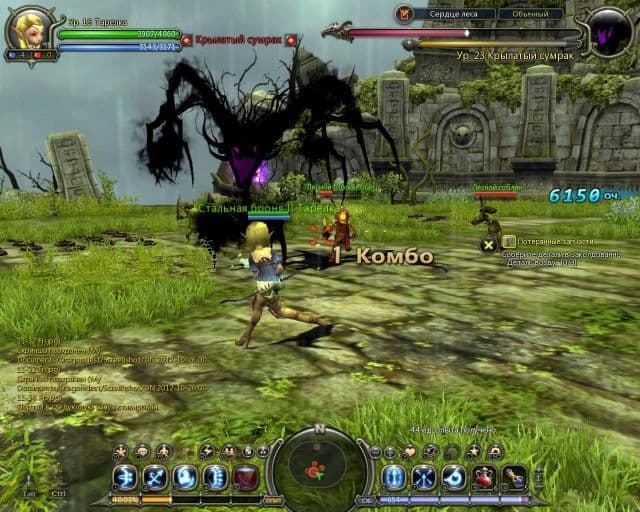
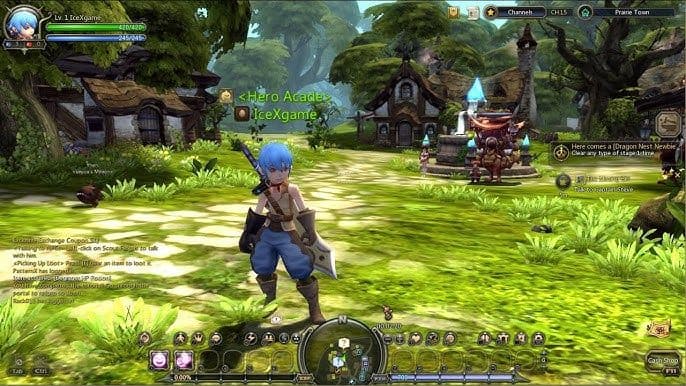
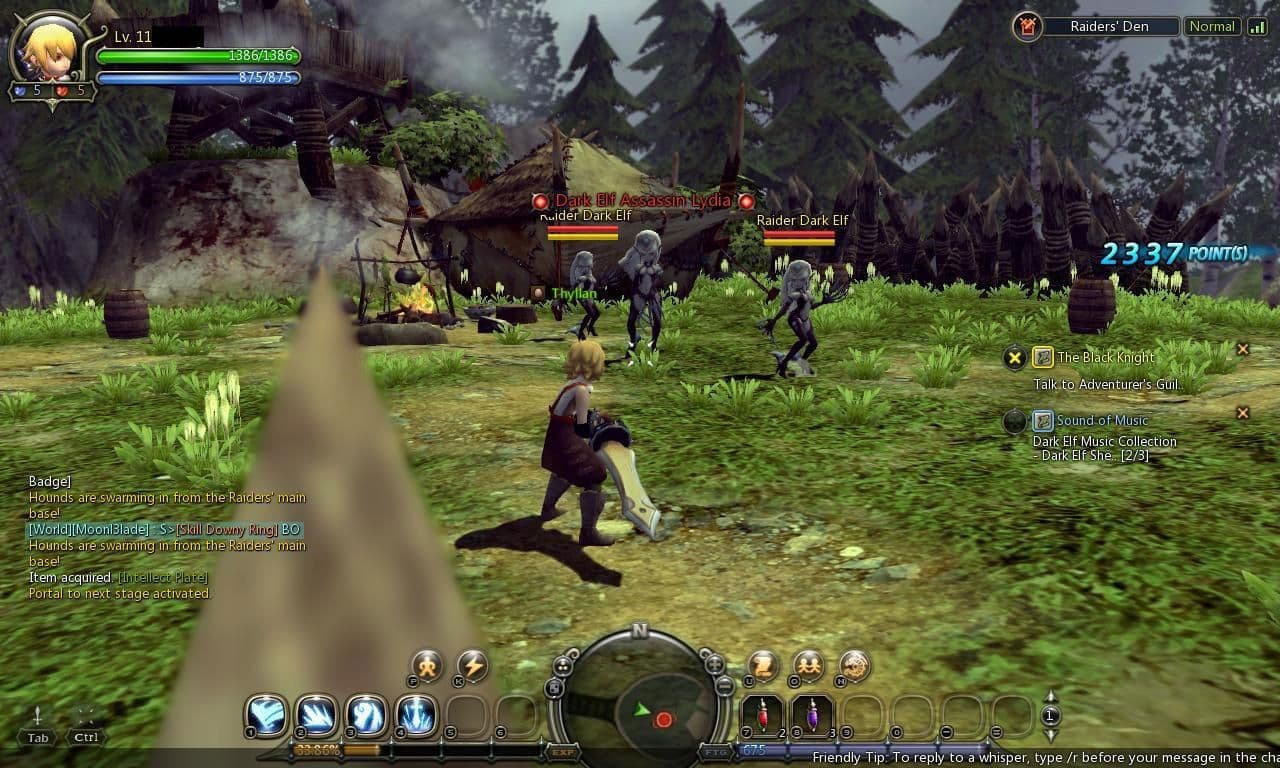
Dragon Nest is a free-to-play action MMORPG developed by South Korean studio Eyedentity Games, first launched in Korea in March 2010 and brought to North America by Nexon in September 2011. It swaps the point-and-click targeting of its genre peers for manual aiming and real-time dodges, and that single design choice has kept it relevant long after most of its 2010-era competitors shut their servers down. Fifteen years on, the game survives in a scattered form — self-published by Eyedentity in North America and Korea, run by Cherry Credits in Southeast Asia alongside a from-scratch Classic relaunch, and still drawing new class updates as recently as this year. This Dragon Nest review looks at what a first-time player finds today, what a decade-plus veteran has watched the game become, and whether either one should still be logging in.
The continent of Lagendia is under siege by dark dragons, and the game's central conceit is that ancient dragons don't die in a single fight, they die across a chain of them. A "nest" isn't a zone you wander — it's a linear sequence of connected combat rooms, each a small arena, each capped off by a mini-boss or the dragon itself. That structure sounds restrictive compared to an open world, and it is, but it's also the reason the combat can afford to be this dense. Every room is hand-built for what your class can do in it, which is a trade Dragon Nest made in 2010 and never really walked back. The story is told from a different vantage point depending on which class you pick at creation, which is a nice touch that most players skip through anyway to get to the next fight.
Start a fresh account today and the first thing you notice isn't the story, it's the camera and control scheme. You move with WASD, aim your skills with the mouse, and dodge with a dedicated key that actually has invincibility frames attached to it — closer to a console brawler than to a traditional MMORPG, and the game leans into that from the tutorial onward. Ten base classes are available at creation: Warrior, Archer, Sorceress, Cleric, Assassin, Academic, Kali, Lancea, Machina, and Vandar, each splitting into further specializations as you level. A new Warrior mashing basic slashes in the first nest already feels different from a new Sorceress kiting with ranged bolts, and that gap only widens once skill points start unlocking real combo strings.
The early loop is straightforward: clear a nest, get gear and experience, level up, unlock the next nest, repeat. Somewhere around the mid-teens you pick a first specialization — a Warrior becomes a Sword Master or a Mercenary, an Archer becomes a Bow Master or an Acrobat — and the class stops being a rough sketch and starts having an actual identity. New players get funneled through the story quickly enough that they reach a party-relevant level within a weekend of casual play, and the tutorial nests are generous about explaining that dodging isn't optional flavor, it's how you survive rooms that fill up with enemies fast.
Where the newcomer experience gets rougher is the sheer amount of accumulated systems standing between "just arrived" and "actually competitive." Fifteen years of expansions means a modern account has to work through rune enhancement, Dragon Jade slots, awakened skills, and hero-tier unlocks that didn't exist at launch and aren't explained with much patience. A returning-friendly onramp exists in the form of level-skip events and catch-up gear, but a genuinely new player without a veteran friend walking them through it will spend real time on forums figuring out what half the UI actually does.
For someone who played at launch and came back now, the game that greets them barely resembles memory. The level cap climbed from 32 at NA launch past 90, a tenth base class (Vandar) arrived in 2020 with its own wristbow-and-broadsword identity, and Vandar's own second specialization and hero-tier spin-off class have shipped since — the studio is still actively iterating on a fifteen-year-old cast rather than just patching it for maintenance. Publishing itself has splintered along the way: Nexon ran the Korean and North American service early on, handed NA fully to Eyedentity in 2016 once its own population had thinned out, and Europe and Southeast Asia passed through their own separate publishers before landing with Cherry Credits. A veteran checking back in has to first figure out which regional client their old account even lives on.
The most interesting recent wrinkle for a returning player is Dragon Nest Classic, a from-scratch relaunch that opened in Southeast Asia in 2025 and deliberately caps progression and content at the game's early state — level 40, four playable classes, the original Minotaur Nest as an actual challenge rather than a formality. It's a direct answer to the most common veteran complaint, which is that live-service power creep buried the version of Dragon Nest people actually fell in love with under a decade of stat inflation. Classic isn't a competitor to the main game so much as a preservation project, and it's telling that Eyedentity built one at all.
Combat is the entire pitch — a non-target combo system built on manual dodges and skill chains rather than hotbar rotations — and it holds up. Skills chain into juggles, cancels let you weave a dodge into a combo without losing momentum, and boss telegraphs demand you actually move rather than tank a hit and heal through it. A Kali flowing through chakram spins into an aerial finisher, a Machina laying traps before detonating them with a follow-up shot, a Cleric bouncing between healing staff stances and melee mace combos — the class kits are distinct enough that switching characters genuinely changes how a familiar nest plays. Difficulty tiers scale the same content up with harder mechanics and better rewards, which means veteran players revisit early nests on Hell or Abyss difficulty rather than aging out of them entirely.
The honest caveat is that Dragon Nest's action combat asks more of a controller and less of a build sheet than most MMORPGs, and players who came from tab-target games sometimes bounce off the expectation that you're supposed to be watching the fight instead of a hotbar. It's also worth saying plainly that the game's dungeon format means there's no seamless open world to explore between fights — everything happens inside instanced nests, connected by town hubs rather than a continuous landscape.
Dragon Nest's PvP has always run alongside its PvE rather than underneath it, built around several distinct modes rather than one flagship arena. Ladder matches rank players in structured 1v1 and team formats, Free-for-All and Grand Battle turn the same combo toolkit into a scramble with no teams at all, and guild-versus-guild content lets organized groups fight for standing rather than just individual rating. Because combos and dodge timing matter more than raw gear score, a well-piloted lower-geared character can still take rounds off a whale — a rarer thing in this genre than marketing usually admits. That said, veteran accounts with fully awakened skills and maxed Dragon Jades do hit a power ceiling that skill alone can't fully close, and newer PvP entrants should expect an adjustment period against players who've been chaining these combos for over a decade.
Guilds anchor the social side of the game, gating GVG participation and providing the usual mix of shared storage, chat, and coordinated nest runs. Beyond that, Dragon Nest doesn't lean hard into social infrastructure the way a themepark MMORPG with open-world raids might — nests are typically 4-player instances, and the game is comfortable being played solo or in small ad-hoc parties rather than requiring a standing raid team. For a player who wants server drama and open-world encounters, that's a real limitation; for a player who wants to log in, clear a nest with three strangers, and log out, it's exactly the right amount of commitment.
Let's answer the search query directly: Dragon Nest is free-to-play, and by most player accounts it sits closer to pay-for-convenience than outright pay-to-win, though the line isn't as clean as the most generous defenders claim. The cash shop sells storage expansion, safe enhancement items, pets, and stat-bearing costumes, and some of those costume stats are not purely cosmetic. PvE content is fully clearable without spending — difficulty and reward scale with skill and gear you can farm — and PvP is built around combo execution rather than raw stat checks, which blunts the advantage money buys in either mode. The honest read is that a patient free player can access everything the game offers, while a paying player gets there faster and with a slightly harder-hitting kit; whether that counts as pay-to-win in your book probably depends on how much you weigh convenience against a hard content wall, and Dragon Nest mostly avoids the latter.
Dragon Nest's Steam listing sits at Mostly Positive across more than two thousand reviews, roughly 71 to 72 percent favorable — a solid if unspectacular score for a fifteen-year-old free-to-play title, and one that's held fairly steady rather than sliding. Concurrent population on Steam is modest, typically in the range of a few dozen to a couple hundred players at any given time, which tells you plainly that this isn't a game riding a crowded server anymore. That's a fact worth stating rather than dressing up: population has settled into a small, dedicated niche rather than the mainstream audience the game commanded at its 2012 peak, when it reportedly counted over 200 million registered accounts across all regions and had grossed roughly $180 million. What's kept that niche intact is a genre with very few real substitutes — there simply aren't many MMORPGs built around this exact blend of manual combos and dungeon-format progression, and the community that wants that specific thing hasn't had anywhere else to go.
The case for Dragon Nest rests almost entirely on combat that still feels distinct from its genre — few MMORPGs demand this much manual execution, and the class variety means that distinctiveness doesn't wear thin after one character. The case against it is that everything built around that combat — the population, the fragmented publishing, the accumulated systems bloat — shows its age far more than the fighting itself does.
Here's the question worth sitting with before you download anything: are you looking for a big, populated world to get lost in, or are you looking for a fight that actually asks something of your hands? Dragon Nest was never going to win the first contest again, not against a decade of open-world competitors built with modern budgets. But the second question is exactly where it still has an answer nobody else in the genre quite matches — a combo system with real depth, ten classes that actually play differently, and PvE and PvP content you can clear without your wallet doing the fighting for you. If population size is your first filter, this isn't your game anymore. If you've ever finished a fight in an MMORPG and wished it had asked more of you than pressing the same button on cooldown, Dragon Nest still has that fight waiting, in whichever region you can get your account transferred to.