 F2P · Live
Lineage 2 Essence
Lineage 2 Essence is NCSoft's free-to-play take on the classic Korean MMORPG Lineage II, built around faster…
Farever is Shiro Games' online co-op action RPG, set in the reclaimed realm of Siagarta and built around exploration, weapon-driven builds and dungeons that scale to any party size. Four classes, six ...
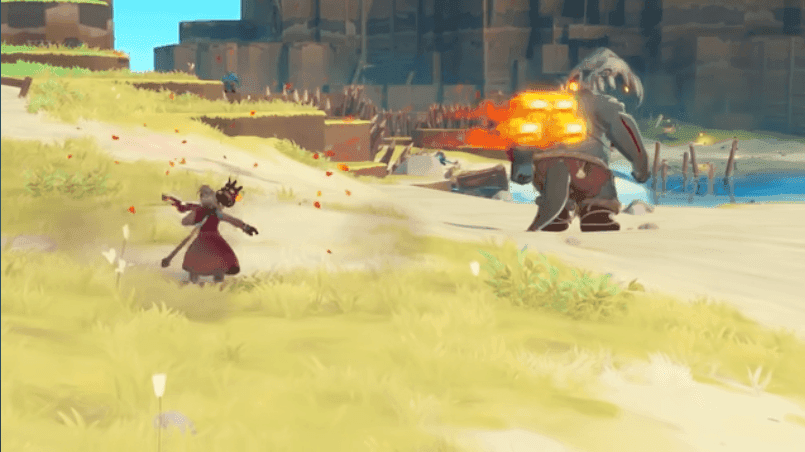
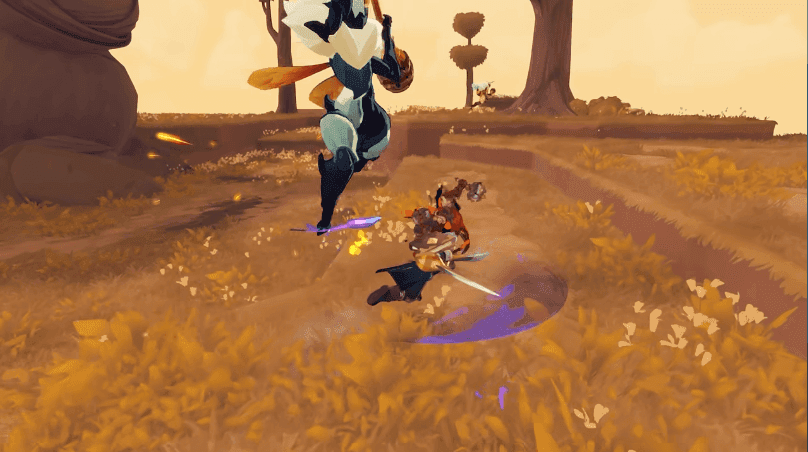
Farever is an online co-op action RPG from Shiro Games, the Bordeaux studio behind Northgard and Wartales, released into Steam Early Access on May 6, 2026. It takes the outline of an MMO — four classes, crafting jobs, instanced dungeons, a shared open world — and strips out most of the weight, trading raid nights and faction politics for climbing, gliding and jumping puzzles. Three months and one major update later it has sold past 100,000 copies and settled into a Steam score that captures both halves of its reception.
Quick take: Farever is worth its $19.99 if you want twenty to forty hours of exploration and dungeon-running with one or two friends. It is not yet worth it if you want an MMO with guilds, an economy and something to grind at cap. The world design and the weapon system punch above the price; the content ceiling arrives quickly, and performance on mid-range PCs is still the loudest complaint in its Steam reviews.
Farever's opening hour hands you a character and expects you to work out everything after that. Creation offers four classes — Warrior, Mage, Rogue and Priest — along with three body types, nine skin tones and roughly a dozen hairstyles, which is thin beside what the genre's customization heavyweights offer. Then you are standing on Skyover Island with no tutorial and no chosen-one plot, and nothing explains combat, crafting or the map.
The setting accounts for part of that. Siagarta is an ancestral home humanity was exiled from and has only recently begun reclaiming, and the writing refuses to cast you as the prophesied saviour — you are one more pioneer poking at ruins other people are also poking at. Reviewers keep landing on the same trade-off: the missing central quest feels liberating for three hours and directionless by the tenth, and the absence of a proper quest log sharpens the problem.
What carries the early game instead is the shape of the world. Skyover Island rewards looking up and looking down — ledges to climb, canyons to glide across, underwater caves with their own oxygen pockets — and the NPCs keep the tone light with names like Ruby Garland and Haydn Seek. Obelisks work as fast-travel anchors in the manner of Breath of the Wild's towers, though you can only jump between them, so getting to one is on you.
Presentation sits somewhere between cosy and slightly off-putting, deliberately. Enemy design lands between adorable and repulsive — the boars will trample you, the bees are in a dungeon called Lady Bee's Palace — and the lighting stays warm even in the caves. There is no voice acting, the dialogue font is small, and a few lines read like they lost something in translation. The score does most of the atmospheric work, and each enemy type has its own combat cry, which is the sort of detail that only gets added by people who cared.
Two small systems arrive early and set expectations for the rest. Mounts are bought from encampment vendors at prices steep enough to structure your first several hours of gold, and gliders live in your pocket for crossing ravines. Companions — crabs, dogs, a crimson ram added with the July update — are caught with a butterfly net and do nothing at all except follow you around. Farever is largely content to give you things because they are pleasant rather than because they are optimal.
Combat is where Farever earns its price. Your weapon decides your active skills, while your class mostly sets your attributes and your role in a group, and the Early Access build ships with over a hundred weapons that each carry their own kit. A Rogue running a bow and a Rogue running paired blades diverge as far as two separate classes would in most MMOs. Upgrade currency stretches further in skill ranks than in any single weapon, which you will replace within a few levels anyway.
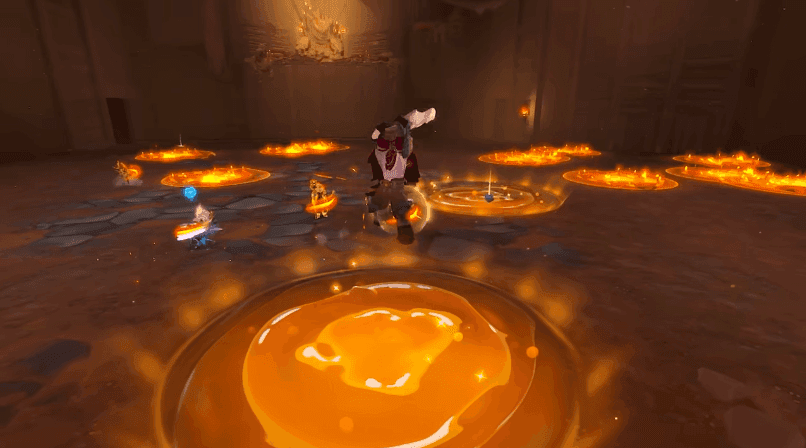
Underneath the build system it is straightforward action combat: manual aim, timed dodges, timed blocks, ability rotations layered over the top. Bosses are built around one gimmick each — a moveset that changes at a health threshold, waves of adds, an arena that fills with hazards — which is enough variety that no single build clears the whole roster. Fights like Crabgantua and Nepsilon, Envoy of Emperor Nephisto, also tell you exactly what register the writing works in.
Yes on paper, and unevenly in practice. Farever asks for frame-accurate blocks and dodges, and since launch a large share of players have reported that latency and frame drops make those inputs unreliable — worst in group content, and painful during platforming, where a dropped input means a fall. The gap between what the combat design asks for and what the client delivers is the most common theme in the game's negative Steam reviews.
The technical picture behind it is unusual. Farever runs on Heaps, Shiro's in-house Haxe-based engine, rather than Unreal, and at launch players described the classic single-thread symptom: 30 fps while the GPU sat around 30% utilisation. Shiro's patch notes through May and June list latency work and general optimisation, and the forums do report improvement — though the sceptics there argue the servers stopped straining partly because there are fewer people on them.
Crafting is bought rather than levelled into. An NPC called Job Welldon sells six jobs at 300 gold apiece — Alchemist, Blacksmith, Cook, Enchanter, Jeweller and Outfitter — and each opens its own recipe menu with material requirements spelled out. Gathering feeds them straight from the world: ore, hides, herbs and reagents go in, gear, potions, food buffs and accessories come out. The loop is not novel. It is legible, which matters more in a game that refuses to teach you anything.
The other half of an economy is missing. There is no auction house, no player-to-player trading and no guild storage in the current build, so everything you craft serves you and whoever happens to be standing next to you. Shiro has patched around the friction — an autosort button, larger bank capacity, crafting directly from bank contents — but those are conveniences layered on a closed system, not a market. In practice the loop runs inward: gather ore on the way to a dungeon, smelt and forge a weapon you were going to need anyway, enchant it with reagents pulled from the same trip. Gold accumulates faster than there is anything to spend it on once the jobs are bought and the mount is paid off.
Farever's content ceiling is its most honest weakness, and July's update raised it rather than removed it. Early Access launched with two regions, ten dungeons and a level cap of 20, which committed players reached inside the first week. The Nightling Invasion update, live since July 15, added the mountain city of Ramburg — a Lower City, a Cathedral and the district of High Inquisitor Chakram — plus two dungeons, new equipment sets and a level cap of 25.
The Rifts are the update's real addition and the first system in Farever that behaves like a live MMO. A Rift opens somewhere on the map every hour, alerts everyone online, and drops as many as fifteen players into the demon world of Niflel to close gates against escalating waves before a boss spawns. Clearing one pays Demonic Souls, spent with a dedicated merchant in Ramburg on mounts, weapons and runes. That is a repeatable loop rather than an endgame, but the launch build had neither.
A dungeon run itself is short and physical rather than logistical. There is no lockout timer, no lockout loot table and no need to assemble a balanced group — you walk in with whoever is available, work through platforming sections and enemy packs that scale to your numbers, and finish on a boss with a readable gimmick. Difficulty modes let you dial the challenge up for better rewards. It is closer to a Zelda dungeon with a party attached than to anything with a raid calendar.
Everything else at the ceiling is replay. Bosses can be fought again at higher difficulty, achievements and codex entries fill in, and the roadmap promises Heroic modes later. Anyone arriving from a theme-park MMO expecting weekly lockouts and a gear treadmill should read that as a warning rather than a quibble — the treadmill has not been built yet, and Shiro is not pretending otherwise.
Less multiplayer than the store tags imply, and that is a design decision rather than an oversight. Every dungeon scales to party size, the whole game is completable alone, and parties cap at four — which quietly removes the pressure that normally forces MMO players to talk to each other. There is global chat, and strangers do wander into open-world boss fights and help, but nothing structural holds a community in place.
Guilds, an auction house, player trading and PvP battlegrounds are all on the 2026 roadmap and none of them exist today. The plumbing that does exist has been unreliable: players have reported Steam invites failing, party syncing breaking and fast travel separating groups, all of which Shiro has publicly named as priorities. Until guilds land, the honest description is MMO-lite: a co-op game with a shared world attached rather than an MMO with a social layer.
Farever is buy-to-play at $19.99 with no subscription and no free tier, discounted to $17.99 at launch and cut again during Steam's summer sale. Shiro's own announcement described the in-game shop as cosmetics only — skins, mounts, pets and gliders, and nothing in the current build sells power. Steam's store page carries the In-App Purchases label accordingly.
Two caveats worth knowing before you buy. The studio has said the price will rise at 1.0 to reflect the added content, so buying during Early Access is the cheapest entry. And a paid game running a cosmetics shop annoys a portion of any audience on principle, regardless of what the shop stocks — that argument turns up in Farever's forums as it does in every other buy-to-play title with a storefront, and it is about principle rather than balance.
Farever passed 100,000 copies sold before its first major update, which is a genuine success at this scale. Concurrency told the usual Early Access story: the game peaked near 15,000 concurrent players in May, then settled, with third-party trackers through late July and early August reporting daily peaks roughly in the 1,500 to 5,000 band and live counts often between one and three thousand. Treat those as approximations — trackers disagree by the hour and by methodology.
One thing does make the numbers more meaningful here than usual. Farever is PC-only and Steam-only, with no launcher of its own and no console version, so Steam concurrency is close to the entire population rather than a slice of it. Steam user reviews sit around 72–74% positive across roughly 6,500 reviews at the time of writing, with the most recent thirty days running a few points higher — a rating that tracks the split between people praising the exploration and people who could not keep a stable frame rate.
The most useful thing anyone can tell you about Farever is that its problems come from the label, not the game. Sold as a mini-MMO, it invites comparisons it loses — no guild to join, no market to play, no cap to grind past, no rival faction to hate. Judged as a four-player adventure game with shared zones and hourly world events, it is one of the better things $20 bought in 2026, and the exploration layer in particular does work that much larger studios keep failing to do.
The performance question is the one that should decide your purchase, because it is the only complaint that no amount of patience fixes on your end. If your CPU has strong single-thread throughput, most reports suggest the game holds together; if you are on something older or heavily multithreaded, the Steam forums are full of people fighting the same 30 fps for months. The refund window exists for exactly this, and two hours is enough to know.
Everything else is a timing decision. The Nightling Invasion proved Shiro can ship a real update, the roadmap through 2026 is specific about guilds and level 50 and two more classes, and Farever will be a substantially larger game by the time the price goes up at 1.0. Buying now is cheaper and buying later is safer. Both are defensible; pretending the current build is a finished MMO is not.
No. Farever is a paid Early Access title at $19.99 on Steam, with no subscription and no free tier. The optional in-game shop sells cosmetics such as skins, mounts, pets and gliders.
Partly. It has a persistent shared world, global chat and world events for fifteen or more players, but parties cap at four and there are no guilds, no auction house and no PvP. Most coverage settles on "MMO-lite" for a reason.
Yes, from start to finish. Enemy health and dungeon difficulty scale to the number of players present, so nothing in the current build is gated behind having a group.
Not at present. Instanced battlegrounds with their own gear are listed on Shiro's roadmap for later in 2026, and no PvP exists anywhere in the game today.
For exploration-driven players who want co-op without a schedule, yes — provided the game runs acceptably on your hardware. Players who need endgame structure, guilds or an economy should wait for the updates that add them.