 F2P · Live
Lineage 2
Aden's castles never stay in the same hands for long, and Lineage II has built an entire twenty-three-year…
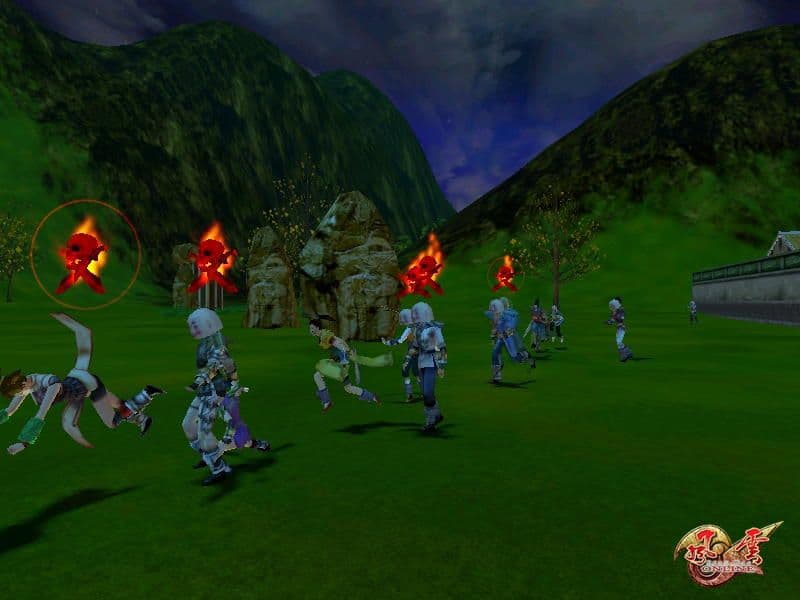
Fung Wan Online is a wuxia-themed MMORPG adapted from the Hong Kong comic Fung Wan (Wind and Cloud), set in a martial world thrown into chaos after an internal power struggle cripples the once-dominan...
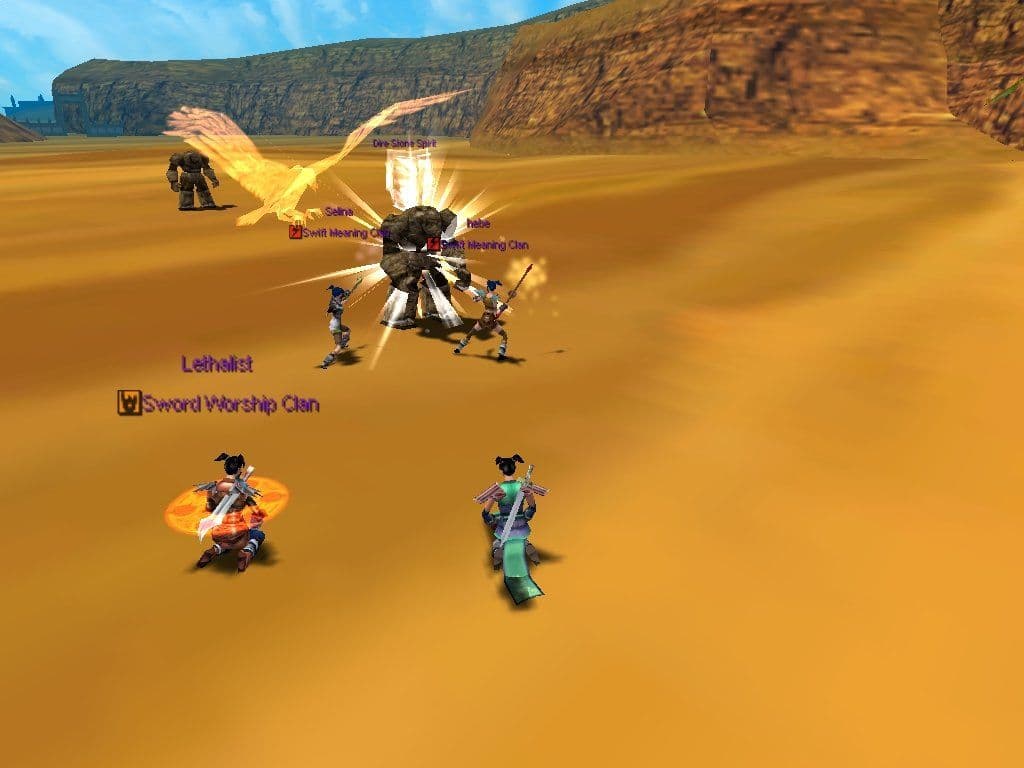
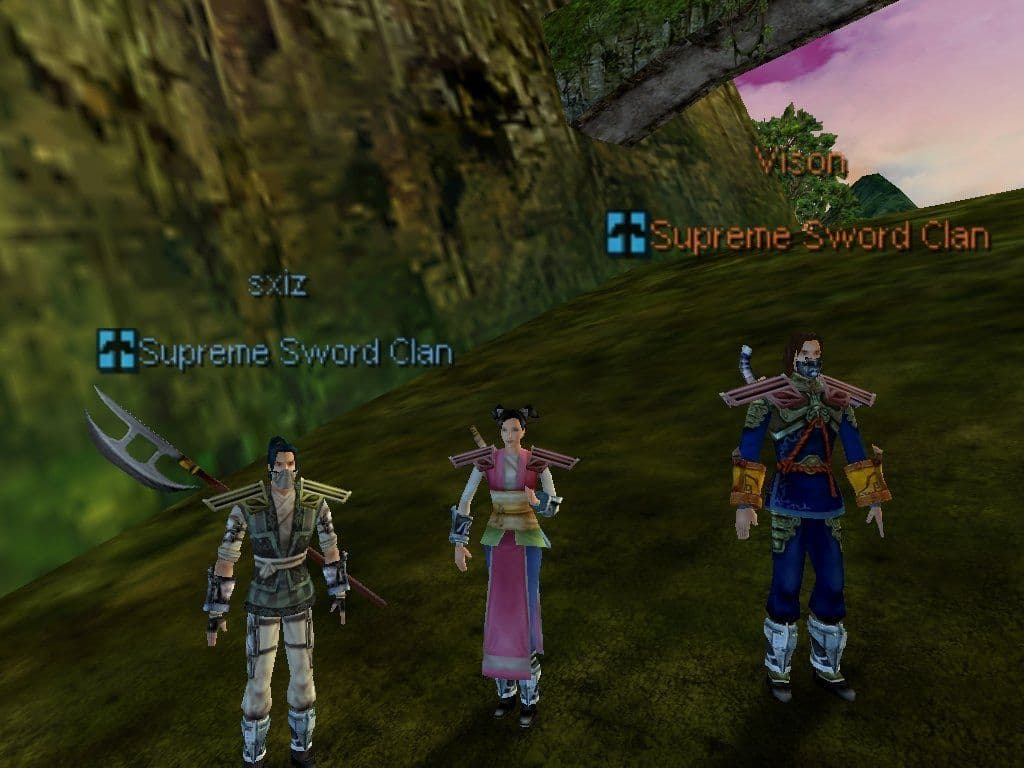
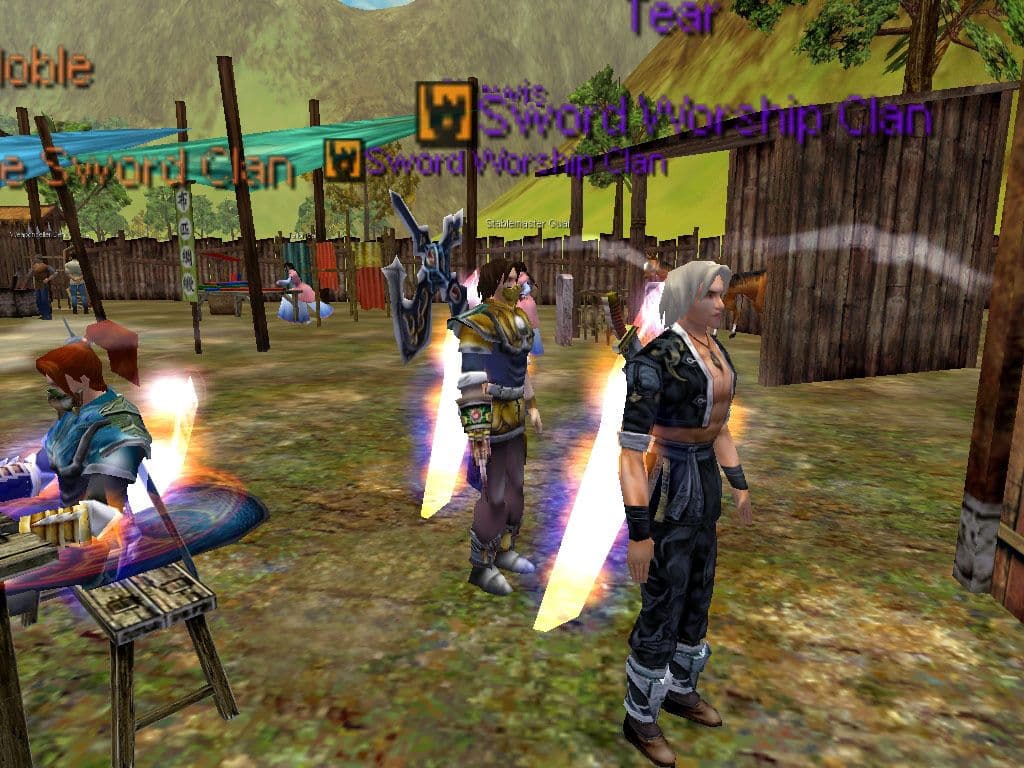
Fung Wan Online was a wuxia MMORPG built around Ma Wing-shing's long-running Hong Kong martial arts comic Fung Wan — the same source material behind the films The Storm Riders and The Storm Warriors — and it launched into Western markets in late 2003 during the genre's first big wave of Asian MMO localizations. It never became a household name the way Ragnarok Online or Lineage did, but for a specific slice of early-2000s players, its clan-versus-clan structure was ahead of its time. Two decades later, the official game is gone in every territory that ever ran it, and what survives is a single fan-run private server keeping the world of Fung Wan technically playable for whoever still wants in.
The game borrows its premise wholesale from the manhua: for twenty years the Tian Xia clan ruled the martial world unchallenged, propped up by its two legendary lieutenants, Wind and Cloud. An internal power struggle cracks that dominance open, and the other clans smell opportunity. Rather than adapting a single storyline beat for beat, Fung Wan Online used that premise as a backdrop and a justification — five rival clans locked in perpetual, structural conflict rather than a linear plot the player marches through. It's a thin layer of narrative dressing over what the game actually wanted you doing, which was fighting other players for territory, but it gave that fighting a reason to exist beyond an arbitrary flag on a map.
Character creation offered five combat stances rather than traditional classes — bow, saber, sword, staff, and unarmed fist — each mapped to a distinct playstyle rather than a distinct story role. An archer picked off targets from range with precise, costly shots; a saber user leaned on raw, relentless pressure; a staff wielder controlled space and tempo, trading burst damage for the ability to keep several attackers at bay at once. None of it reinvented the wheel mechanically, but the framing sold it as martial arts schools rather than character jobs, which fit the source material better than a generic "warrior/mage/rogue" split would have. Attribute allocation sat underneath the stance choice, letting two players who'd both picked sword end up built very differently depending on whether they leaned into raw strength, agility, or the more esoteric internal-power stat the game used to gate its higher-tier martial arts techniques.
The world itself was carved into named zones of escalating difficulty, reachable on foot or, for the more distant ones, only after spending part of your earned cash on travel. That distinction mattered more than it sounds: a player with a thin purse was effectively boxed into the zones close to their home city until the economy started working in their favor, which nudged early trade and grouping behavior more than a purely level-gated world would have.
A fresh character dropped into a supervised training arena before ever touching the live world — an AI-guided space that walked new players through camera controls, basic combat, and how guild structures worked, a fairly standard onboarding beat for the era. Graduating out of it dropped you into a starting city with a beginner weapon and a small purse of gold, and from there the loop was the genre's usual one: fight weak beasts near town, sell what they drop, buy slightly better gear, repeat against progressively less forgiving enemies further from the safe zones.
What set the early game apart was how quickly it pushed players toward the clan question. Joining one of the five clans wasn't cosmetic — it determined who you could fight without penalty, which sub-guilds you could form or join, and whether the game's signature system, the clan siege, would ever matter to you. Switching clans later was possible, and the game left that door open rather than locking players into a single faction forever, which was a more flexible stance than a lot of its RvR-flavored contemporaries took.
The feature that made Fung Wan Online worth remembering wasn't its combat depth — that was competent but unremarkable turn-of-the-century action — it was the clan base siege. A coordinated group could march on a rival clan's stronghold and, if the attack succeeded, actually take over leadership of that clan. This wasn't a scoreboard event or a cosmetic siege with no lasting consequence; it restructured who ran what for the players still logged in the next day. The five clans weren't lore-only either — Tian Xia, the dominant faction from the opening premise, sat alongside four rivals with their own territory and their own reasons to want that dominance broken, and the siege system was the mechanism through which the game's founding conflict actually got re-fought by real players instead of staying locked in backstory text. Long-time players who wandered through the genre's graveyard years later still single it out as the thing that made the game distinct from the dozen other Asian MMOs competing for the same audience at the time.
Sub-guilds layered on top of that structure, letting smaller player groups organize within a clan's larger umbrella without needing to be one of the five headline factions to matter. It's a shape of guild hierarchy that plenty of later MMOs would formalize more elegantly, but Fung Wan Online was working the idea out early, and the payoff — actual leadership changing hands through in-game conquest — is still a rarer feature than it should be almost a quarter-century later.
The open beta built genuine goodwill. Then the game moved to a paid live-service model, and the goodwill started leaking out fast. Players who stuck around for the transition described major balance changes landing within the first few months of the paid launch — nerfs that broke previously viable character builds, interrupt mechanics that stopped respecting abilities explicitly flagged as uninterruptible, and a general sense that systems were being rewritten under players who'd already committed money to characters built around the old rules. None of that is unique to Fung Wan Online; a lot of early-2000s MMOs shipped rough and patched destructively. But it left a mark on the game's reputation that outlasted the specific bugs causing it, and forum threads from the period read like a community watching a promising launch curdle in real time.
The regional picture fragmented from there rather than ending cleanly. The original Western service folded around 2006, a short run by MMO standards even for its era. A Southeast Asian version, run under separate regional publishing, proved considerably more durable — player accounts of the game place its unofficial retirement closer to 2021, meaning some version of Fung Wan Online was technically live for roughly two decades after the source material's Western launch collapsed. That kind of publisher-by-publisher divergence was common for licensed Asian MMOs of the period, where a single game could have wildly different lifespans depending purely on which regional operator was running the servers, and Fung Wan Online is a fairly stark example of just how wide that gap could get.
Talk to someone who played Fung Wan Online on its original Western servers and you're hearing about a specific, bounded window: open beta hype, a rough paid transition, and a shutdown a few years later. Talk to someone who logged in years after that on the surviving regional builds, and you're hearing about a much longer relationship with a game that quietly kept running in the background of the genre for most of a decade past when Western fans assumed it was already dead.
Today, both of those histories are equally inaccessible — there's no official server left running anywhere. What exists instead is a single fan-operated private server that has rebuilt the client, hosts its own launcher, and presents the same five stances, the same clan structure, and a version of the same starting arena as the game's original design. It's run by enthusiasts rather than a licensed studio, and it comes with the caveats every private MMO server carries: no guaranteed uptime, no accountability if the operators lose interest or the project simply disappears one day, and no way to verify how account data or payment information — if the server monetizes at all — is actually handled behind the scenes. Anyone curious enough to log back in should treat it exactly like any other unofficial revival project: interesting as a museum piece, not a platform to build a long-term account around.
The original commercial model followed the standard shape of its era: a free open beta to build population, followed by a conversion to a paid live service, with the specific mechanics of that paid tier — subscription time, cash-shop items, or some hybrid — not consistently documented across the surviving regional histories. What is documented is player frustration at how that transition was handled mechanically rather than the pricing itself; the anger in period forum posts is aimed at broken builds and shifting rules, not at being asked to pay.
The current private server operates entirely outside any of that original commercial structure, and whatever monetization it runs — if any — is a decision made unilaterally by whoever maintains it today, with no publisher oversight and no refund process worth trusting. That's worth stating plainly rather than guessing at specifics: this is a hobbyist revival, and it should be evaluated with the skepticism any unofficial server deserves, regardless of how faithfully it's recreated the original systems.
Fung Wan Online never had the population or the polish to compete with the era's biggest names, and its combat, viewed today, is exactly as dated as you'd expect from a 2003 client. But the clan-conquest idea it built its identity around — real leadership changing hands through a coordinated siege, rather than a leaderboard tick — is a genuinely uncommon design even now, and it's worth crediting a mid-tier licensed wuxia MMO for trying it this early. Most of its direct competitors from the same wave of localizations are gone without leaving much of a mechanical fingerprint behind. Fung Wan Online at least left an idea worth pointing to.
Not as a game to seriously invest time in, and not as a private server to trust with anything you'd mind losing. What Fung Wan Online deserves instead is a place in the conversation about early Asian MMO localizations that tried something structurally interesting and got buried by a rough live-service rollout and a fractured publishing history rather than a bad core idea. The clan-siege concept was smarter than the execution around it, and that gap between ambition and delivery is a more honest legacy than pretending the game quietly thrives somewhere today. If you're chasing genre history rather than a game to actually settle into, the fan server is there. If you want something built and maintained by people accountable for it, look elsewhere — that game stopped existing a long time ago.