 F2P · Live
Lineage 2 Essence
Lineage 2 Essence is NCSoft's free-to-play take on the classic Korean MMORPG Lineage II, built around faster…
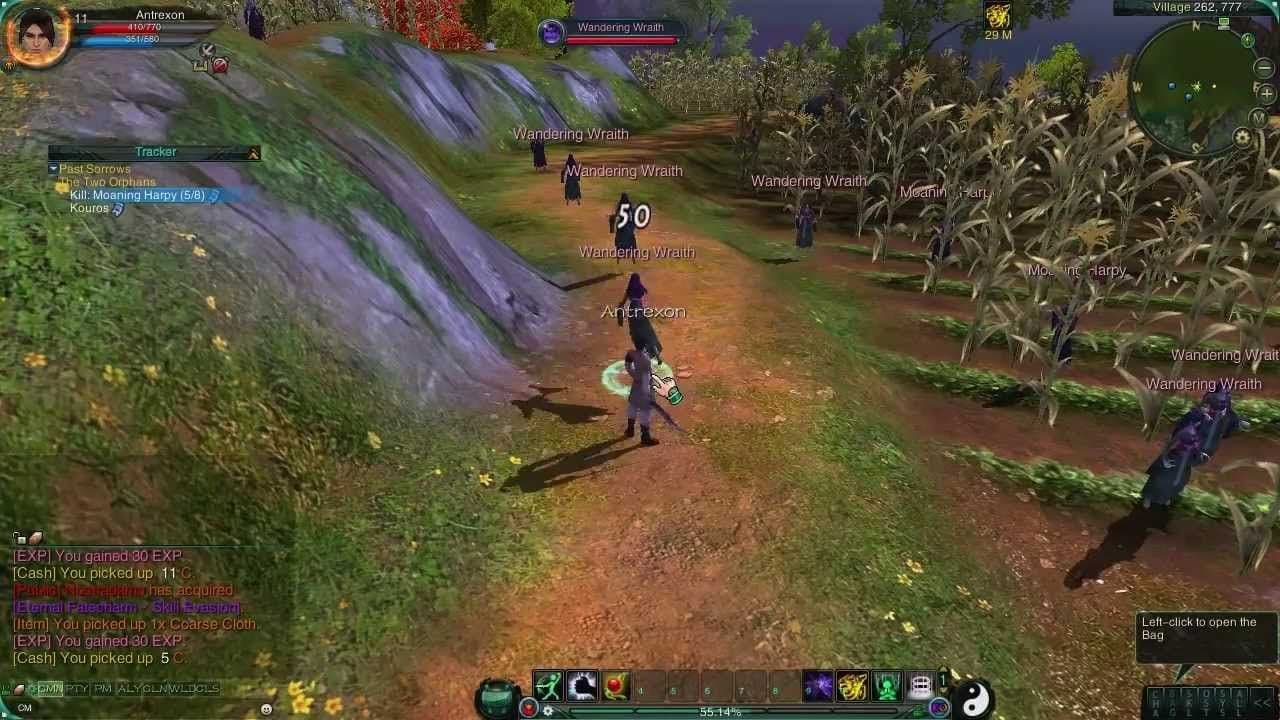
Jade Dynasty is a 2007 wuxia MMORPG from Perfect World, built on the Zhu Xian novels, where eleven human and demigod factions fight over the secret of immortality. Its Esper system famously let charac...
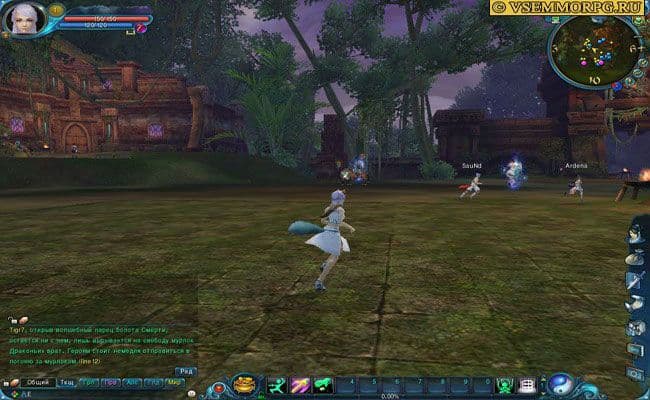
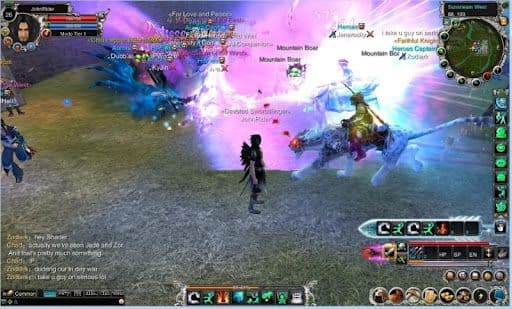
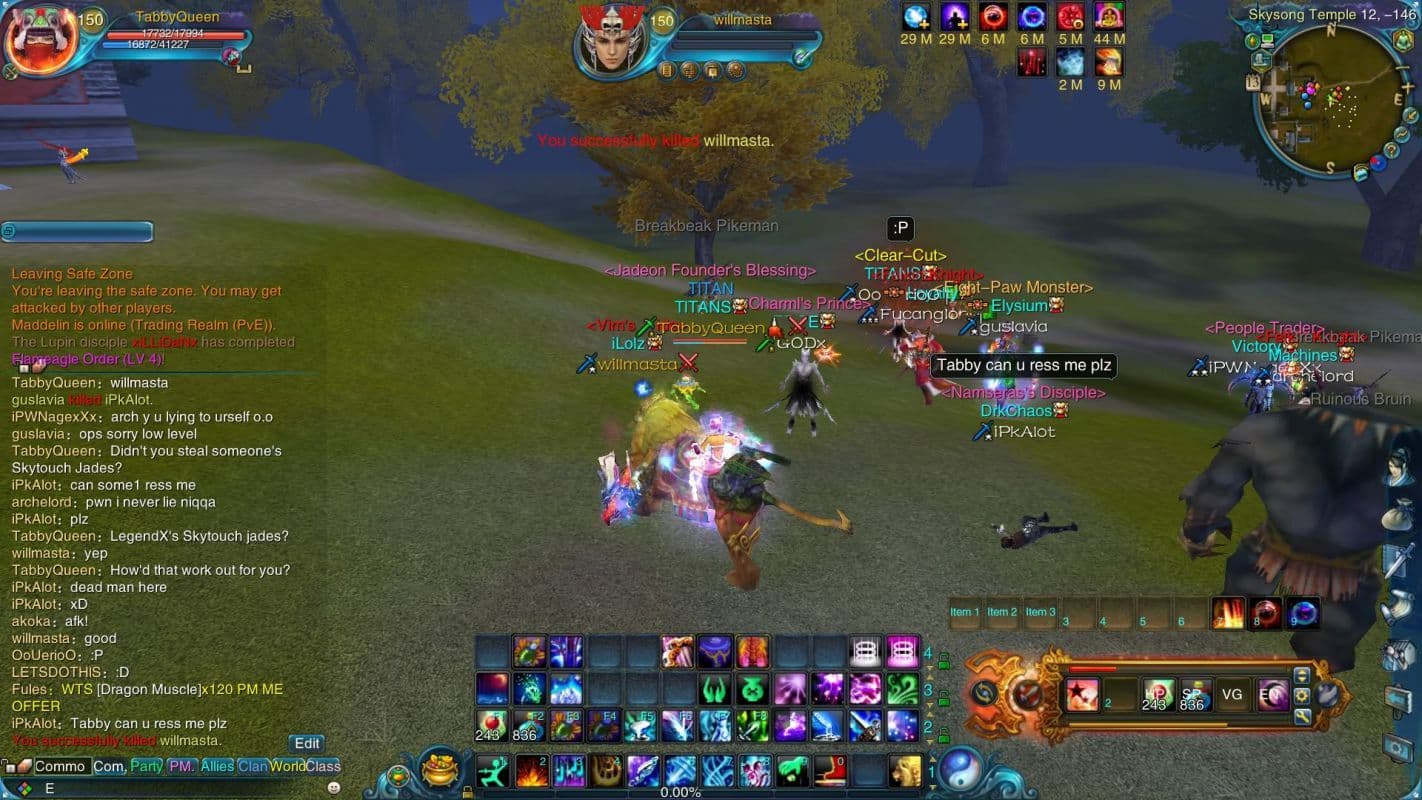
Jade Dynasty is a wuxia MMORPG developed by Beijing Perfect World, launched in China in May 2007 under the name Zhu Xian and opened in North America in June 2009. Its signature idea was an officially sanctioned bot — an equippable item that fought mobs on your behalf while you were away from the keyboard — wrapped around a faction system built on the immortality myths of one of China's most-read internet novels.
Perfect World Entertainment closed the Western servers on June 5, 2018, after a nine-year run. The game itself never stopped: the Chinese client is still in official operation in 2026, a handful of English private servers keep the 2010-era build running, and Perfect World has since rebuilt the whole thing in Unreal Engine 5 as World of Jade Dynasty. This review covers the original game and where each of those three doors leads.
Quick take: Jade Dynasty holds up in 2026 for one specific type of player — someone who wants a slow, faction-locked cultivation MMO and is genuinely curious about a game that automated its own leveling curve. There is no official English service left, so the realistic options are a private server with a few hundred players or the Chinese original, and both come with real friction before you ever see the world.
The endgame of Jade Dynasty is a reset button dressed up as enlightenment. Once a character reaches Tier 5 — or accumulates enough of the game's reputation currencies, tracked as honour, piety, charity, culture and renown — Ascension becomes available. Taking it drops your character back to level 15 with large permanent attribute bonuses, an altered skill set, and the option to switch to a different faction within your race. Veterans of the game will tell you to hold off until level 150, the cap, because the bonuses scale with how far you climbed before letting go.
That single system explains almost everything else about the game's design. A 150-level curve is punishing enough on its own; a design that expects you to walk most of it twice would be absurd without some way to compress the second pass. Ascension is why the leveling content is tuned as a long, repeatable treadmill rather than a one-time story, and it's why the game's rewards are stacked at the far end rather than spread evenly along the way.
It also gives the game an unusual sense of shape. Most MMOs of the era pointed at a raid tier as the destination. Jade Dynasty pointed at your own character sheet — the goal was not a boss but a version of yourself that had gone around the loop enough times to shrug off the people who hadn't. Whether that reads as elegant or as an excuse for a second grind depends entirely on how much you enjoyed the first one.
No — in Jade Dynasty, automated grinding is a built-in feature available to every account for free, not a third-party exploit. The tool is the Esper, an equippable spirit item that grants stats and bonus powers, and that can be set to a mode called Invigorate: the character attacks nearby enemies on its own, uses HP and SP remedies when they run low, and fires assigned skills on cooldown. Espers gain proficiency as they work, level up on their own, and visibly change appearance as they grow.
Perfect World's reasoning was practical rather than idealistic. In 2007, the bot problem in grind-heavy MMOs was severe enough that unassisted players were competing against software regardless of what the rules said. Building the bot into the client made third-party programs mostly pointless and flattened the advantage held by anyone able to leave a machine running all night. It's one of the more honest answers the genre has produced to a problem it usually pretends to solve with bans.
The cost lands squarely on the moment-to-moment game. Combat in Jade Dynasty is tab-target and slow by modern standards, and a system that lets your character grind while you sleep quietly tells you that most of it isn't worth your attention. Leveling zones empty out socially, because nobody needs a partner to clear a camp when the client will do it unattended. The parts of the game that demand a live human — Territory Wars, group instances, faction skirmishes — feel sharper for the contrast, but you spend a lot of hours as an administrator of your own character before you get there.
Character identity in Jade Dynasty comes from faction, not from a traditional class menu. Human characters start as Initiates with no specialization at all and commit at level 15 to one of six paths: Jadeon, the glass-cannon spellsword with heavy ranged and area damage; Skysong, the healer and buffer; Vim, the armoured frontline; Lupin, the burst assassin; Modo; and the Incense Mage. The demigod Athan race skips the waiting period and chooses at character creation, drawing from Balo, Arden, Rayan, Celan, Forta and Voida.
Marketing at the time described this as classless progression, which was generous. Each faction has a fixed skill tree, a clear combat role, and a defined position in the trinity — the freedom is in choosing when to commit and, later, in switching sides through Ascension rather than in building a character freely. The genuinely open part of the system is the Esper and the affinity specializations layered on top, which unlock advanced powers and gate access to certain zones.
Traversal is where the fantasy actually delivers. Flight arrives through the Skyblade — a sword you ride, in the most literal xianxia idiom available — and the game hands it over early enough that the world reads as vertical rather than as a series of long walks. Two decades on, the animation looks its age. The idea has aged perfectly.
Jade Dynasty's setting comes from Xiao Ding's Zhu Xian, a serialized internet novel that became one of the defining works of modern Chinese fantasy, later adapted into a 2019 feature film and an ongoing animated series. The game's premise follows the book's: six human sects chase immortality through cultivation, and the Athan demigods move to stop them before humanity gets close enough to threaten the balance. Sunstream City, temple courtyards, mountain sects hanging over cloud layers — the art direction commits to that register without diluting it for an export audience.
The problem in the West was never the quality of the setting. It was that the localization arrived with almost none of the cultural scaffolding attached. English players got faction names like Modo and Voida with no novel behind them, and a story built on assumptions about cultivation, sect rivalry and celestial hierarchy that the genre had not yet exported. Reading a wiki solved it. Most people didn't, and the story became background noise behind the Esper.
PvP was where Jade Dynasty asked for a live player, and it asked at scale. The Vengeance expansion, released in the West in August 2010, added the Celan and Rayan Athan factions along with the Territory Wars system — ongoing alliance-versus-alliance warfare over map control, configured differently from server to server. On top of that sat duels, battlegrounds, and alliance wars fielding up to 225 players per side, with the Elysium zone left open as unrestricted PvP for anyone willing to walk into it.
Execution was uneven, and the honest version of the story includes the engine. Angelica-derived tech built in the mid-2000s does not hold up gracefully when four hundred characters converge on one flag, and the same mass-PvP promise that pulled guilds in also produced the slideshow that pushed them out. The Territory War calendar also concentrated the game's social life into a few scheduled hours a week — thrilling if your alliance was in the fight, dead air if it wasn't.
What did work was the political layer. Territory control created a reason for alliances to negotiate, betray each other and hold grudges across months, which is the kind of content no patch can author. Servers with a strong alliance scene stayed compelling long after the PvE ran out.
Jade Dynasty ran a cash shop from launch with no subscription, and the structure was better than the era's average. Real money bought Zen, Perfect World's platform currency, which converted into Jaden for the in-game Marketplace at roughly a dollar per gold Jaden — a mount sat around twenty. The important part was the exchange: Jaden could be traded to other players for in-game gold at a floating rate, so a player with time and no budget could reach shop items through the market instead of the checkout.
The catalogue itself was broad — buffs, pets, mounts, flight items, consumables, cosmetics, gems, storage expansions, respec items and teleports — and new characters received a chest that dispensed shop goods at five-level intervals. Reviews of the game consistently landed on the same summary: playable without paying, with a clear advantage to spending, concentrated in convenience and mobility rather than raw stats.
Where it did bite was refinement and gear upgrades, the standard pressure point for Perfect World titles of the period. Chasing top-end equipment through upgrade chains rewarded wallets in a way the leveling curve never did, and competitive PvP at the top of a server was not a level playing field. Fair by 2010 standards, uncomfortable by 2026 ones.
There are three routes, and none of them is an official English server. The Chinese original remains in active operation under Perfect World, with new content versions and fresh server openings still scheduled through 2026; that client is Simplified Chinese only and expects a Chinese payment method. Private servers carry the English build. The Unreal Engine 5 successor is the newest option and the hardest one to reach from the West.
The English private-server scene is small but stable. Server trackers pulling live Discord data listed five active Jade Dynasty servers in August 2026, with the largest — a Vengeance-era server called Lumen — reporting around 130 players online at peak and a combined community across all servers of roughly 2,400 registered members. Treat those figures as directional rather than exact: they're derived from Discord integrations, several servers share community spaces, and concurrency for the whole English scene realistically sits somewhere in the low hundreds. What that number means in practice is a functioning market, populated Territory Wars on the largest server, and long queues for anything needing a full raid group.
The successor is the more interesting long game. World of Jade Dynasty launched in China on December 19, 2024, built in Unreal Engine 5, and reportedly recovered its development costs within a month of release. Regional servers for Taiwan, Hong Kong, Macau, Singapore and Malaysia followed in June 2025, and community translators have been maintaining an unofficial English patch for them. Perfect World has still not announced a Western release, a publisher or a localization date. Anyone waiting for one has been waiting since 2022.
Jade Dynasty looked directly at the least defensible part of the 2007 MMO — hours of repetitive mob-killing that existed to sell time — and admitted it was busywork by writing a bot into the client. That was clear-eyed in a way most of its contemporaries never managed. The trouble is the conclusion Perfect World drew from it, which was to automate the busywork instead of removing it, and a game that plays itself for fifty levels has told you exactly how much those fifty levels were worth.
What's left underneath is a competent faction MMO with a striking traversal system, a distinctive rebirth loop, and a setting that deserved a better introduction to English players than it got. In 2026 it survives on maintained private servers and a Chinese client most Western players will never touch, which is a quieter ending than the game earned but not the same thing as being gone. Jade Dynasty is worth the install if the Esper is the reason you're installing it. If you came for the wuxia world, the successor Perfect World built in Unreal Engine 5 is the one to watch — assuming it ever ships in a language you read.
The Western version is. Perfect World Entertainment closed all English-language Jade Dynasty servers on June 5, 2018. The original Chinese version, Zhu Xian, remains in official operation and continues to receive updates.
Yes, through community-run private servers, which host the original English client across Classic and Vengeance-era builds. There is no official English service and no publisher supporting it.
The official version leaned that way at the top end, mainly through gear refinement rather than direct stat purchases. Cash-shop currency could be traded for in-game gold, which gave patient free players a route to most Marketplace items.
No. World of Jade Dynasty is a separate Unreal Engine 5 MMORPG built on the same novel, released in China in December 2024, with regional servers in Southeast Asia and Taiwan. It shares the setting, not the systems.
Across tracked English private servers, concurrent population sits in the low hundreds as of August 2026, with the largest single server reporting roughly 130 players at peak. Chinese population figures aren't published.