 F2P · Live
Lineage 2
Aden's castles never stay in the same hands for long, and Lineage II has built an entire twenty-three-year…
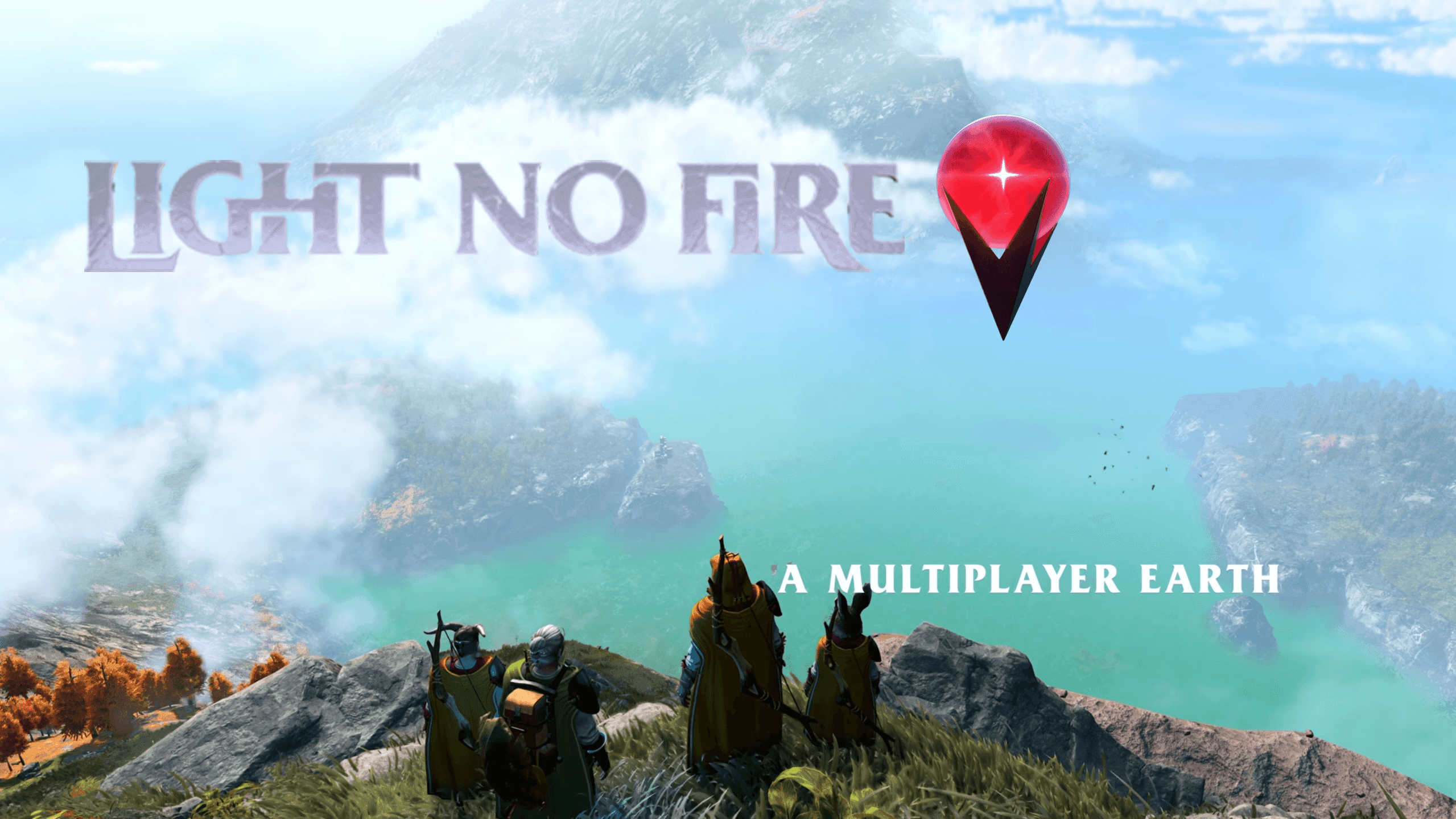
Light No Fire is Hello Games' next project after No Man's Sky: a single, Earth-sized fantasy planet shared by players who explore, build, and survive together on dragonback and on foot. Confirmed for ...
Light No Fire is the next project from Hello Games, the Guildford studio behind No Man's Sky, announced by founder Sean Murray at The Game Awards in December 2023. Where No Man's Sky spread its ambition across a procedurally generated galaxy, Light No Fire narrows the lens to a single fantasy planet built at roughly Earth's actual scale — dragons instead of starships, cabins instead of habitation pods, magic instead of hyperdrives. It has been in development since 2018, longer than it has been public, and as of mid-2026 it still has no release date, no confirmed platform beyond a Steam listing, and almost no gameplay footage beyond its original reveal trailer. This Light No Fire preview covers exactly what Hello Games has confirmed, what's reasonable to infer from the trailer and Sean Murray's public statements, and what's still pure speculation — because with a game this quiet, keeping those three categories separate matters more than usual.
The premise is the clearest thing about the project. Light No Fire takes place on a single procedurally generated planet built to the real Earth's surface area — Hello Games has said the goal was "a planet that is as varied as a universe," trading the countless-but-shallow worlds of No Man's Sky for one enormous, deep one. The official pitch describes an "ancient earth to uncover," a low-fantasy setting where the player isn't cast as a chosen hero but as one traveler among many on a world already thick with ruins, mystery, and older stories than their own. The trailer backs that framing with skeletal remains scattered across ruined structures, weathered stonework half-swallowed by forest, and a tone closer to folklore than epic quest-log fantasy.
Hello Games has organized its pitch around four stated design pillars — what the studio frames as a multiplayer Earth, a procedural Earth, a fantasy Earth, and an unexplored Earth. It's marketing language rather than a technical spec, but it does communicate priority — this is meant to be a world players share and discover together, generated rather than hand-authored, and grounded in low-tech fantasy rather than science fiction. Every other confirmed detail about the game hangs off those four words.
Strip away the marketing copy and the hard evidence for Light No Fire's gameplay comes down to roughly ninety seconds of footage, most of it recycled across every article written about the game since 2023. It's worth being precise about what that footage contains, because a lot of coverage blurs confirmed material with wishful extrapolation.
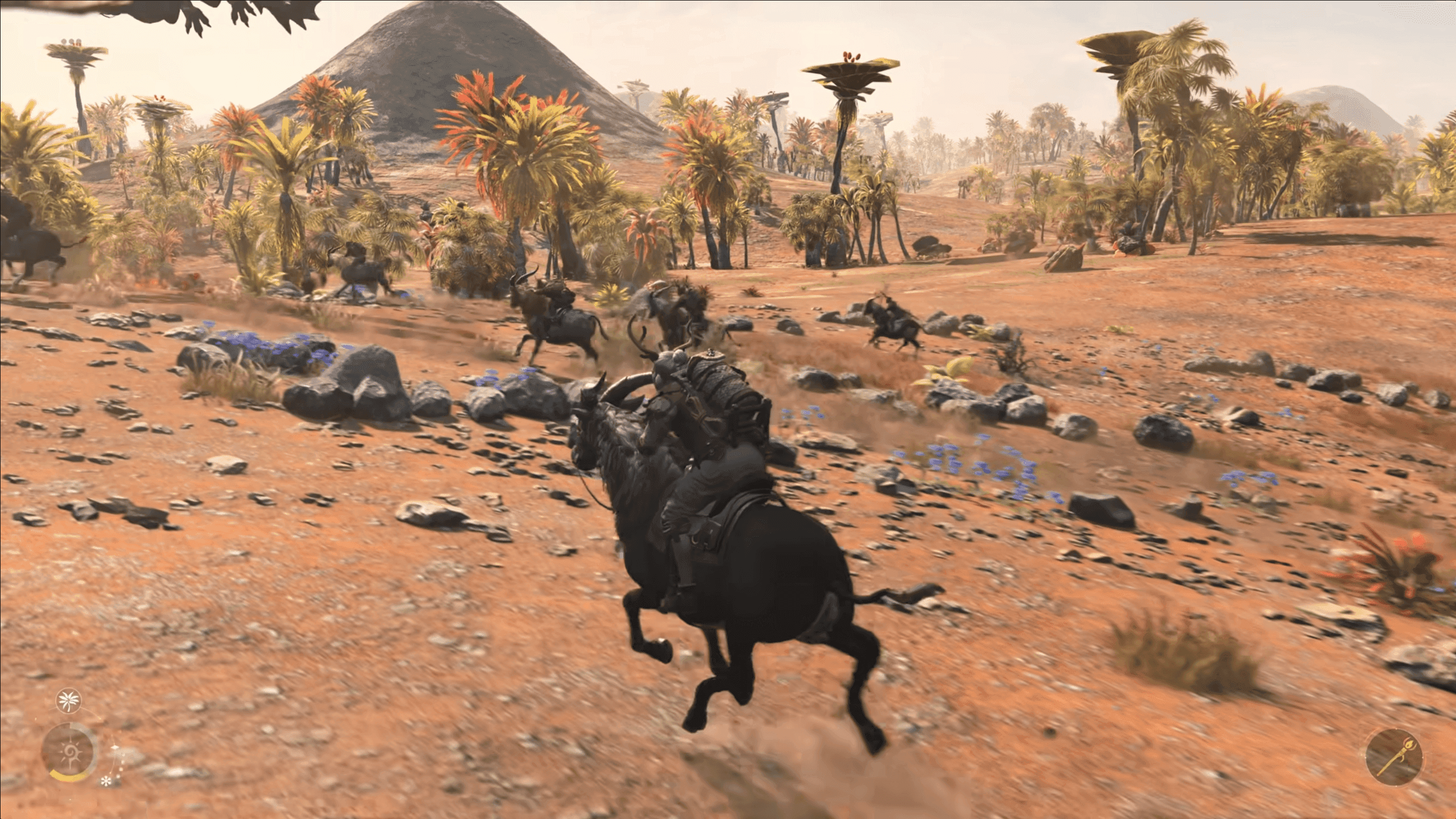
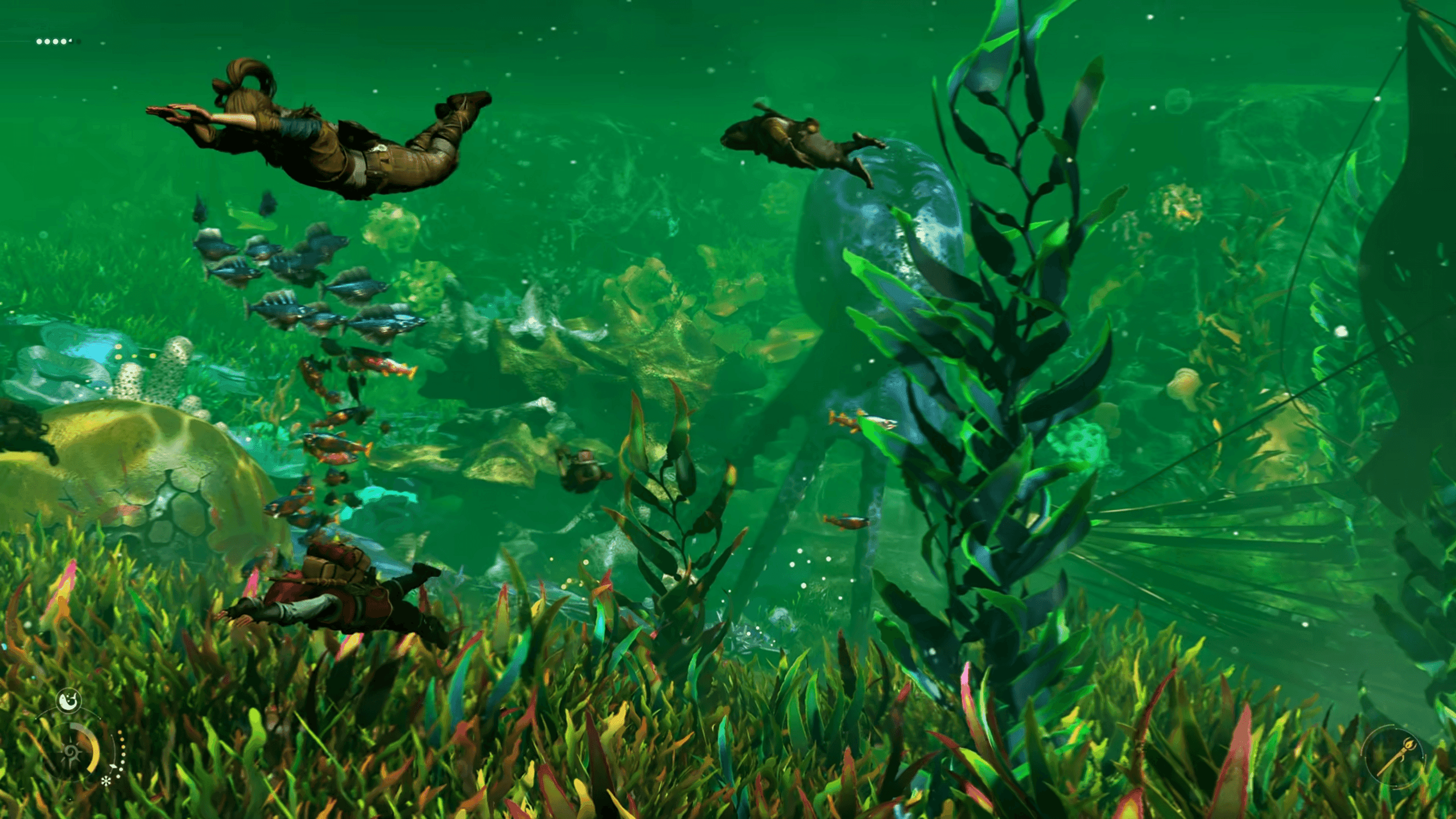
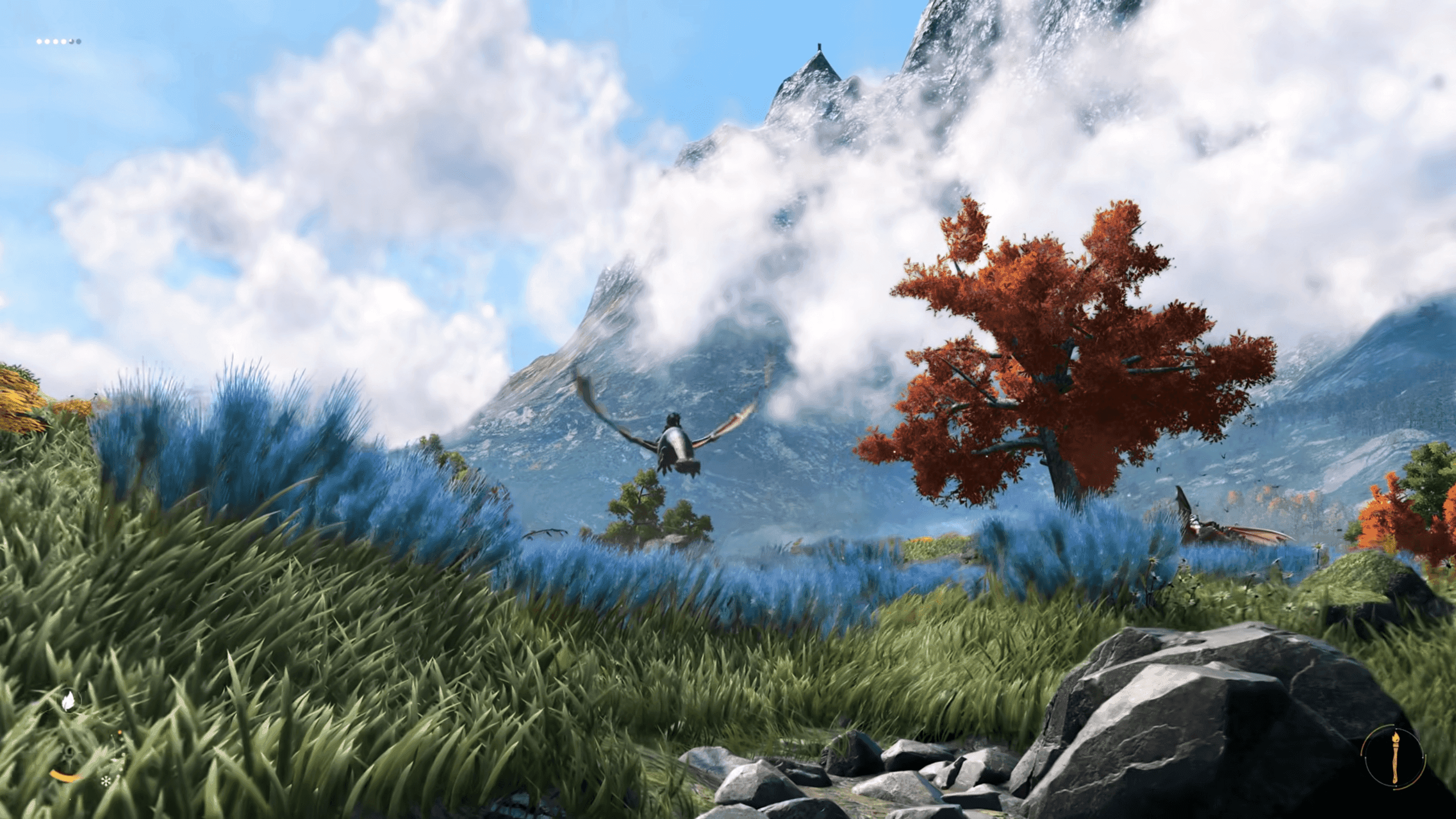
Character creation isn't limited to humans — the reveal shows playable foxes, rabbits, and other animals alongside human characters, though how deep that customization goes, or whether animal and human players interact differently, has never been explained. Traversal is a mix of walking, wild horses, and mounted flight on dragons and enormous birds resembling kingfishers, with different biomes apparently favoring different methods of getting around — mountainous terrain for ground mounts, open sky for aerial ones, though Hello Games hasn't said whether mounts are tamed, bred, summoned, or simply found. Combat appears only in a couple of quick cuts: a sword swing, an arrow loosed mid-motion. Building shows up as modest wood-and-stone cabins rather than anything approaching a fortress, and the trailer includes brief glimpses of cooking and camp life that read more like waypoints on a journey than a base-building centerpiece. A later No Man's Sky "Voyagers" update post described the shared planet as having "real oceans to traverse, needing large boats and crews," which is the closest thing to a confirmed detail about naval mechanics the studio has offered.
That's genuinely most of it. There's no confirmed skill tree, no class system, no crafting recipe list, no combat depth beyond "melee and ranged exist." Anyone promising more granular detail than that is extrapolating, not reporting.
Hello Games' own framing splits the difference between two genres: the depth of a role-playing game layered onto the freedom of a survival sandbox. Concretely, that seems to mean a loop familiar to anyone who's played Valheim or Conan Exiles — gather resources across varied biomes, craft equipment and shelter, survive whatever the world's wildlife and weather throw at you — stretched across a landmass big enough that reaching the far side of it becomes its own kind of achievement. Steam community discussion has already started doing the math on just how large that promise is: a planet the size of Earth, populated by players riding flying mounts, is either going to feel genuinely boundless or get colonized and cluttered faster than the procedural generation can keep it feeling wild, and which of those two outcomes actually happens is not something any trailer can answer.
Multiplayer sits at the center of the concept rather than as an optional layer. Hello Games has described the world as persistent and shared, with players able to build lasting settlements and, presumably, run into strangers doing the same thing across the map — an MMO-adjacent structure closer to No Man's Sky's shared-galaxy model than to a traditional themepark MMORPG with instanced zones. Whether that means dedicated servers, a single shared world, or something else entirely hasn't been specified, and it's one of the biggest open questions hanging over the whole project: a planet-sized map with a meaningfully large concurrent population raises server and design problems that No Man's Sky, for all its scale, never really had to solve in the same way.
Sean Murray has said Light No Fire was already in development by 2018, which puts the reveal trailer roughly five years into the project's life and puts 2026 somewhere past the seven-year mark. That's a long gestation even by Hello Games' own standards — No Man's Sky existed in the public eye for about three years between its announcement and its rocky 2016 launch, and Murray has been explicit that the studio has no interest in repeating that marketing cycle here. The result is a project that surfaces in public roughly once or twice a year: the original reveal, a mention buried in a 2025 No Man's Sky "Voyagers" update post describing shared oceans and boat crews, and a late-2025 comment following a Steam Awards nomination in which Murray called the team's progress "really special" while declining to give any further detail.
That comment is also where the more sobering context lives. Murray has confirmed the Light No Fire team is small — a "tiny team at Hello," in his own words from a March 2026 update — working in parallel with the much larger group still actively shipping content for No Man's Sky, whose Worlds update line and other 2025–2026 releases have consumed a visible share of the studio's public attention. Light No Fire was absent from both Summer Game Fest and The Game Awards in 2025, which several outlets read as a signal that a launch was not imminent, and speculation about an August 2026 release timed to No Man's Sky's tenth anniversary remains exactly that: speculation, with nothing from Hello Games to confirm or deny it. The honest read heading into the back half of 2026 is a late-2026-to-2027 window at the earliest, and even that carries real uncertainty given how consistently the studio has avoided naming a date.
Confirmed platform support begins and ends with a Steam listing for Windows; Hello Games has not announced PlayStation, Xbox, or any other platform, though given No Man's Sky's eventual spread across nearly every console and even mobile devices, a wider rollout sometime after PC launch is a reasonable expectation rather than a confirmed plan. Pricing and monetization are entirely unannounced. Hello Games sold No Man's Sky as a premium, one-time purchase with all subsequent content delivered free, and there's no indication the studio intends to break from that model here — but "no indication of a change" isn't the same as a confirmation, and anyone citing a specific price for Light No Fire right now is making it up.
It's fair to ask, at the seven-year mark with no gameplay demo beyond a teaser reel, whether Light No Fire is a real, close-to-shippable game or an ambition that's outgrown a small studio's capacity to deliver it. The honest answer sits somewhere in between, and Hello Games' own history cuts both ways here. No Man's Sky launched to a genuinely disastrous reception in 2016 — overpromised, underdelivered, and pilloried for it — before the studio spent the better part of a decade rebuilding trust through free content updates until it became one of the more respected redemption stories in the industry. That track record argues for patience: this is a team that has proven it can eventually deliver on an oversized promise, even if the path there is ugly. It also argues for caution, because the exact same team once shipped a game nowhere near ready for the promises attached to it, and a Steam listing that's sat at "release date TBA" for going on three years since reveal is not, by itself, evidence that a launch is close.
What tips the read toward "still real, just slow" rather than "quietly shelved" is that Murray keeps talking about it, however sparingly, and keeps describing active progress rather than going silent entirely. A studio that had abandoned a project wouldn't usually keep surfacing to say the work continues "at pace." But sparse, upbeat updates from the person running the studio are not independent verification, and readers should weight them accordingly.
There's no meaningful way to assess Light No Fire's combat depth, its crafting complexity, its endgame, its social systems, or its monetization, because Hello Games hasn't shown or said enough about any of them. There's no beta, no closed test, no hands-on preview event that any outlet has attended. Every comparison to Valheim, Conan Exiles, or classic fantasy survival games floating around the internet right now is pattern-matching from a ninety-second trailer, useful as a rough genre signpost and nothing more. That's not a criticism of the project itself — plenty of eventually-great games spent years in exactly this kind of quiet — but it is the honest limit of what can be evaluated today, and stretching a trailer into a confident verdict would be doing readers a disservice.
If you loved No Man's Sky's eventual arc — a rocky, overhyped launch followed by years of the developer quietly making good on its promises — does a similarly long, quiet runway bother you, or does it read as exactly the pattern you'd expect from this particular studio? That's really the question this preview boils down to, because there is nowhere near enough public information to evaluate Light No Fire as a game yet, only enough to evaluate the studio making it and the shape of what they've promised. The pitch is genuinely compelling: a single planet-sized fantasy world, shared with strangers, explorable on dragonback, built by the team that eventually proved it could turn an infinite universe of disappointment into one of gaming's better comeback stories. Whether that pitch survives contact with an actual release is unknowable from here. Wishlist it if the premise excites you, keep expectations at zero until Hello Games shows real gameplay, and don't trust anyone — this preview included — who claims to know more about how it plays than a ninety-second trailer can tell you.