A Living Fantasy Life Over the Routine Grind
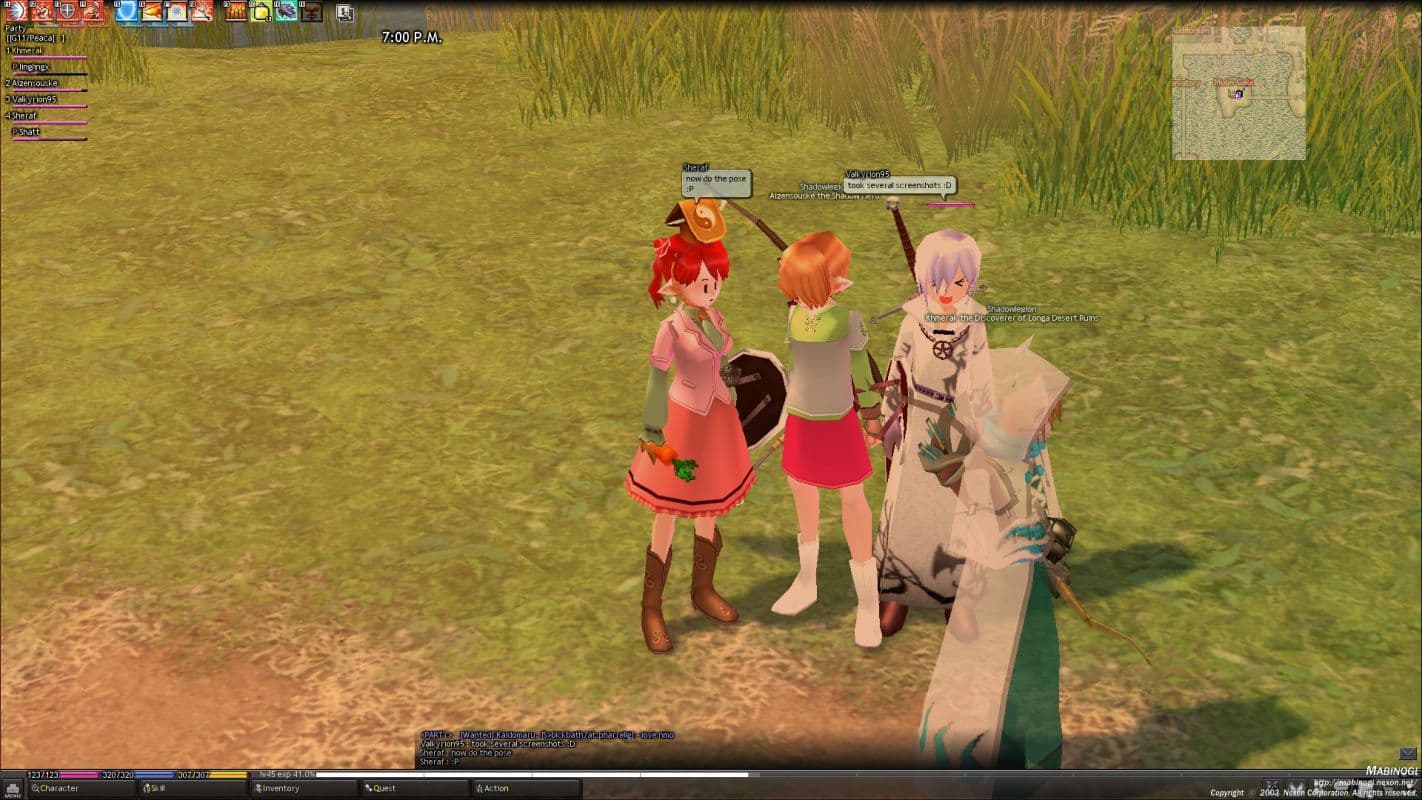
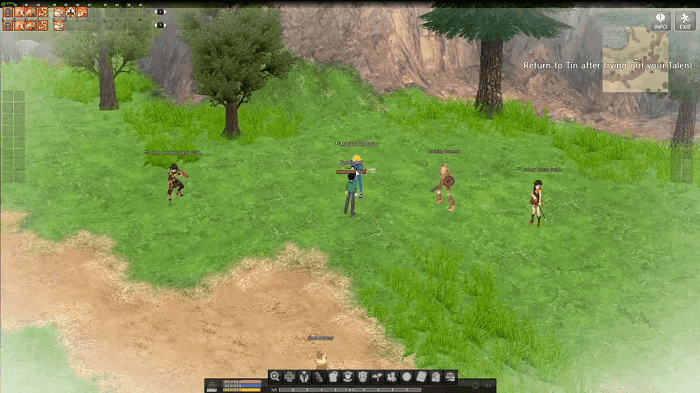
When Korean developer devCAT and publisher Nexon deployed Mabinogi back in 2004, the MMORPG market was riding the crest of rigid theme parks and Korean-style grind treadmills. Nearly every contemporary title followed the exact same blueprint: lock your character into an immutable archetype, chase exclamation marks across guard outposts, and butcher thousands of woodland predators for incremental stat bumps. Against that sterile backdrop, Mabinogi's central motto — "Your Fantasy Life" — sounded audacious. Yet the developers delivered precisely that: not merely an arena for monster slaying, but a tangible, breathing virtual world governed by unique physiological rules, authentic Celtic folklore, and daily domestic rituals that make spending hundreds of hours in mundane tasks genuinely captivating.
The narrative engine hinges on a profound metaphysical contrast. The realm of Erinn is populated by the mortal native race — the Tuatha Dé Danann. They grow frail, succumb to pestilence, dread the subterranean Fomorians, and live out humble lifespans as blacksmiths, weavers, and farmers. Players, by contrast, cross the threshold as Milletians — "Star-children", immortal souls capable of resurrecting from fatal wounds and endlessly cycling their physical incarnations through the Rebirth mechanism. To the native townsfolk, your avatar is an enigmatic paradox: an indispensable protector, a divine omen, and a mildly terrifying anomaly immune to permanent death.
Yet the authentic brilliance of Mabinogi shines through the granular texture of its everyday simulation — systems that modern big-budget titles have long abandoned in favor of sanitized convenience:
- Biological Ageing System: your avatar physically ages every real-world Saturday at noon. Stepping off the tutorial boat as a diminutive ten-year-old child, several months of continuous play transform you into a fully grown youth. Age actively steers progression mathematics: levels gained at age 10–12 confer massive bonuses to Intelligence and Luck, whereas mature brackets at age 16–18 heavily favor raw Strength and Health pools.
- Dynamic Body Composition: forget static character-creation sliders. In Mabinogi, dietary habits visibly reshape your avatar over time. Ingesting heavy bread loaves, wheels of cheese, and roasted meats to keep your hunger gauge full steadily packs bulk onto your waistline and thighs. To trim down back to a lean silhouette, you must commit to a strict diet of wild forest berries and apples, or spend in-game afternoons chopping firewood at the local timber mill.
- Tactile Physical Gathering: securing wool requires approaching a grazing sheep with a pair of shearing clippers, steadily clipping fleece while praying the creature doesn't panic and sprint into the brush. Harvesting fresh eggs from the coops of Tir Chonaill demands barehanded stealth, with careless lunges resulting in a stinging peck to the forehead and a ruined egg.
Here lies the core philosophy of the game: while its rivals forced players into an endless sprint through identical dungeon corridors, Mabinogi invited you to gather around a crackling campfire on the cobblestones of Dunbarton, listen to a fellow adventurer pluck a polyphonic lute ballad, and simply exist within a vibrant virtual society. That warm sense of inhabiting an authentic second home is the reason its tight-knit community remains deeply loyal more than two decades later.
Infinite Reincarnation: Classless Progression, Rebirth, and Arcana
Traditional party-based MMOs inevitably box character development into a corner: commit to a warrior, and you are doomed to swing steel forever; fancy slinging lightning, and you must roll an alternate character and re-tread the exact same campaign from scratch. Mabinogi shattered that orthodoxy through an entirely classless architectural engine. There are no static archetypes here — every avatar begins as an empty canvas upon which you can simultaneously master two-handed greatswords, destructive pyromancy, longbow marksmanship, restorative healing, master blacksmithing, and complex musical composition.
The structural engine driving this boundless freedom is the Rebirth system. On a weekly timer (or on demand via reset elixirs), players can voluntarily roll their active level back to Level 1, choosing a fresh target age and an active Talent path. Crucially, all accumulated wealth remains untouched: your vault, gold, gear, mastered skill ranks, and banked talent currency — AP (Ability Points). Why willingly forfeit a hard-earned level 100 character? The answer lies in progression mathematics:
- Uninterrupted AP Generation: at high level brackets, the experience bar crawls at a glacial pace. Rebirthing to Level 1 grants immediate access to the ultra-fast experience curves of early levels, allowing an active player to surge through another hundred levels in an afternoon and bank hundreds of fresh Ability Points.
- Cumulative Level: this metric tracks the aggregate total of all levels earned across an avatar's entire lifespan spanning hundreds of reincarnations. In modern Erinn, the baseline entry ticket to relevant endgame content hovers at 20,000+ Cumulative Levels, with battle-hardened veterans effortlessly pushing past 40,000 and 50,000.
- Granular Skill Ladders: every single ability trains independently — progressing from Novice through lettered ranks F–A, numbered tiers 9–1, and onward to master prestige brackets Dan 1–3. Every conquered rank permanently bakes stat points into your avatar's core DNA (Strength, Dexterity, Intelligence, Stamina, or Will), benefiting your character even when your hands wield completely unrelated gear.
Yet unbridled freedom eventually triggered an identity crisis: once long-time players capped every single one of the game's 300+ skills, high-level combat deteriorated into an undifferentiated clash of identical jacks-of-all-trades. To inject tactical asymmetry back into the endgame, developers introduced the Arcana framework — apex specializations that fuse two distinct disciplines into overwhelming combat arsenals:
- Elemental Knight: a crushing synthesis of heavy melee bladecraft and elemental evocation. Imbues greatswords and battleaxes with ice, fire, and lightning, transforming short-range cleaves into devastating long-range energy waves.
- Harmonic Saint: an organic union of bardic acoustics and divine Holy Arts healing. Converts the avatar into an indispensable raid backbone boasting massive persistent regeneration fields and protective holy wards.
- Dark Diviner: a menacing fusion of abyssal sorcery and battle scythe mastery. Shreds enemy damage resistances, stacks brutal vulnerability debuffs, and detonates packed mobs with concentrated necrotic bursts.
- Alchemic Sharpshooter: a lethal hybrid of long-range archery and elemental combat alchemy. Loads specialized alchemical cylinders directly into arrow shafts to unleash catastrophic multi-target elemental detonations.
The friction point? The staggering resource ceiling. Pushing an Arcana specialization to its cap of Level 50 demands thousands of banked AP alongside piles of rare essences harvested from punishing high-tier sanctums. For fresh adventurers, this numeric barrier would prove insurmountable were it not for the modern Blaanid's Memoir questline. This comprehensive onboarding overhaul injects massive experience bursts into newcomers, rocketing fresh accounts directly to the 20,000 Cumulative Level threshold within a couple of focused evenings.
Combat Rock-and-Roll: From the Tactical Triangle to Fluid Combos
The combat mechanics of early Mabinogi departed wildly from contemporary genre standards. While traditional MMORPGs relied on passive auto-attack exchanges punctuated by cooldown-gated key rotations, devCAT engineered an intricate tactical duel governed by fighting-game psychology. At the core of every skirmish sat an unyielding rock-paper-scissors counter dynamic — the Combat Triangle — where any impulsive attempt to brainlessly click-spam an adversary sent your avatar straight to the graveyard.
In this tense mechanical ballet, every foundational technique held a strict hard counter:
- Normal Attack: a rapid sequence of clean strikes. It interrupts spell preparation and punishes sprinting foes, but bounces helplessly off a primed shield.
- Defense: an anchored guard stance that absorbs basic swings, negates incoming damage, and briefly staggers the assailant into a recovery window. However, locking into a defensive posture roots the player and leaves them completely helpless against heavy kinetic strikes.
- Smash: an aggressive lunging strike designed to shatter an active Defense stance into splinters, launching the defender across the room into a hard knockdown. The vulnerability lies in its prolonged startup animation, which is instantly punished by a patient counter-stance.
- Counterattack: a reactive waiting stance that weaponizes an opponent's momentum. If a foe charges in with an active Smash or attempts a standard attack string, the counter completely absorbs the kinetic force and drives the aggressor into the dirt for double damage.
- Windmill: the crowned centerpiece of Mabinogi's combat legacy. A 360-degree sweeping kick that scatters surrounding mobs, providing brief invulnerability frames and completely bypassing defensive guards. Yet this power demands a brutal blood tithe: every single rotation of Windmill permanently burns up to 10% of your current health pool, converting it directly into severe wounds.
Locking horns with a standard woodland bear or goblin dungeon prowler was an exercise in pure read-based psychology. Players had to dissect micro-animations, audio cues, and the tiny preparation bubbles floating over an enemy's head to deduce their loaded skill in a fraction of a second, firing off the appropriate counter-measure before the animation connected.
This hardcore tension was magnified by two unforgiving physiological damage systems:
- Wounds (Injury) Mechanic: crushing blows from elite monsters do not merely deplete health points; they inflict lacerations. In the interface, this manifests as an indelible black bar eating into the maximum capacity of your health pool. Standard red health elixirs (HP Potions) can only replenish the clear portion of the gauge — they are completely inert against wounds. To restore the blacked-out health segment, you must bind your flesh with manual bandaging via the First Aid skill or sit down to rest at an active campfire.
- Deadly Status: when an overwhelming boss strike deals enough mathematical damage to kill your avatar outright, the game offers a razor-thin lifeline. The character dips into a negative health state (such as -45% HP), with a flashing Deadly banner appearing above their head. In this perilous state, you remain on your feet, but literally any microscopic scrape — from an environmental bee sting to a falling pinecone — results in instantaneous death.
Over the years, the combat tempo underwent a profound kinetic evolution. To match modern raid expectations, developers pruned sluggish animation locks and integrated high-octane disciplines: the twin-pistol gunplay of Dual Guns, the smoke-screen agility of Ninja, and the versatile area-clearing whip-blade of Chain Blade, powered by the soul-reaping Dorcha resource gauge. While modern Mabinogi plays at a significantly faster, combo-driven tempo, its foundational respect for positioning, read-based counters, and animation timing remains firmly rooted in its 2004 heritage.
The Holy Grail of Erinn: MML Music, Campfires, and the Cult of Fashionogi
Ask any decade-long veteran of Mabinogi why they still log in, and you will rarely hear praise for parse numbers or high-tier raid mechanics. The enduring soul of the game thrives in its peerless social sandbox and artisanal life skills, crowned by a musical composition engine that remains the most authentic bardic realization in multiplayer history.
Rather than confining players to canned audio presets, the game embeds a fully functional MIDI-style tracker powered by MML (Music Macro Language):
- Score Scroll Composition: players purchase blank musical scrolls — Score Scrolls — and manually code their own MML strings, setting tempo flags, octave shifts, volume envelopes, and note lengths. The engine natively supports three polyphonic tracks (a lead melody paired with two distinct harmony channels), allowing the community to recreate everything from Irish folk jigs and anime themes to intricate Bach fugues directly within the game world.
- Instrumental Diversity: the acoustic library spans dozens of period instruments, ranging from portable lutes, pan flutes, and mandolins to concert harps, cellos, upright pianos, and thunderous field drums. At novice ranks of the Playing Instrument skill, your character comically botches fingerings, misses beats, and shrieks flat notes; investing in master ranks, however, unlocks flawless, crystal-clear acoustic fidelity.
- Street Ensembles (Jam Sessions): using party synchronization commands, groups of players can assemble impromptu orchestras directly on the flagstones of Dunbarton. At the bandleader's signal, every musician strikes up their respective track in perfect sync, converting the bustling marketplace into an open-air concert hall.
The second pillar of community life is the ubiquitous Campfire. Tossing a bundle of timber onto the ground and striking a spark establishes an instant sanctuary anywhere across the wilderness. A campfire here is not decorative backdrop dressing — it is a vital communal apparatus:
- Laceration Recovery: resting beside active flames drastically accelerates stamina and mana recovery, while steadily mending those persistent black Wounds that standard apothecary potions cannot heal.
- The Ritual of Shared Food: an adventurer trained in the culinary arts (Cooking) can place a steaming pot of stew or roasted game directly on the ground. Any weary traveler sitting by the hearth can partake in the meal, bathing the entire gathering in long-lasting combat and utility buffs.
- Enchant Burning: active flames serve as the sacrificial altar for extracting magic. By consigning enchanted weapons and armor to the fire alongside vials of Holy Water of Lymilark, players attempt to safely extract rare enchant scrolls from doomed equipment, generating mana herbs and bonus experience in the process.
Finally, no honest discussion of Mabinogi's endgame can overlook the cultural phenomenon known as Fashionogi. Across the community, a cardinal rule reigns supreme: armor stats are temporary, but a flawless silhouette is eternal. The in-game economy has historically been anchored by Dye Ampoules. Using an ampoule launches a twitch-reaction mini-game featuring five wandering reticles hovering over a dense spectrum of RGB pixels. Players must time their click to a fraction of a second, attempting to land on specific color coordinates. The unrelenting market hunt for pure optical white (#FFFFFF) or absolute abyssal black (#000000) fuels an auction house economy where a single pristine dye can easily fetch higher prices than a masterwork combat blade.
To showcase their domestic identity, every player receives a personal Homestead — a private pocket dimension. Here, players construct estates, cultivate herbal pharmacology plots, erect functional blacksmithing anvils and tailoring looms, and arrange collectible figures that grant permanent passive stat boosts across their entire account.
Pets as Lifelines: Battle Companions and Mobile Warehouses
In the vast majority of modern MMOs, vanity pets function as little more than decorative digital tails vacuuming up stray gold coins at your heels. In Mabinogi, the companion ecosystem was elevated into an indispensable survival mechanic without which tackling high-tier dungeons is virtually impossible. A pet here operates as a fully autonomous combat entity complete with its own level progression, custom equipment slots, health and mana bars, unique talent trees, and, most crucially of all, its own independent inventory grid.
The tactical value of Erinn's menagerie unfolds across several interwoven layers:
- On-Summon Crowd Control: whistling for an apex companion is treated not as a passive spawn, but as an instant-cast combat ability. Summoning a skeletal Bone Dragon triggers an immediate radial roar that petrifies surrounding mobs and shreds their physical armor; calling forth an airy Nimbus puts enraged foes to sleep while pumping regenerative healing through the party; while an adorable Corgi radiates a sustained aura that strips away both physical and magical defenses from raid bosses. High-level players dedicate an entire action bar to pet rotations, cycling through 5 to 7 summons in rapid sequence to maintain perpetual crowd control.
- Mounted Combat and Aerial Navigation: companions provide essential transit across the sprawling canyons of the Iria continent. Furthermore, select mounts permit mounted combat, enabling players to cast charged magic bolts on the gallop and carry party members across dangerous terrain.
- Fynn Sync Harmonization: modern pet progression incorporates sacrificial soul fusion. By feeding redundant or duplicate pets to your primary companion, you permanently unlock additional passive trait slots, elemental barrier shields, and the ability for your pet to land critical strikes that scale alongside your own damage output.
Yet behind this immense mechanical utility lies Mabinogi's most infamous historical pain point — the brutal reality of inventory starvation. The game organizes storage using an unforgiving Diablo-style spatial grid: a two-handed claymore consumes 2x4 slots, heavy plate cuirasses take up 2x3, while potions, herbs, and leather scraps swallow up dozens of individual squares. An adventurer's default starter backpack fills to bursting within ten minutes of exploratory dungeon crawling.
For over a decade, cash-shop pets served as the primary monetization lever for basic quality of life. Every premium pet purchased from the store shipped with its own spacious storage compartment ranging from 6x8 to 8x10 tiles. Crucially, a pet's inventory remains safely stored on the server even when the animal is dismissed. Consequently, long-time players assembled veritable stables containing dozens of pets, labeling their virtual summon lists like storage lockers: "Ore Depot," "Silk & Fabrics," or "Enchant Archive."
Fortunately, recent updates have significantly dismantled this predatory dynamic. The modernized Blaanid's Memoir campaign and the in-game Dungeon Guide now reward newcomers with several massive, top-tier companions — including an armored Pegasus, a battle dragon, and a flying broomstick — entirely free of charge. Combined with modern Doll Bags that automatically vacuum up dropped currency and crafting mats, the pressure to swipe a credit card simply to manage basic dungeon loot has been successfully mitigated.
The Silk Road and Market Warfare: Commerce and the Player Economy
The economic blueprints of most contemporary MMOs are sterile to the point of tedium: you extract raw gold from instanced boss encounters and dump it onto an automated market board governed by antiseptic price algorithms. In Mabinogi, the economy is a volatile, high-stakes organism where master crafters and traveling merchants wield just as much geopolitical influence over a server as veteran raid leaders. The crowning glory of this mercantile infrastructure is the caravan transport simulation known as Commerce.
The logistics of the caravan trade are modeled on authentic geographic price arbitrage:
- Regional Market Discrepancies: every settlement specializes in distinct commodities. The mining colony of Bangor extracts heavy coal deposits and marble slabs; the lakeside cultural hub of Emain Macha produces vintage wines and gourmet cheeses; while the bustling port of Belvast exports fine overseas silks. A merchant's objective is straightforward yet precarious: acquire a freight consignment at a local trading post using an independent merchant currency — Ducats — and transport the cargo across hostile wilderness to a distant town suffering an acute regional deficit.
- Freight Transport Evolution: a rookie peddler begins their journey on foot, hauling a modest canvas backpack and moving at a painfully slow crawl. By reinvesting earned Ducats and advancing their Commerce Mastery rank, players upgrade to a two-wheeled pushcart, step up to a swift horse-drawn wagon (Wagon) for high-speed express runs, and ultimately purchase a towering cargo elephant (Pack Elephant) capable of hauling tons of heavy stone ballast. Traversing the vast deserts and snowy tundras of Iria brings hardy camels and dog sled teams into play.
- Highway Bandit Ambushes: transporting wealth along Erinn's trade arteries is fraught with peril. Camouflaged outlaw bands — ranging from scuttling goblins and imps to hulking veteran ogres — lie in wait along major thoroughfares. The instant a caravan crosses an invisible tripwire, a magical combat barrier seals the perimeter, and thieves begin systematically ransacking your cargo crates. If you fail to eliminate the raiding party within the strict countdown timer or fall in battle, the outlaws escape with a major cut of your goods, turning a lucrative run into a catastrophic net loss.
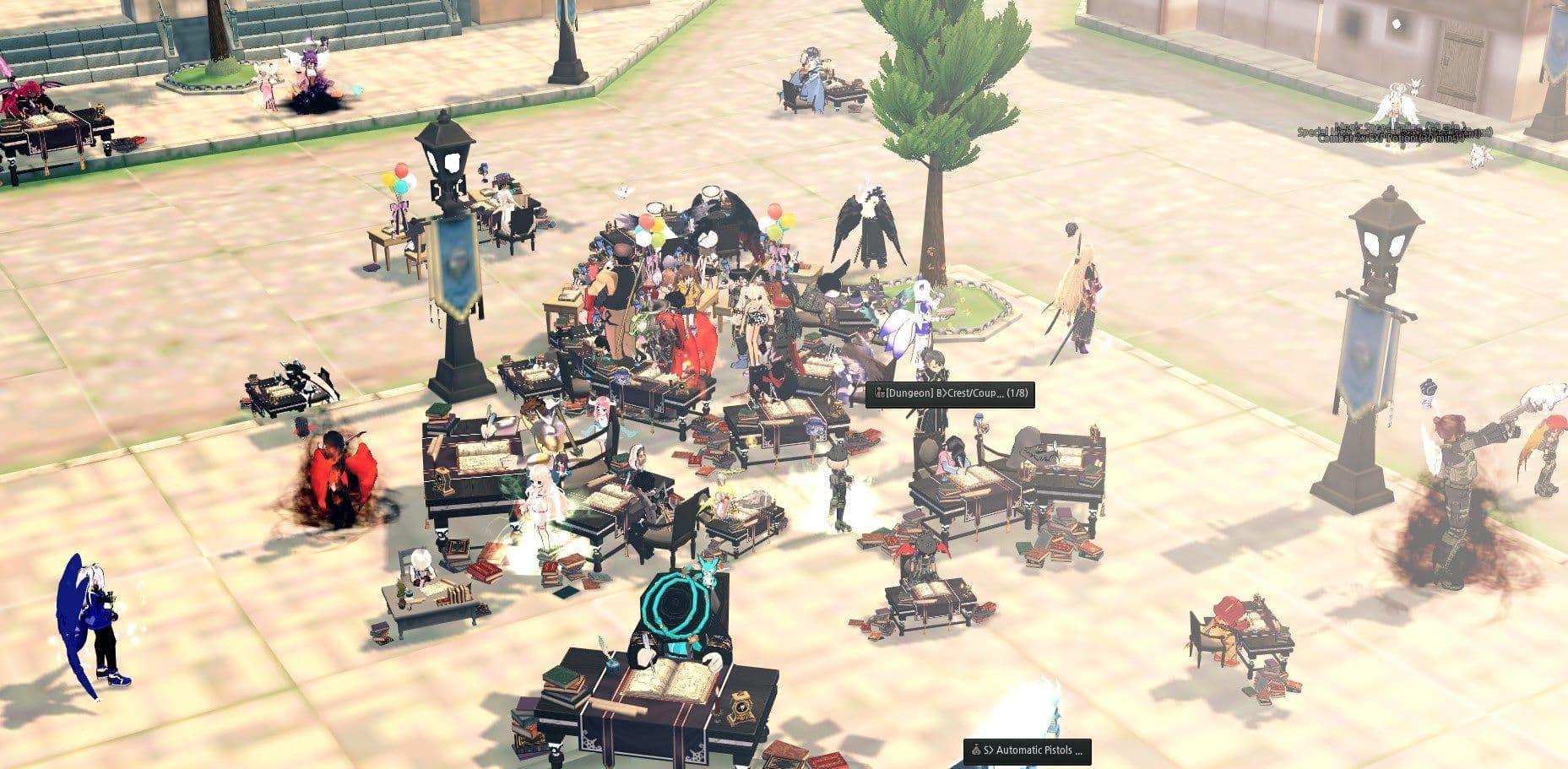
Beyond the highway thrills of the caravan trails, Mabinogi fosters a fiercely competitive domestic market. Historically, the central cobblestone square of Dunbarton served as the bustling open-air Wall Street of the game. Prior to the rollout of a unified auction interface, hundreds of players pitched personalized merchant kiosks and vendor tents across the plaza, transforming the city into a vibrant bazaar dense with competitive shouting, price negotiations, and manual trade agreements.
While the modern client utilizes a streamlined centralized auction house (Auction House), the foundational supply chain remains stubbornly tethered to manual player labor:
- Holy Water of Lymilark: the undisputed lifeblood of the server's commodity market. It cannot be looted from world bosses; it is earned exclusively from church clergy by completing daily agricultural chores — weeding potato patches, hauling well water, and shearing parish sheep — through the Part-Time Jobs system. Because holy water protects equipped gear from enduring severe durability loss upon player death, server-wide demand never wanes.
- Artisanal Supply Chains: masterwork ingots, premium weaves, specialized tailoring patterns, and potent combat elixirs are crafted solely by high-ranking artisans, fostering powerful guild syndicates that command lucrative monopolies over end-game raid provisions.
The sheer mechanical depth of market fluctuations, coupled with constant risk assessment on the roads, elevates Commerce into an intoxicating full-time game within a game. An astute merchant can build an empire worth millions in gold and Ducats without ever setting foot inside an instanced combat raid.
Sacrificial Dungeons, High-End Raids, and the Celtic Mythos
The narrative architecture and dungeon formats of Mabinogi diverge radically from standard hallway instances. Rather than recycling the stale trope of chosen saviors battling nameless demons, the writing team crafted a sweeping Celtic epic structured across grand narrative epochs known as Generations, currently spanning over 25 distinct chapters.
The saga opens with the celebrated G1–G3 trilogy, thrusting the Milletian into the tragedy of the war goddess Morrighan and her eternal blood feud with the sovereign of the subterranean Fomorians, the god Cichol. Rather than existing as detached dialogue text, the plot fundamentally transforms your avatar's mechanical identity:
- The Divergence of Light and Shadow (Transformations): completing narrative milestones bestows dramatic shapeshifting capabilities. Overcoming the trials of G2 grants the mantle of the radiant Paladin, providing massive stat surges and complete immunity to kinetic hit-stun. However, venturing into G3 allows players to forsake the divine covenant and embrace the path of the Dark Knight — a brooding warrior whose stat multipliers are determined upon every transformation by an unpredictable, chaotic roll of invisible dice (ranging from negligible buffs to apocalyptic surges of raw power). Elves and Giants receive their own totemic spirit avatars in the form of Falcon and Beast.
- The Theatrical Chronicles of Avon: in chapters G13–G16, the campaign takes a delightfully bizarre turn, whisking the player into the extradimensional amphitheater of Avon. Here, adventurers actively reenact Shakespearean tragedies — stepping onto the stage boards of Hamlet, Romeo and Juliet, and Macbeth to duel metaphysical manifestations of human hubris.
Equally inspired is the mechanical design of the classic mainland dungeons of Uladh (Alby, Ciar, Rabbie, Peaca):
- The Altar of Sacrifices: access is not managed through sterile matchmaking menus, but through an ancient physical ritual. Standing before the goddess altar in the entrance hall, a player drops literally any item from their backpack onto the stone slab — an apple, a scrap of cloth, a wooden branch, or a single gold piece. The sacrificed item functions as a procedural world seed: the engine generates a distinct, isolated labyrinth keyed uniquely to that specific offering. If two separate parties drop identical items onto the altar, they enter the very same dungeon instance.
- Tiered Dungeon Passes: offering dedicated pass tokens determines fixed parameters — ranging from Basic and Intermediate to grueling Advanced and Veteran tiers — dictating room densities, puzzle keys, and legendary encounters such as the elusive Succubus lurking in the depths of Rabbie.
For players operating at the bleeding edge of the progression curve, Mabinogi offers a punishing suite of modern raid encounters:
- Shadow Missions: tactical incursions staged within the mirrored, twilight-shrouded versions of the capital cities of Tara and Taillteann, featuring objective-driven warfare from alchemical perimeter defense to fortified citadel breaches.
- Tech Duinn: tightly tuned high-velocity gauntlets (Feth Fiada, Seven Nightmares) demanding razor-sharp rotation execution and coordinated crowd suppression.
- Crom Bhas: a gothic subterranean descent driven by a volatile Corruption gauge (scaling from 0% to 100%). Pushing corruption to maximum levels mutates the trickster boss Irusan and the towering fallen deity Glas Ghaibhleann into nightmarish juggernauts, but unlocks drops of the coveted materials required to forge the apex weapon class of the game — the Nightbringer series.
- Glenn Bearna: an unforgiving two-party raid split across an impenetrable frost barrier. The raid party is severed into two synchronized teams occupying mirrored realms of Day and Night. Unable to see one another, the two squads must coordinate boss-stagger mechanics in real time, tossing sacred elemental embers back and forth across the dimensional veil to keep each other from freezing to death.
This seamless spectrum — bridging the cozy nostalgia of dropping apples onto a stone altar with the high-stakes coordination of modern dual-phase raiding — underscores the extraordinary range of Mabinogi's design palette.
The Monetization Snare: Reforging Roulette and Erg Enhancement
It would be disingenuous to evaluate an elder Korean MMORPG published by Nexon without scrutinizing its predatory monetization traps. While the early and middle chapters of Mabinogi cultivate an idyllic, pastoral sandbox fantasy, crossing into the endgame progression loop slams the player headfirst into an uncompromising wall of upgrade systems historically engineered to extract real-world capital.
The primary point of community friction for over a decade centered around the notorious gear-modifying mechanism known as Reforge:
- The Bonus-Line Lottery: applying a Reforging Tool to a piece of gear unlocks up to three randomized modifier lines. These are not modest "+5 to Strength" increments, but game-altering capability multipliers: boosting Smash damage by Level 20 (+200%), radically widening AoE blast radiuses, slashing spellcasting prep times, or extending maximum archery engagement range.
- The Tier Ladder Trap: reforges span three distinct tiers (Rank 3 ➔ Rank 2 ➔ Rank 1). Ascending to the coveted Rank 1 ceiling and subsequently rolling the exact desired Level 20 modifiers historically required burning through hundreds of cash-shop tools, easily vaporizing thousands of real-world dollars on a single piece of equipment.
- The Truck Protests and Reform: player outrage culminated in South Korea when players hired media trucks equipped with LED billboards to circle Nexon's corporate headquarters, demanding full transparency regarding hidden gacha odds. Confronted by immense public scrutiny, Nexon enacted sweeping structural reforms: publishing full mathematical probability tables, introducing an in-game pity gauge to guarantee rank advancement, and allowing players to craft premium reforging tools using in-game dungeon tokens and gold.
The second merciless time-and-resource furnace is the weapon-awakening track known as Erg Enhancement:
- Game-Breaking Utility: pushing a weapon's Erg level from 0 to the absolute cap of 50 infuses it with traits that fundamentally rewrite class balance. For instance, an Erg 50 set of combat knuckles completely eliminates martial-arts skill cooldowns, transforming the avatar into an uninterrupted flurry of continuous combo loops. Similarly, an Erg 50 whip-blade ensures near-instantaneous regeneration of the Chain Blade soul gauge.
- The Cap-Break Bottleneck: progression halts every five levels (at milestones 35, 40, 45, and 50). Breaking these ceilings requires feeding the altar mountains of high-tier crafted equipment, rare raid drops, and specialized catalytic reagents. Because baseline success rates at the 45–50 tier dip into fractional percentages, players routinely endure brutal streaks of 200 to 500 consecutive failed attempts, incinerating months of accumulated wealth in a single session.
Compound this with high-stakes Piercing Level rolls and the ever-present danger of permanently stripping maximum item durability during advanced Enchanting failures, and you behold a virtually bottomless endgame gear treadmill.
Yet it is vital to emphasize a crucial counter-weight: Mabinogi does not force every casual adventurer through this meat grinder. The complimentary equipment distributed by the fairy Blaanid, coupled with foundational ranks in your chosen Arcana, allows players to comfortably conquer 90% of the game's total content — from Generation storylines and Shadow Missions to Uladh dungeons and caravan trade — without spending a single dime. The punishing paywall of Reforging and Erg optimization becomes mandatory only when you deliberately aspire to join the server's top 1% elite pushing the maximum difficulty tiers of Crom Bhas and Glenn Bearna.
Ancient Foundations, Project Eternity, and the 2026 Verdict
Assessing the technical infrastructure of Mabinogi in 2026 requires an honest acknowledgment of its antiquity. The live client still operates on the proprietary Pleione engine, engineered at the dawn of the millennium. This legacy architecture drags along a familiar catalog of early-2000s technical quirks: animations tied to server tick-rates, occasional positional desynchronization when enemies execute lunging maneuvers, memory leaks during marathon gaming sessions, and an archaic click-to-move navigation scheme that demands genuine patience from modern players accustomed to fluid WASD controls.
Yet Nexon and devCAT have no intention of letting this unique world fade into obscurity. Recognizing that Mabinogi's specific design formula has zero direct market competitors, the studio greenlit a monumental architectural overhaul — the Mabinogi Eternity project:
- Complete Unreal Engine 5 Migration: this is not a disconnected sequel, but a seamless, full-scale port of two decades of accumulated content, player avatars, companion registries, and storyline progression into Epic Games' modern engine.
- Preserving the Stylistic Identity: rather than chasing generic photorealism, developers are meticulously preserving Erinn's iconic cel-shaded anime aesthetic. The engine swap introduces Lumen dynamic global illumination, realistic textile physics, volumetric water shaders, fluid skeletal animations, and native ultrawide display support. Recent technical demonstrations of Tir Chonaill and the stone alleyways of Dunbarton look like a high-budget animated feature film brought to life, completely liberated from the jagged polygon counts of 2004.
For international and regional players, geopolitical constraints present an additional hurdle. Following Nexon's infrastructure restructuring in June 2024, direct connections from select regions (including Russia and Belarus) are blocked at the IP level, requiring reliable VPN routing or gaming proxies to access both the official launcher and the Steam client. Furthermore, with all legacy servers consolidated into the single unified North American megaserver Erinn, transatlantic players face average latency ranges of 110 to 160 ms, necessitating muscle-memory adjustments during precision-timed raid mechanics.
Is diving into Mabinogi worth the effort today?
- Who will fall in love with it: purists yearning for an authentic virtual society and an unhurried social sandbox; digital bards and musicians who want to code polyphonic arrangements through MML; devotees of Celtic mythology and classic anime aesthetics; and theorycrafters who relish the boundless freedom of an unconstrained, classless progression engine.
- Who should look elsewhere: players who cannot stomach vintage visuals and early-2000s netcode; dedicated competitive PvP enthusiasts; those easily paralyzed by twenty years of accumulated legacy feature bloat; and anyone unwilling to configure network workarounds for regional IP barriers.
Mabinogi endures as a towering monument from the golden age of MMO design — a rare era when creators were unafraid to build worlds that were demanding, domestic, eccentric, and thoroughly alive. With the transformative promise of the Mabinogi Eternity Unreal Engine 5 engine port on the horizon, this legendary fantasy life stands poised to capture an entirely new generation of adventurers.
 F2P · Live