 F2P · Live
Lineage 2 Essence
Lineage 2 Essence is NCSoft's free-to-play take on the classic Korean MMORPG Lineage II, built around faster…
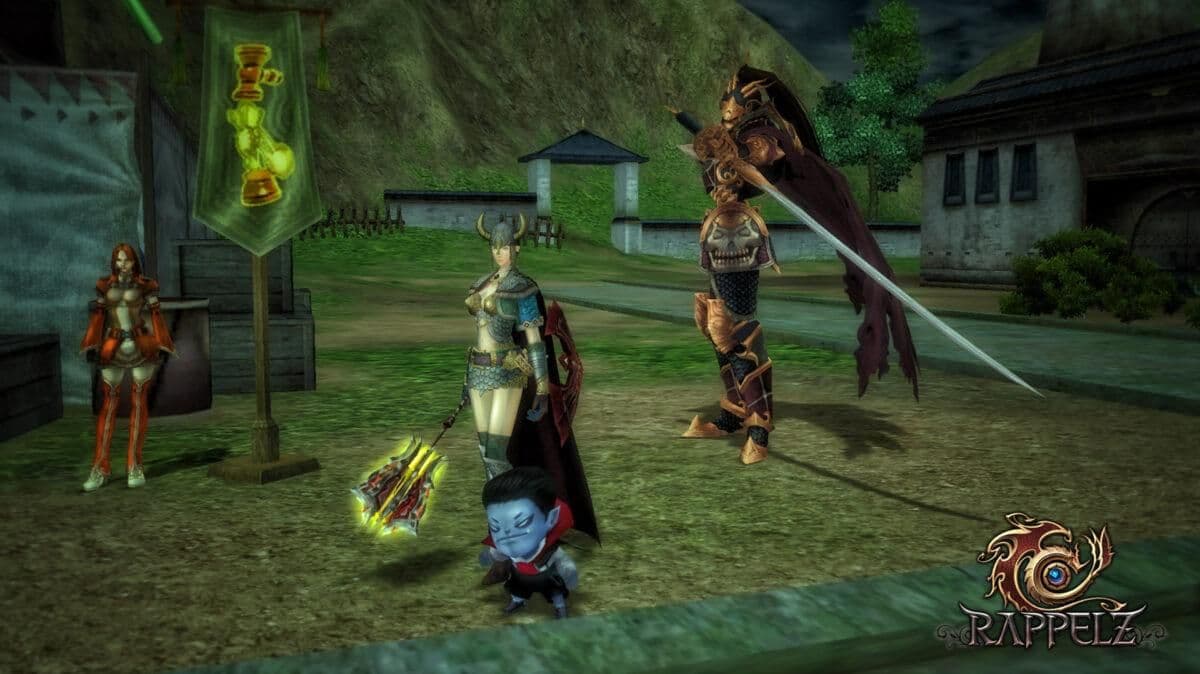
Rappelz is a free-to-play dark fantasy MMORPG built around one of the most detailed creature-taming systems ever put in the genre — capture almost any monster in the world, evolve it through five stag...
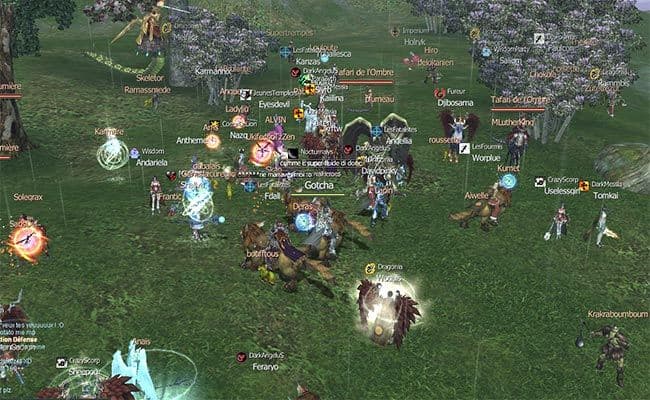
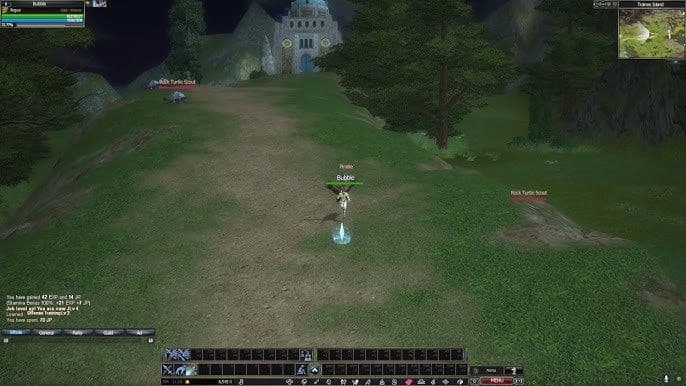
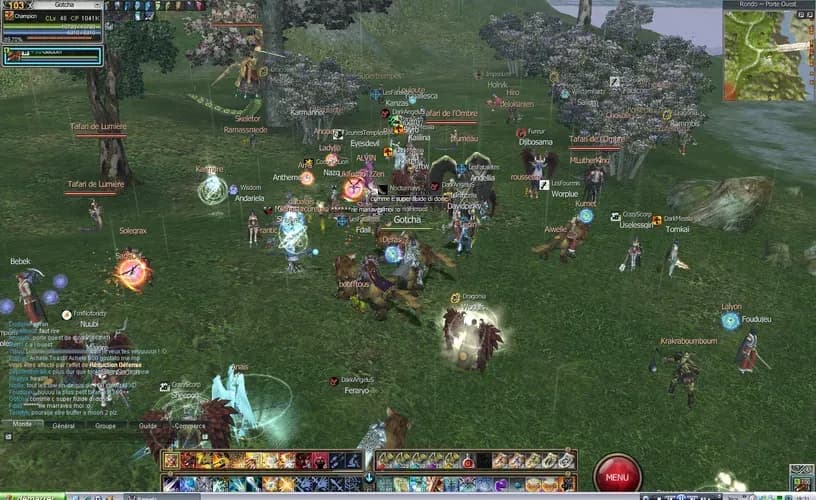
Rappelz is a South Korean free-to-play MMORPG developed by Gala Lab, then trading as nFlavor, and launched in November 2006 around a taming system that turns almost any monster in the world into a permanent combat companion. Two decades later it is still patched and still online, but it now runs as several parallel operations under different publishers, each with its own client, price list and population. Anyone weighing it up in 2026 has to settle the question of where to play before the question of whether to.
Quick take: Rappelz still has the deepest creature-collection system any MMORPG has shipped, and it is welded to a 2006 grind that expects you to treat leveling as a scheduling problem. The version you pick decides the experience more than the class you pick does — official servers, the Russian-language Steam build and the unofficial scene run wildly different economies on the same art. Start only if slow, party-dependent progression sounds like a feature.
There are three distinct places to log in, and they are not interchangeable. Gala Lab publishes the game itself through its Play2Bit portal in English, German and French, with maintenance notices still going out through mid-2026. A second build sits on Steam under publisher GameXP, released on 1 July 2022, and its store page states outright that English is not supported — interface, audio and subtitles are Russian only. The third route is the unofficial server scene, which has kept its own versions of Rappelz running for close to a decade.
The Steam build is the only one whose numbers anyone can check, and they are small. Public trackers put concurrent players in the single digits to low teens on a typical day, with an all-time peak around thirty, and Steam reviews sit at Mixed — 93 positive out of 163. Those figures describe one Russian-language server run by one operator, not the game everywhere. Gala Lab has never published concurrency data for its own servers, and unofficial operators report their own totals with no external audit, so every population claim about Rappelz in either direction is an estimate.
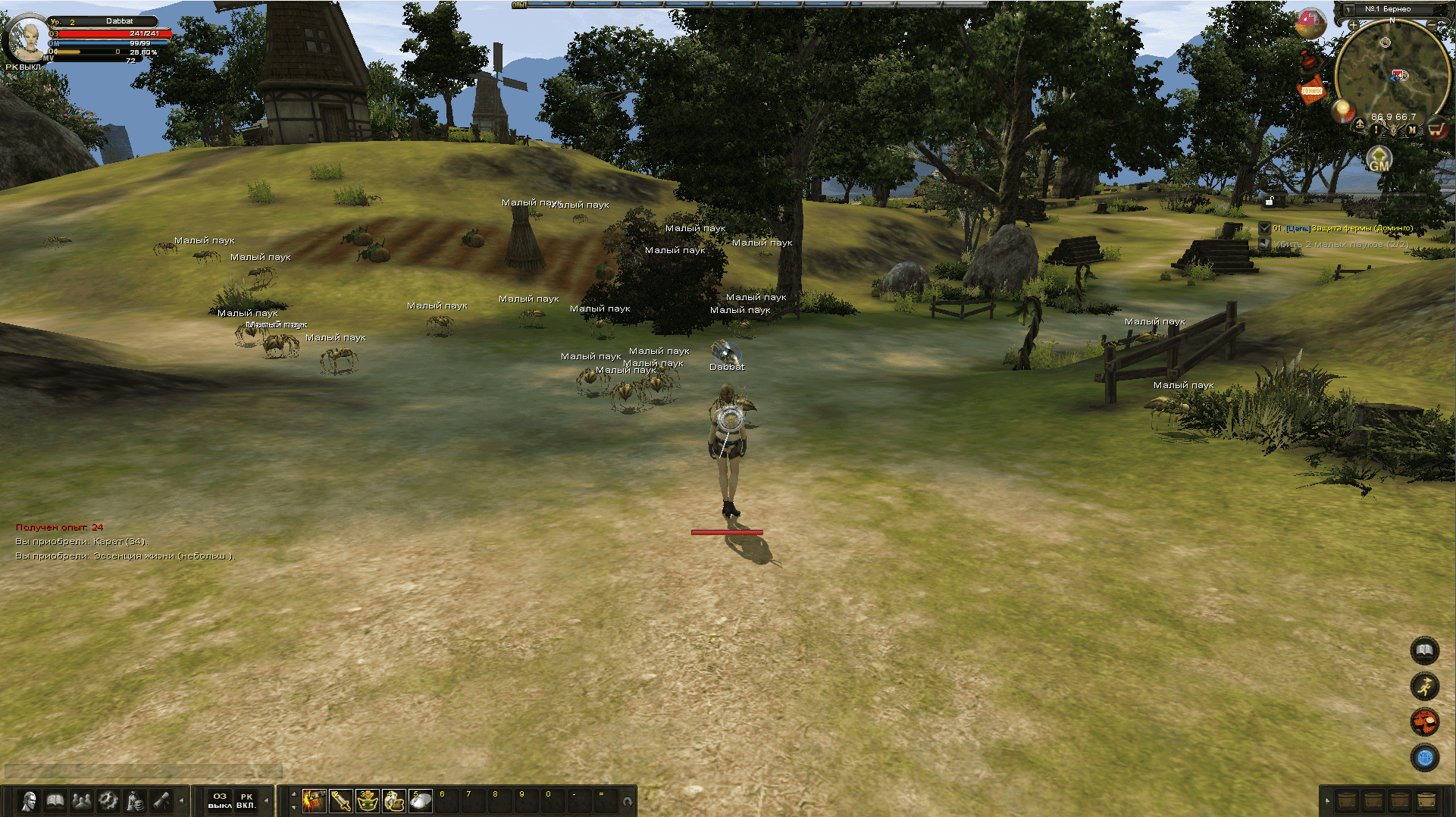
Rappelz spends its opening hour teaching two things — how to click a monster, and how to keep one. Character creation offers three races: the Deva of light, who lean toward tanking and healing; the Asura of darkness, built around evasion and raw damage; and the Gaia, the human race sitting between the two. Each starts you in one basic job — Guide, Stepper or Rogue — with a handful of shared skills and one race-flavoured extra. Combat is tab-target with a right-mouse camera, and it moves at the pace you would expect from a client that still ships against DirectX 9.0c.
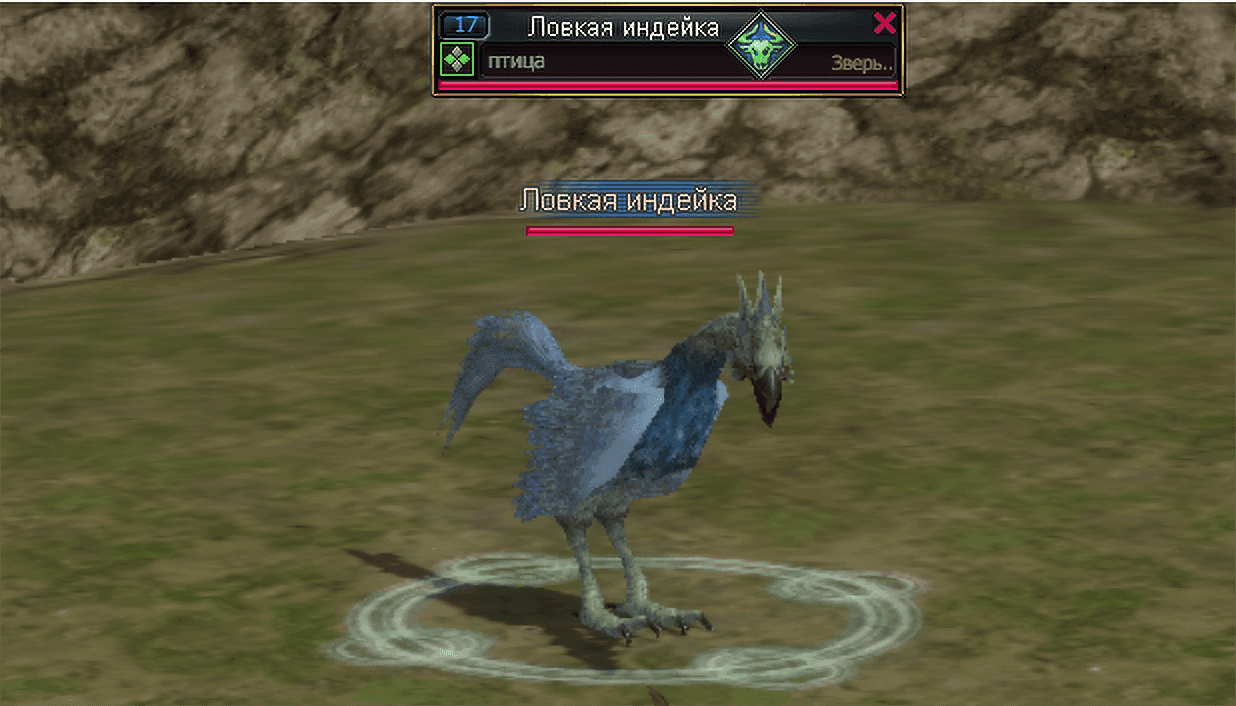
Taming is where the tutorial stops feeling like every other 2006 MMO. You need an empty creature card in your inventory, a target of the matching type at full health, and enough patience to survive a long cast while other monsters take an interest. Cast Creature Taming, then kill the mob normally; the chat window tells you whether the soul went into the card. A failed attempt destroys the card, which is the moment most new players understand what kind of game they have installed. A consumable called the T-Protect Mirror exists specifically to save the card on failure, and it is not free.
Two rules shape everything that follows. A newly tamed creature always starts at level 1, no matter whether you tamed a level 6 mob or a level 12 one, so hunting a bigger target for a better pet is wasted effort. And pets only earn experience while they are below their owner's level — park a level 52 creature on a level 50 character and it simply stops growing until you catch up. The pet is a second character sheet, and it advances on your schedule rather than its own.
By the twentieth hour Rappelz has revealed its real progression system, which is a spreadsheet wearing a fantasy costume. The first job change lands at level 10 with job level 10, the second at 50, and the master class at around 150 — fifteen master classes across the three races, and the choice is permanent. Templar tanks, Void Mage clears packs, Corruptor stacks damage over time; the roles are conventional, and the game is honest about that.
What is not conventional is how hard the game pushes grouping. Community leveling guides put the experience bonus for a full eight-player party at up to 280%, which turns party formation from a social nicety into the single largest multiplier available to a low-level character. Solo play works and plenty of players do it, especially with a well-staged pet covering the tank or healer slot, but it costs hours that a group would not spend. On a server with a thin population, that maths is the difference between a hobby and a second job.
Rupees are the in-game currency, earned from mobs, quests and the quest-broker NPCs who hand out repeatable work. The official line on the other route is unusually clear: buying rupees from third-party sellers is a bannable Terms of Service violation, and the only sanctioned way to convert real money into in-game wealth is to buy cash-shop items and sell them to players. That single sentence explains most of the Rappelz economy. Cash-shop stock is the reserve currency, and player prices track whatever the shop is promoting that month.
Late Rappelz is a pet-refinement game with an MMO attached. Creatures advance through a five-stage evolution chain from S0 to S5, and each step upward consumes a Soul Catalyst plus two additional creatures of the same stage — the sacrificial arithmetic doubles at every rung. Higher stages hand out new active skills and passives, and a fully staged endgame pet contributes on the order of a second party member. The Soul Taming system introduced back in Epic 8.2 widened the pool further, letting almost any monster be captured with an attack type of tank, healer or damage dealer and a partly randomised skill set, which means two identical-looking Giant Frogs can roll out very differently.
Endgame content has kept moving, slowly. Epic 9.9 "Twilight Underworld" arrived in January 2024 with a dungeon gated at level 220 and an armour set upgraded through crystal combining. Epic 9.10, "King of Alcatraz", followed on the Steam build in March 2025, adding a quest chain that requires level 228 and rank 8 accessories from a new boss. That is a level ceiling in the 230s and a gear tier that assumes years of accumulated play, which is roughly where a twenty-year-old MMO ends up when it keeps adding numbers rather than rebuilding systems.
Guilds in Rappelz fight over dungeons rather than castles, and they collect rent afterwards. Winning a Dungeon Siege makes your guild the landlord of an instanced zone, entitled to set a tax between 1% and 10% on rupee and lak drops that everyone else earns inside it, claimable from the Dungeon Master NPC by the guild leader only. Access runs in two stages: a Raid Time Attack window from Monday to Thursday, where the fastest qualifying guild earns the right to challenge, then the siege itself, fought over a Dungeon Core with the roles flipping mid-match so both sides attack and defend in turn.
The constraints are what make it politics rather than a scheduled event. A guild may hold only one dungeon at a time, cannot enter Time Attack while it owns one, and cannot disband or edit its alliance until it gives the dungeon up — after which nothing guild-related happens for seven days. Party caps scale with the prize, from eight players for Moonlight up to thirty-two for Palmir Plateau. Owning a dungeon commits a guild to defending it and freezes its ability to reorganise, which is a sharper design than most territory systems that shipped a decade later.
Open-world PvP is more casual than that suggests. Duels can be started anywhere, Death Match islands open up at level 50, and arena play pays Arena Points that buy their own armour and cards. Kill anyone you like outside town, with a karma system as the only meaningful brake.
Yes, by the ordinary meaning of the term, and it has been for most of its life. Enhancement protection items, taming protection, experience and drop boosts, and the sanctioned pipeline from cash-shop purchase to player-sold rupees all sit on the paid side of the line, and progression in Rappelz is dominated by enhancement outcomes and pet staging — precisely the two systems that respond to consumables. Long-running community complaints on MMO forums describe a cash shop that expanded steadily from the late 2000s onward, and older players who levelled without spending are consistent that the economy shifted underneath them.
The Steam build makes the ceiling legible in a way the official portal does not. Four purchasable bundles are listed against the game, priced from $29.99 to $129.99, with $229.96 to buy all four. Steam also flags the product as containing chance-based in-game purchases. None of that is unusual for a Korean free-to-play MMO of this generation; it is simply visible here in a way it usually is not.
What softens the picture is time. Nothing in the cash shop is locked away from a patient free player forever, because everything sellable is tradeable, and rupees are farmable. The question is how many hundreds of hours the patient route costs against the paid one, and on official servers the honest answer is a lot.
Rappelz has outlived the attention of everyone responsible for it, and that is the honest summary of its 2026 condition. The taming system is a genuine achievement — hundreds of capturable creatures, a staging chain deep enough to sustain years of play, and a pet that functions as a second character rather than a decorative follower. Nothing released since has attempted it at that scale, which is why the game keeps drawing people back long after its graphics stopped being an argument.
The problem is that the game and the service have come apart. A design this dependent on grouping needs population, and population is exactly what the official servers cannot demonstrate. A design this dependent on enhancement needs a restrained shop, and the shop has been the loudest complaint in the community for fifteen years. The English-language official servers are the only version most Western players can use, and they are also the version with the least visible evidence of health.
For anyone curious about what pet-collection design looked like before gacha rewrote the category, Rappelz is worth a weekend on whichever server has people in it. For anyone looking for a primary MMO to invest a year in, the risk sits with the operator rather than with the game.
Yes. Every version of Rappelz is free to download and play, funded by an in-game cash shop. The Steam build additionally sells four optional bundles priced between $29.99 and $129.99.
The game is still running and still receiving maintenance, but its playerbase is fragmented across official servers, the Steam release and unofficial servers. Only the Steam build reports public numbers, and those are in the single digits to low tens of concurrent players.
Community catalogues list more than 200 tameable creatures, spanning six rarity categories, with rarer creatures carrying a lower chance of a successful tame. Almost every monster in the world became capturable after the Soul Taming system arrived in Epic 8.2.
Yes, in four forms: duels anywhere in the world, Death Match islands unlocked at level 50, team arenas that pay Arena Points, and guild-versus-guild Dungeon Sieges for territory and tax income.
Only if slow progression appeals and you can join a server with an active party scene. New players entering a thin server face a levelling curve designed around an eight-player group bonus they will not be able to form.