 F2P · Live
Lineage 2 Essence
Lineage 2 Essence is NCSoft's free-to-play take on the classic Korean MMORPG Lineage II, built around faster…
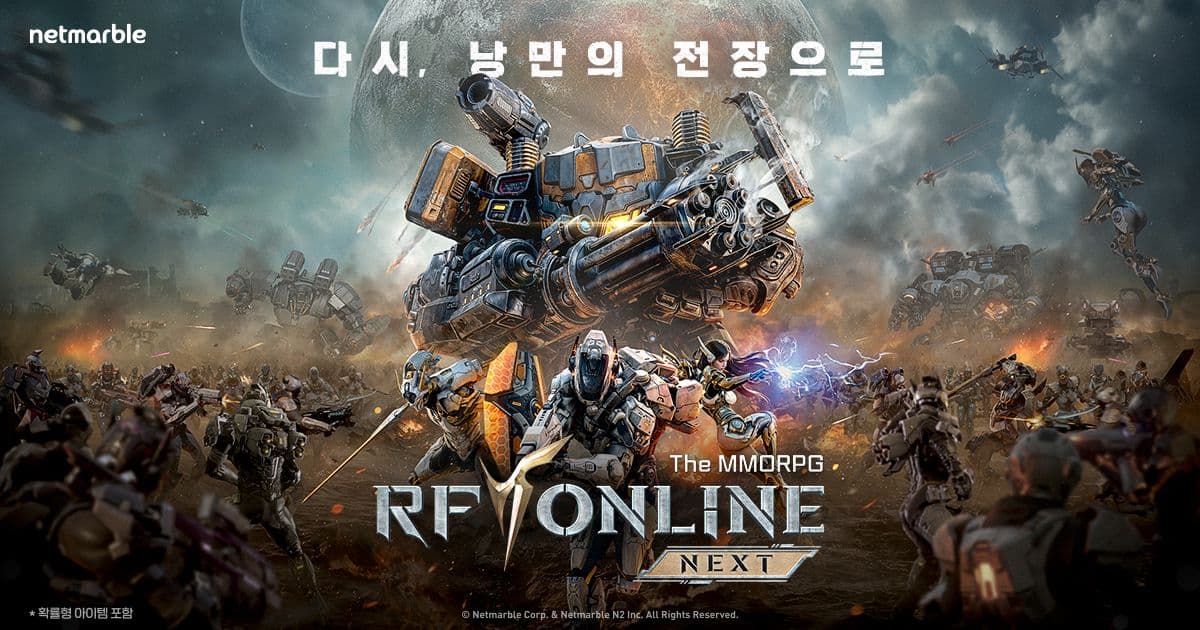
RF Online Next is Netmarble's sci-fi sequel to the cult-classic RF Online, rebuilding its three-faction war around a flexible, classless Biosuit system and massive Mining War battles for control of a ...
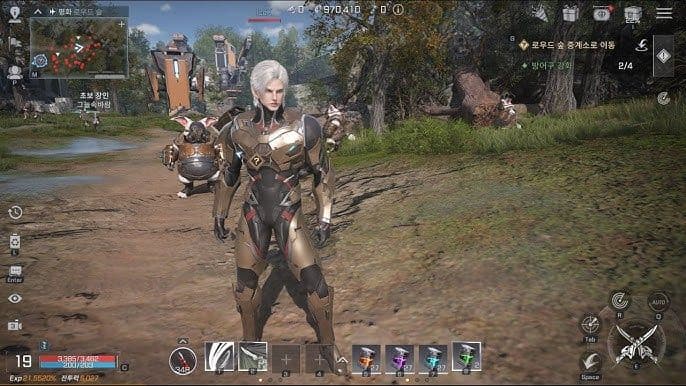
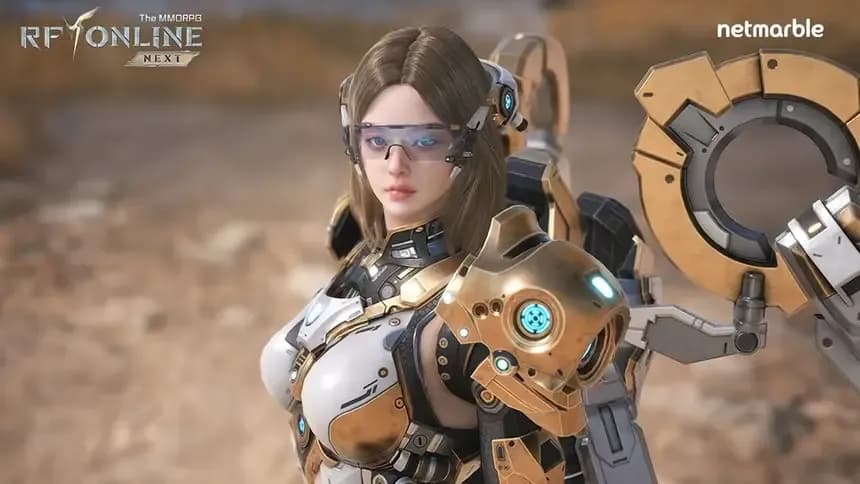
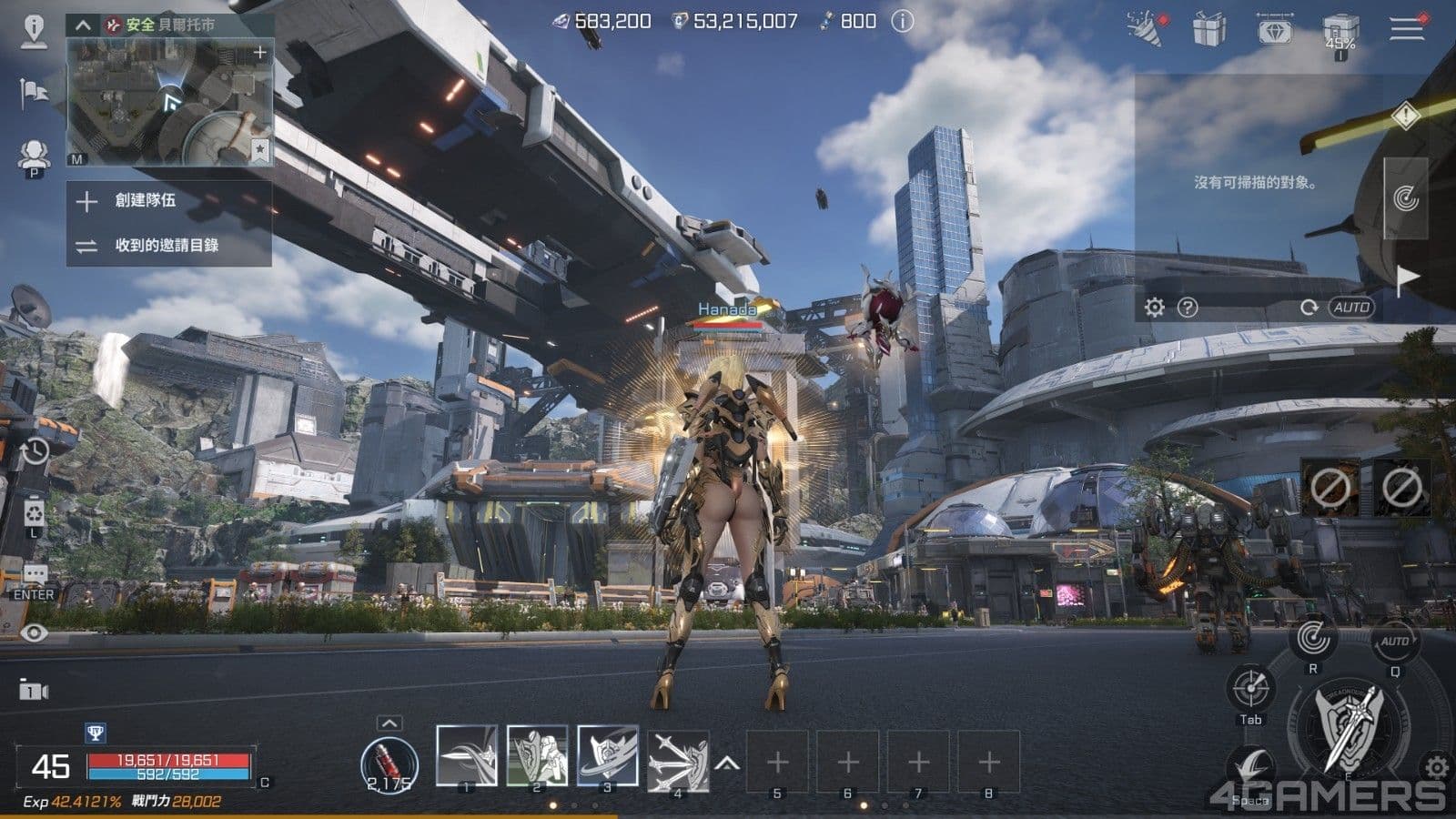
RF Online Next is Netmarble's sci-fi sequel to the 2004 MMORPG RF Online, built on Unreal Engine 5 and launched worldwide on June 16, 2026, following earlier regional rollouts in South Korea, Japan, and Taiwan. It keeps the original's three-faction war over a shared mining resource but replaces the old race-locked class system with a single, classless Biosuit mechanic that lets any character swap combat roles mid-fight. A few weeks into global service, it's a live, heavily marketed game whose biggest battles are still ahead of it — and whose harshest reviews are already in.
Quick take: RF Online Next delivers on the promise of massive faction warfare and a genuinely flexible class system, but heavy automation and gacha-driven progression make it a hard sell for anyone who wants to actively play an MMORPG rather than supervise one. Worth a look if three-faction RvR and mech combat are the draw; a pass if you came for a hands-on grind.
Every new character starts as a Scion, a human-origin survivor in a universe where machines have replaced flesh and blood — not a Bellato pilot, a Cora summoner, or an Accretia unit. That racial identity gets earned later, not chosen at creation, and it's a deliberate break from the 2004 original, where your race was the first decision the game asked of you. The opening hour plays it straight: a handful of guided story missions establish the post-war setting, hand over your first Biosuit, and walk you through the basics of aiming, dodging, and calling in support fire.
The tutorial doesn't linger. Movement feels weightless in a way ground-based MMOs rarely manage, mostly because it isn't ground-based for long — every Biosuit has flight built in, and the game wants new players airborne within the first twenty minutes. That's a genuine hook: swooping over a battlefield instead of walking across one changes how a starting zone feels, even before there's anything meaningful to fight for yet.
The setting itself does some quiet heavy lifting. The war that ended the original RF Online's era left the planet Novus scarred and resource-poor, which is the in-fiction justification for a mining-driven three-faction conflict rather than just a gameplay excuse bolted onto the lore afterward. Unreal Engine 5 gives the early zones real visual range — burned industrial wreckage gives way to Cora's overgrown ruins a few zones later — and the jump in fidelity over the 2004 original is the one thing almost nobody, critic or fan, disputes.
Somewhere around the mid-levels, a Scion pledges to one of three factions — the Bellato Union, the Holy Alliance of Cora, or the Accretian Empire — and that choice locks in for the life of the character, short of seasonal transfer items down the road. It's the single permanent decision the game asks of a player, and it's worth making deliberately: Bellato leans on deployable MAU mechs and frontline support, Cora on force-magic zoning and its Animus summons, Accretia on stationary artillery and raw firepower scaling. None is mechanically stronger by design — the studio's stated goal was parity, not a strongest-nation meta.
Veterans of the original are the ones most likely to bristle here. The 2004 game's racial split wasn't cosmetic — Accretia's ranged artillery, Bellato's mechanized units, and Cora's mystical summons were tied to permanent race choices that shaped a character from level one. Folding all three into a shared Biosuit roster and a mid-game pledge is a real design trade-off, not a lateral move: it buys balance and flexibility, and it costs some of the identity that made faction warfare feel personal in the first game.
By the time a character has a couple of Biosuits leveled, the combat system starts to show what it's actually built around. Sources disagree on the exact roster size — figures of seven and eight both show up across official-adjacent guides — but the mechanic underneath is consistent: gear, skill levels, and progression carry across every Biosuit a player owns, so switching roles mid-fight costs nothing but a button press. A frontline anchor can drop into an artillery stance to clear a choke point, then swap back before the enemy line closes the gap.
Sitting above the Biosuits are the Sacred Weapons — MAU mechs, stationary Launcher turrets, and Cora's Animus summons — deployable heavy cooldowns that reshape a fight rather than just adding damage. Dropping an Animus mid-battle can wall off a chokepoint or stall an enemy push entirely; a well-timed MAU deployment during a territorial push does something similar for offense. These aren't decorative ultimates. In faction-scale fights that Netmarble has advertised at up to 450 players a side, they're closer to siege equipment than character abilities.
Faction identity still shapes how a guild fights even with a shared Biosuit pool. Accretia guilds tend to lean on backline artillery suits and stationary Launcher play; Bellato favors frontline suits built to escort a deployed MAU through a contested push; Cora leans on zoning suits that clear space for its Animus to do sustained, semi-autonomous damage. None of that is enforced by the game — a Bellato player is free to run an artillery build — but the tools each faction gets encourage a particular shape of fight, which keeps 450-player battles from turning into an undifferentiated mob of identical suits.
Yes, in the sense that spending accelerates gear enhancement and Biosuit acquisition faster than grinding alone — but no, in the sense that nothing paid is exclusive. Free players reach the same gear tiers and the same Biosuit roster as spenders; money buys speed, not content a free account can never touch. That's a meaningfully different shape of pay-to-win than the loot-box exclusivity model some rival gacha MMOs run, and it's worth naming the distinction rather than flattening both into the same accusation.
The mechanism is straightforward: Biosuits and high-tier equipment upgrades run through a gacha system, and duplicate pulls fuse into upgrade fuel rather than sitting idle in an inventory — which at least gives a bad pull some use. Gear enhancement past a certain point, the community shorthand calls it the "+6 wall," is where the spending pressure actually bites, since failed enhancement attempts consume the same resources a F2P player has to grind for. It's not predatory in the sense of gating story content behind a paywall. It's a slower, more patient kind of pressure, and it's the kind Netmarble has leaned on before.
That history matters here. The original RF Online's western server folded in 2023 after a play-to-earn pivot that alienated its remaining playerbase — a cautionary example the current community brings up constantly when discussing whether the new monetization model deserves the benefit of the doubt. So far, RF Online Next hasn't repeated that specific mistake. Whether the gacha-and-enhancement model proves gentler in the long run is a question this early into live service, not a settled one.
Endgame in RF Online Next is a modernized version of the original's "Chip War," now called the Mining War: guild-scale skirmishes over Holy Mineral zones that feed each faction's upgrade economy directly. It's the system the rest of the game is quietly built around, from the faction pledge in the early levels to the gear-enhancement loop covered above. Controlling a mining zone isn't a bragging-rights trophy — it chokes the enemy faction's access to enhancement materials, which means territorial control translates into a real gear-tier advantage over time rather than a cosmetic banner on a map.
That resource link is also the game's best answer to the pay-to-win question above. A coordinated free-to-play guild that holds mining territory generates upgrade resources faster than a disorganized guild full of individual spenders — organization can outproduce money, at least at the guild level. Later seasons are meant to expand the format further, with inter-server wars over outer-planet resources pitting top guilds from different servers against each other, though that layer is still rolling out rather than fully live at the time of writing.
Crafting exists, but it plays a supporting role rather than a central one. Players gather raw materials from mining nodes and contested zones, feed them into crafted gear and consumables, and sell the results through a faction auction house — the same basic shape the 2004 original used, modernized rather than reinvented. Success rates on higher-tier crafts are deliberately inconsistent, which turns crafting into a secondary income stream for patient players rather than a reliable path to best-in-slot gear.
The premium currency, Diamonds, sits at the center of most of that economy — used for everything from gacha pulls to cosmetic appearance changes at a flat per-use cost. That's worth naming plainly: a system built around a premium currency for both power progression and cosmetics blurs a line other MMOs keep separate, and it's part of why the monetization critique below lands as hard as it does even for players who've made peace with gacha mechanics elsewhere.
This is where the honeymoon ends for a lot of players, and it's the review's most important caveat. Past the tutorial and into the mid-game grind, quest pickup, travel, basic combat, and even routine world-boss encounters lean heavily on auto-play systems that a player can largely just watch run. Community feedback since launch has been blunt about it: long stretches of the leveling experience feel less like playing an MMORPG and more like supervising one, tapping in occasionally to approve a decision the game would have made anyway.
That's a real tension with the combat depth described above. The Biosuit-swapping and Sacred Weapon deployment genuinely reward active play in faction-scale PvP, where no auto-battler is making split-second calls for a player under fire. But the road to that PvP, the leveling, the daily dailies, the routine farming loop, is largely automated by design, which means the game's best systems only show up for players patient enough to sit through the parts that don't need them at all.
This isn't unique to RF Online Next — auto-questing and auto-combat have crept into most mobile-first MMOs over the past few years, and Netmarble's own back catalog leans on the same toolkit. What stands out here is the scale of it: even world-boss encounters, traditionally the moment a live-service MMO asks for a player's full attention, run mostly on autoplay unless a fight is contested. A reviewer who logs in expecting the tactical density of the Mining War to extend down into the leveling game will spend most of a session watching a progress bar fill rather than making decisions.
Guild membership isn't optional window dressing here — Mining War participation, coordinated territory holds, and the inter-server war format all run through guild structures, so a solo Scion is functionally locked out of the endgame that the marketing leans on hardest. Cross-play between PC and mobile keeps the population pool unified rather than split, which matters more for a guild-dependent endgame than it would for a solo-friendly sandbox.
A guild that actually organizes around mining-zone control has a real, measurable edge over one that doesn't, since resource control feeds gear enhancement directly rather than sitting off to the side as a vanity system. That gives guild leadership a heavier job than in most MMOs: scheduling contested zones, rotating defenders, and coordinating Sacred Weapon deployment during a push all matter more than raw member count. Casual guilds can still function, but they're competing for the same finite mining territory as guilds built specifically around holding it.
If large-scale RvR and a flexible class system are what you're chasing, RF Online Next earns a look — the faction battles and Sacred Weapon deployments are the game working as intended, and there's nothing quite like a 450-player Mining War fight on the current market. If what you want is an MMORPG you actively play from level one, look elsewhere for now, or go in with clear eyes about how much of the leveling road runs on autopilot before the game hands the controls back to you.
The fairest way to frame it: this is a good faction-war game wearing the shell of a full MMORPG it doesn't consistently need to be. Players who treat the leveling phase as a formality on the way to a guild and a mining zone will get the game Netmarble actually built. Players expecting hand-on-the-controller engagement at every level will spend a lot of that time watching, not playing — and that gap is worth knowing about before installing rather than after.
Is RF Online Next free to play?
Yes. Free accounts reach the full Biosuit roster and the same gear tiers as paying players, though gacha pulls and enhancement materials can be purchased to speed up progress.
Does RF Online Next have PvP?
Its core endgame is PvP: guild-based Mining War battles over resource territory, with faction fights advertised at up to 450 players per side.
Is RF Online Next worth playing in 2026?
For players specifically after three-faction RvR and mech combat, yes; for players who want an actively played leveling experience rather than a heavily automated one, it's a harder recommendation.
Is RF Online Next related to the original RF Online?
It's a direct sequel built on the same three-faction premise and mining-war endgame, though it replaces the original's race-locked classes with a shared, classless Biosuit system.
What platforms is RF Online Next available on?
PC (via the Netmarble Launcher or Epic Games Store) and mobile (Android and iOS), with full cross-play between them.