 F2P · Live
Lineage 2 Essence
Lineage 2 Essence is NCSoft's free-to-play take on the classic Korean MMORPG Lineage II, built around faster…
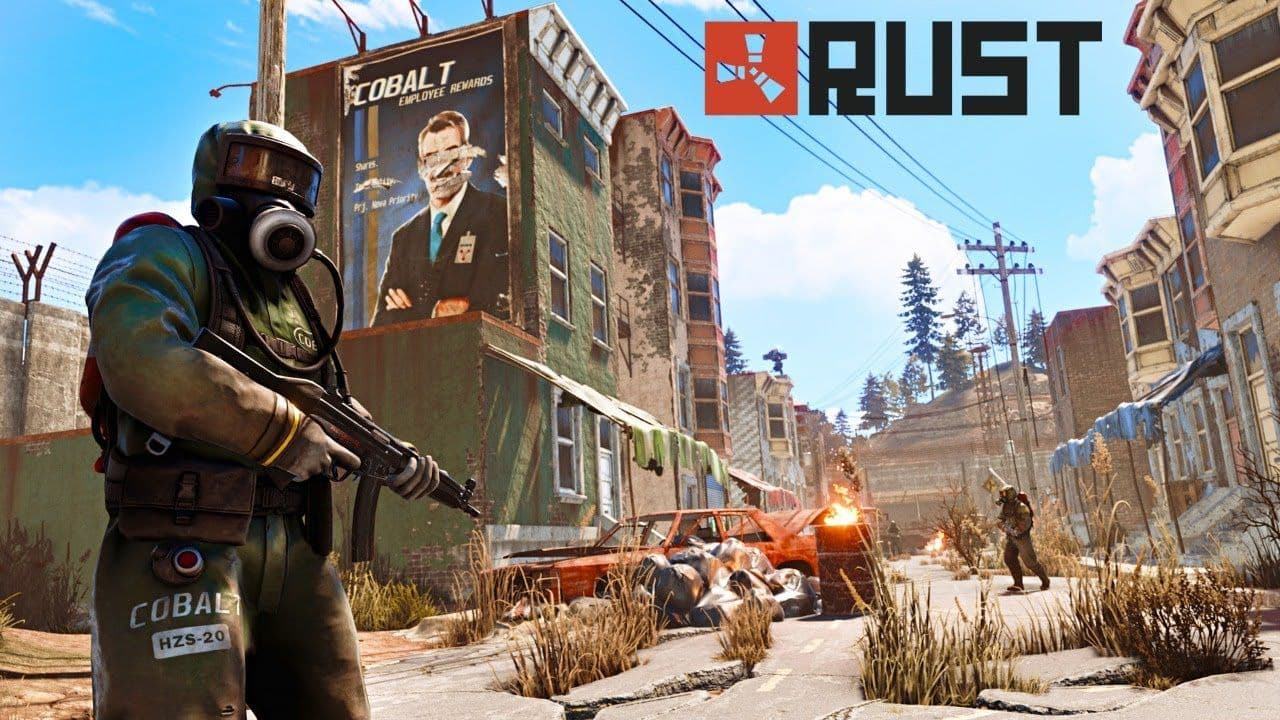
Rust starts every player with a rock and a torch, and from there, shelter, weapons, alliances, and betrayal all get built or stolen from other people. Facepunch Studios wipes servers and ships a named...
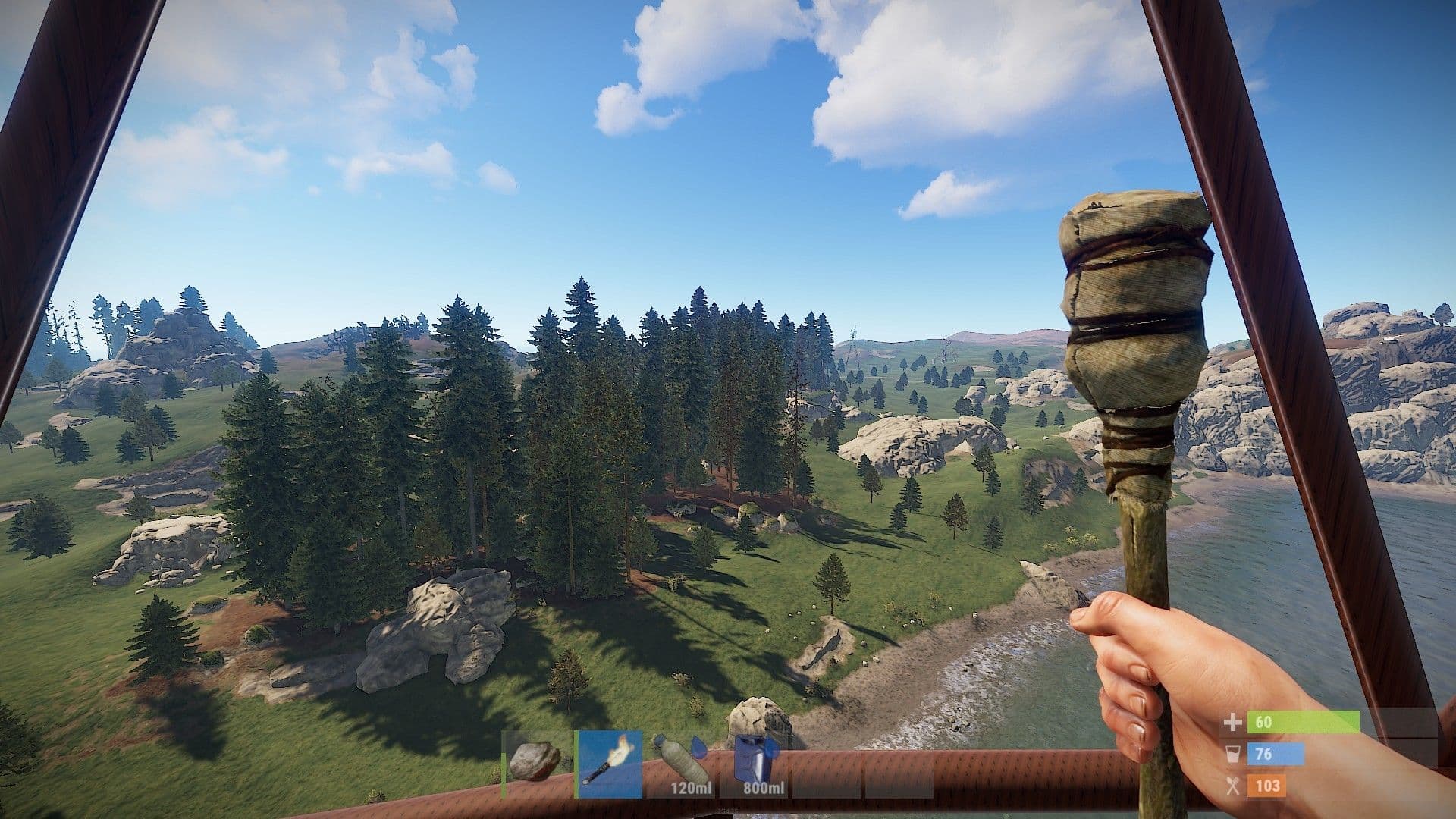
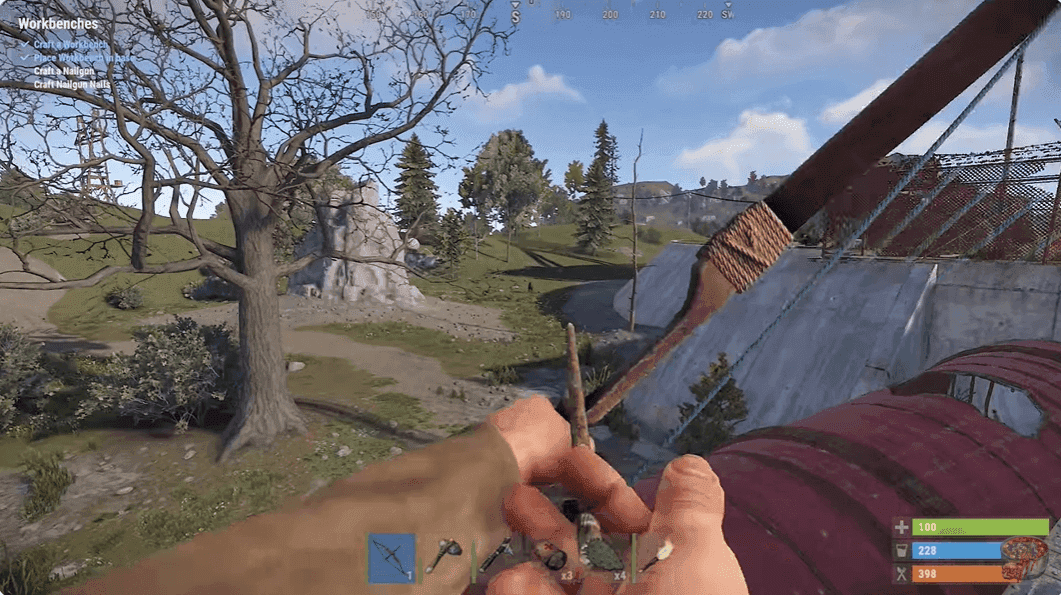
Rust is a multiplayer survival sandbox developed and published by British studio Facepunch Studios, released into Early Access in December 2013 and out the other side of it in February 2018. It drops any number of strangers onto a single procedurally generated island with nothing but a rock and a torch, and lets hunger, cold, wildlife, radiation, and — above all — everyone else on the server decide how the day goes. Thirteen years on, it's still routinely one of the ten most-played games on Steam, still gets a named content update on the first Thursday of nearly every month, and still forces a question that doesn't get any easier with age: is Rust worth playing in 2026, or has the servers-full-of-strangers formula finally run its course?
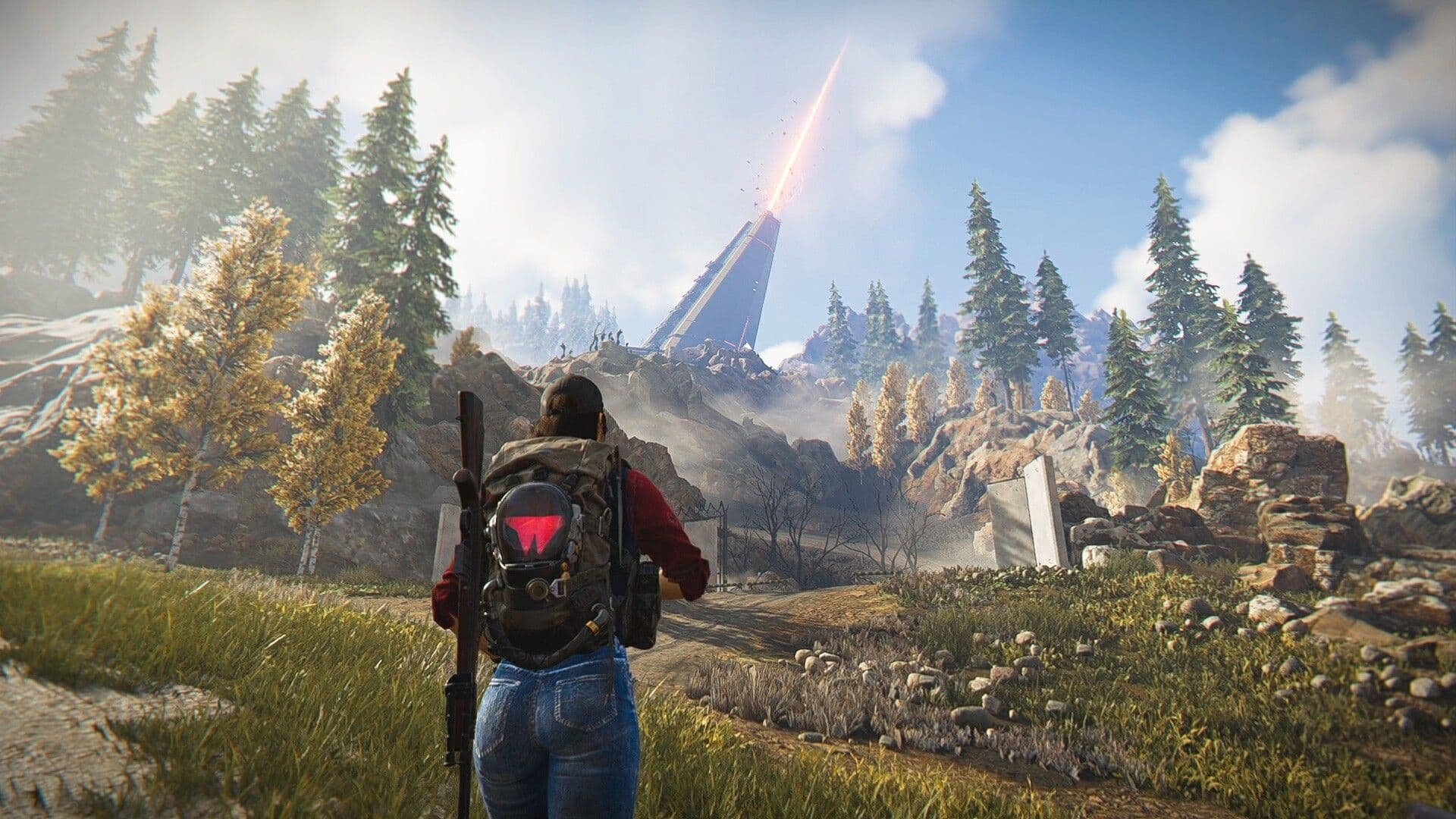
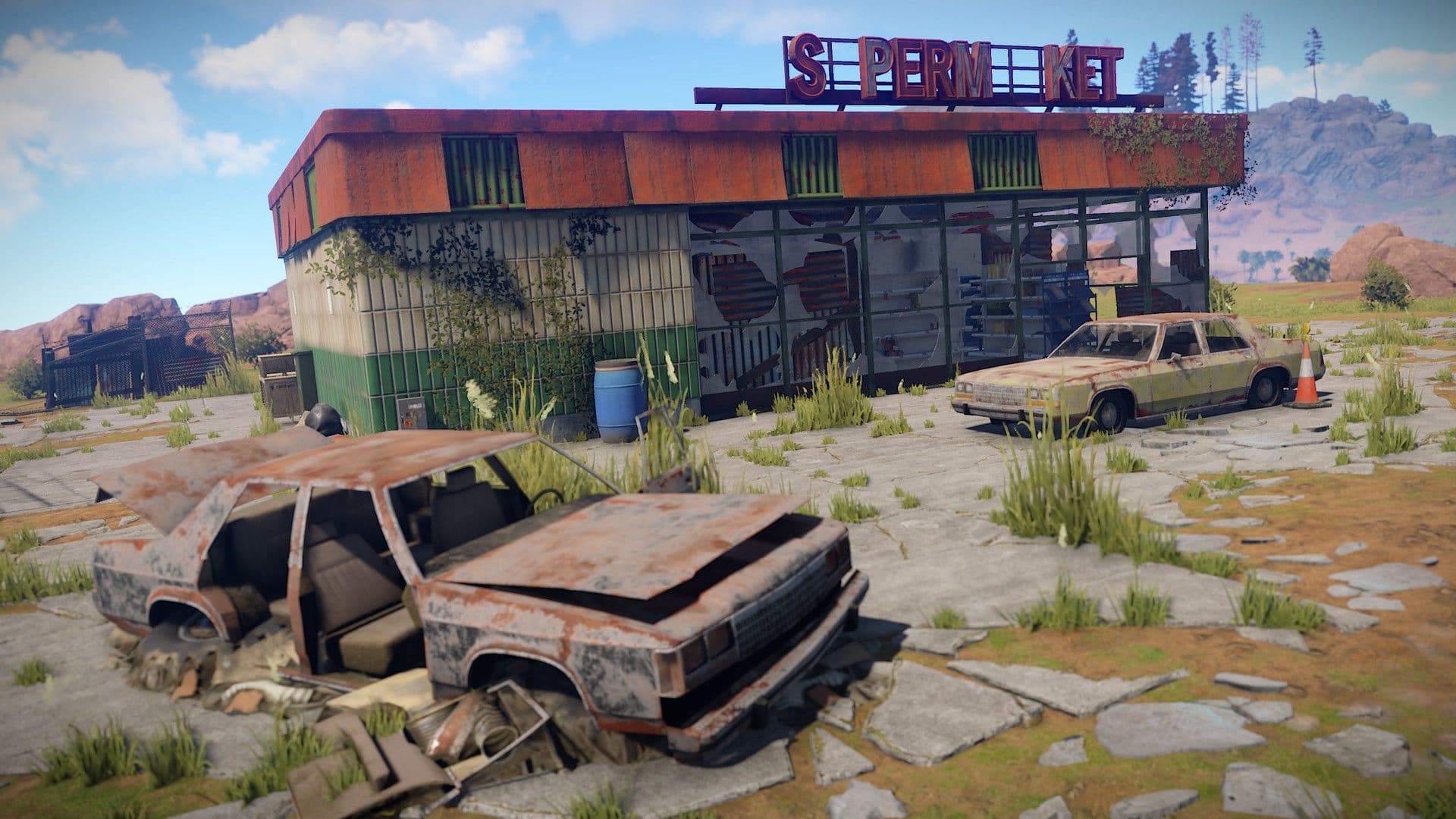
There's no lore to speak of, and Rust has never pretended otherwise. Every map is procedurally generated — or picked from a curated seed on official servers — and stitched together from recognizable biomes: temperate grassland, arid desert, snow-capped mountains, radioactive townsites left over from whatever civilization existed before the wipe. The tone is somewhere between post-apocalyptic scavenger fiction and a nature documentary that's given up trying to be polite about it. Wolves and bears roam the tree lines, abandoned monuments like the Launch Site and Military Tunnels sit radioactive and loot-rich in the distance, and the weather cycles through rain, fog, and blinding midday sun without a cutscene ever interrupting to explain why. The engine — a heavily modified build of Unity, ported from Unity 4 to Unity 5 during Rust's early years — isn't chasing photorealism, but the terrain streaming and lighting have been reworked enough times over the years that a fresh map in 2026 looks meaningfully better than the same biome did five updates ago.
Ask a brand-new player and a thousand-hour veteran what Rust actually is, and you'll get two different games described back to you. Both are true. Neither is complete on its own.
You spawn on a beach with nothing — no weapon, no shelter, no idea whether the person fifty meters away is friendly or about to cave your skull in with a rock. The first ten minutes are the most honest tutorial in the genre: punch a tree for wood, smack a stone node until it yields ore, and craft a stone hatchet the moment you have enough resources, because a hatchet gathers faster than bare hands and every minute you spend under-geared is a minute someone better-equipped can end your run. Facepunch has softened this on-ramp considerably over the years without gutting the danger — a Softcore Mode exists for players who want reduced loss-on-death, and the July 2026 update added an Apartment Complex monument where fresh spawns can rent a room for scrap, giving newcomers a roof over their heads before they've built one themselves.
From there the loop compounds fast: chop enough wood and mine enough stone to drop a starter base, research or blueprint your way to a workbench, and start the climb from rocks to spears to the first firearm most servers agree on as a baseline — usually a Revolver or an improvised weapon, with the semi-automatic rifle as the real first milestone. Cooking got a full overhaul in a recent update, so food is no longer just a number to keep topped up; players actually farm pumpkins, corn, and wheat, raise chickens and bees, and need a working fridge or their stockpile spoils. None of this happens in isolation. Somewhere in your first hour, another player's footsteps will change how every decision after that gets made.
Ask someone who's been playing since the Legacy days, and the conversation moves entirely past hatchets. Veteran play is about base design as applied engineering — honeycombed walls, airlock doors, and loot rooms buried behind enough layers of stone and armored garage doors that a raid costs the attacker more explosives than the loot is worth. It's about timing: raiding happens when you're offline as often as when you're on, so a veteran's mental model of Rust includes base defense as a full-time, unpaid job. It's about server knowledge — which monuments spawn which loot tables, where the Oil Rig event ships in, when the Cargo Ship arrives with its guaranteed high-tier crates guarded by scientist NPCs armed well enough to punish a sloppy assault team.
The honest caveat, and the one veterans will volunteer unprompted if you ask them: this version of Rust is not casual-friendly, and Facepunch has never claimed otherwise. A solo player on a 200-person official server is playing a fundamentally harder game than a five-person clan running coordinated shifts, and the skill gap between someone who's memorized recycler routes and someone who just discovered the map is enormous. That gap is also, by veteran consensus, the entire point — Rust's tension only exists because the threat is real and the loss is real.
Whatever your hour count, the core loop stays recognizable: gather resources, research or craft blueprints, build and upgrade a base, and defend what you've built while looking for a reason to take someone else's. Building runs on a tiered system — twig, wood, stone, sheet metal, armored — and upgrading each tier costs progressively more resources and buys progressively more raid time against C4, rockets, or the humble satchel charge. The component-based crafting system means late-game items need specific salvaged parts rather than generic currency, which keeps recycling barrels and blueprint fragments relevant well past the early game. A June 2026 update rebuilt the player model from the ground up, and the crafting update the same year deepened farming and food preservation to the point that a dedicated grower can genuinely feed a small clan without ever picking up a gun.
The friction here is real and worth stating plainly: building and raiding both lean on math that rewards spreadsheets as much as instinct — sheet-metal-versus-C4 costs, honeycomb ratios, airlock timing — and a player who hasn't studied that math will lose fights they don't understand losing. Facepunch's response has generally been to keep expanding the tools available to smaller groups rather than smoothing the curve itself, and that's a defensible design choice for a game this committed to its own difficulty, even if it doesn't make the first fifty hours painless.
Rust's PvE layer exists to give players something to fight over that isn't each other, and it's grown considerably. Monuments like the Launch Site, Military Tunnels, and Water Treatment Plant are permanent, high-value zones guarded by AI scientists and radiation, forcing a choice between rushing in early before rivals loot it clean or waiting until you're geared enough to actually survive the fight. Scheduled events add rhythm to a wipe cycle: the Cargo Ship sails a fixed route with some of the best loot on the server, the Oil Rig event spawns similarly guarded high-tier crates, and a Bradley APC patrols certain roads well enough to end an undergeared player's day in seconds. A recent naval expansion added buildable boats, deep-sea diving, tropical islands, and even ghost ships, giving exploration-minded players a reason to leave the mainland entirely instead of treating the ocean as empty space between landmasses.
Wildlife still matters here in a way it doesn't in most survival games this age — wolves hunt in packs, bears hit hard enough to kill an undergeared player outright, and the improved animal AI on the 2026 roadmap is explicitly aimed at making that threat feel less like a background hazard and more like an active one.
Officially, PvP in Rust is unrestricted and always on — there's no PvE-only server type baked into the base game, only community servers that opt to run PvE rulesets on top of it. That's a deliberate choice, not an oversight: Rust's entire identity rests on the idea that anyone can take anything from anyone, at any time, and the resulting social chaos — alliances formed over voice chat and broken an hour later, raids planned around someone's offline hours, entire server metas built around one dominant clan everyone else conspires to take down — is the actual game as much as the crafting tree is.
The structural engine behind all of it is the monthly force wipe, which lands on the first Thursday of most months and resets blueprints, maps, and progress across official servers simultaneously. It sounds punishing on paper, and for anyone mid-project when it hits, it is, but it's also the reason Rust's population spikes hard every month instead of slowly bleeding out the way most survival games do after their launch window closes — a fresh wipe puts everyone back at zero at the same time, which is a rare kind of fairness in a genre usually defined by permanent snowballing advantage.
Rust has no guilds in the traditional MMO sense, but the July 2026 update added a formal clan system as a larger-scale alternative to the existing team mechanic, letting groups organize beyond the old five-or-six-person team limit. Community servers remain where most of the game's actual social texture lives — modded servers with custom loot tables, roleplay servers, 2x or 10x rates for players who want the building and PvP without the multi-week resource grind, and the long-running divide between official vanilla servers and a modding ecosystem that's kept the game feeling different depending on where you log in. Solo play is possible and has an entire dedicated community around it, but it remains, by design, the hardest way to experience the game.
Rust is a buy-to-play title, priced at $39.99 on Steam with periodic sales down to half that, and it does not hide behind a free-to-play shop the way most modern live-service games do. The bulk of its monetization runs through cosmetic skins — a community-driven Workshop economy that Facepunch says has paid out more than $32 million to community skin artists — covering everything from weapon wraps to base building materials to the recently skinnable Auto Turret. The honest caveat: a handful of purchasable cosmetics, the Arctic Hazmat suit and a couple of clothing skins among them, carry small passive stat bonuses like reduced visibility or minor damage resistance, and that's a legitimate crack in an otherwise clean cosmetics-only model — it's a minor one in practice, since it affects survivability at the margins rather than raw combat power, but it's not nothing, and it's worth knowing about before you assume every skin is purely visual.
Facepunch has also confirmed it's reviving the Rust Premium name for a new monthly opt-in system planned for later in 2026, described as neither a battle pass nor a VIP tier but an additional layer of skins and perks on top of the base purchase — details haven't been finalized as of this writing, and the studio has openly invited community pushback before it ships. Whatever shape it takes, it's worth watching closely in a game that has otherwise kept its monetization refreshingly restrained for its size and age.
Population figures for Rust vary substantially by source and hour of day, with tracking sites showing daily concurrent numbers anywhere from roughly 80,000 to over 200,000 depending on wipe timing and time zone — real growth pains for a thirteen-year-old game, not decline, and Facepunch's own year-end recap for 2025 described continued year-over-year growth. Steam reviews sit comfortably in "Very Positive" territory across well over a million total reviews, with positive rates consistently in the mid-to-high 80s percent. That's an unusually durable reputation for a game whose entire premise is built on losing everything you've worked for, often to someone you'll never see coming.
None of the above should read as a game without real rough edges. The learning curve is steep by design, and Facepunch's own community will tell you the first wipe or two are miserable for most newcomers regardless of Softcore Mode's cushioning. Toxicity in voice and text chat is a documented, long-running problem that the studio has never fully solved, just mitigated with mute tools. Offline raiding — losing a base while you're asleep or at work — remains a fundamental design decision some players will never make peace with, even if it's also the reason bases matter at all. And the base game's aging netcode, inherited from years of incremental patching rather than a ground-up rebuild, still shows in server hitches during the chaos of a large raid or a full Cargo Ship fight.
Here's the question that actually matters, more than any spec sheet or patch note: can you find genuine satisfaction in building something you know, statistically, will not survive the month — and can you stomach the version of tension that comes from a threat that's real, human, and occasionally sitting in a bush outside your base right now? If the answer is yes, Rust in 2026 is deeper and better maintained than it's ever been, with naval exploration, an overhauled food system, and a clan structure that finally gives larger groups room to organize. If the answer is no — if losing hours of progress to a stranger with C4 sounds like a chore rather than a story you'll tell later — no amount of new content will change that calculus, and that's fine. Rust has never tried to be for everyone. It's tried to be exactly what it is, for thirteen years running, and the servers are still full.