 F2P · Live
Lineage 2
Aden's castles never stay in the same hands for long, and Lineage II has built an entire twenty-three-year…
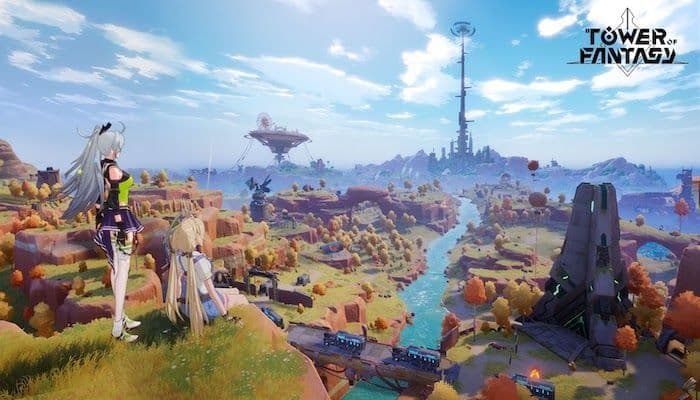
Tower of Fantasy runs on a real open world with zero loading screens between zones, blending anime-styled gacha character collecting with real-time combo combat. Hotta Studio just wrapped Version 5.8'...
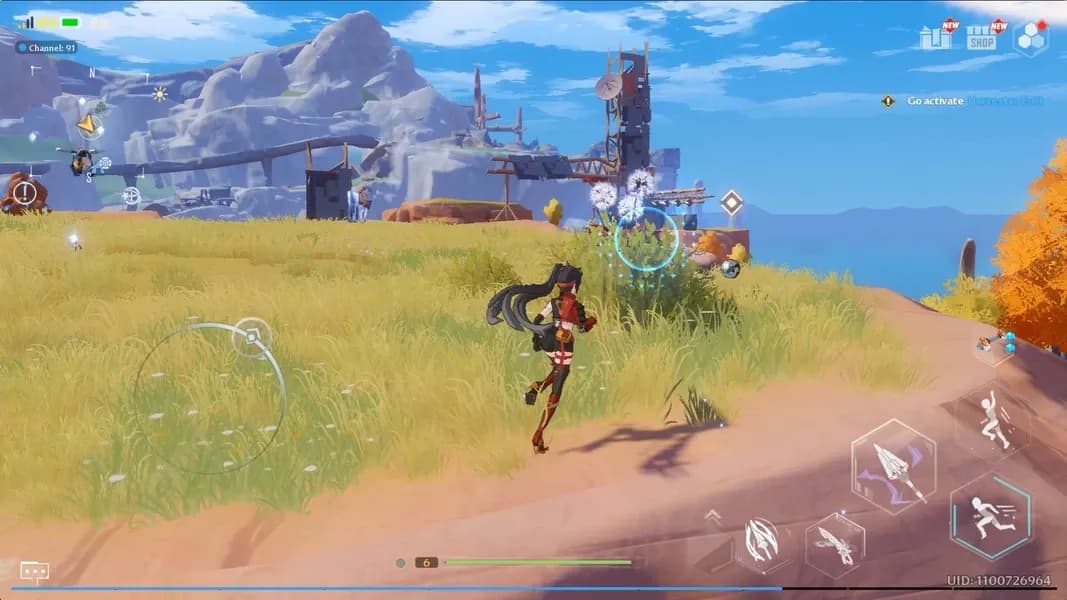
Tower of Fantasy is an open-world action RPG developed by Hotta Studio, a subsidiary of Perfect World Games, and published globally by Perfect World Games since early 2024 after an earlier run under Tencent's Level Infinite. It launched in China in December 2021 and went global on PC and mobile in August 2022, arriving on PlayStation a year later. Four years and dozens of version updates on — the current build, Version 6.0 "Hymn of Eternity," landed in May 2026 — it's outlived the wave of "Genshin killer" headlines that greeted it and settled into something quieter: a working, still-updated sci-fi gacha RPG with a smaller but stubbornly loyal audience. Whether that's worth your time in 2026 depends on what you're hoping to get out of it, and this Tower of Fantasy review tries to sort that out.
The premise borrows its bones from post-apocalyptic sci-fi more than high fantasy, despite the name. Humanity, having drained Earth dry, relocates to the alien world of Aida in search of a mysterious power source called Omnium, carried on a comet named Mara. The attempt to harness it goes wrong, and the game's present-day setting is the fallout: ruined cities, mutated wildlife, and a population of "Wanderers" — you among them — piecing together what's left. It's a serviceable frame for exploration rather than a story people talk about at length; cutscenes are frequent but rarely gripping, and character-focused side quests do more heavy lifting than the main plot.
What the setting is actually good at is variety. Astra, the opening zone, is temperate scrubland dotted with ruins and the husks of old research facilities. Push further and you hit Vera's snowbound tundra, all frozen convoy wreckage and howling weather, then the standout of the bunch: Mirroria, a rain-soaked cyberpunk metropolis of neon signage and elevated highways that looks like nothing else in the genre — closer to a Blade Runner backlot than the pastoral fantasy villages most competitors default to. Later zones layered in over successive updates, Aesperia's crystalline wilds among them, keep the map from ever feeling like a reskin of itself.
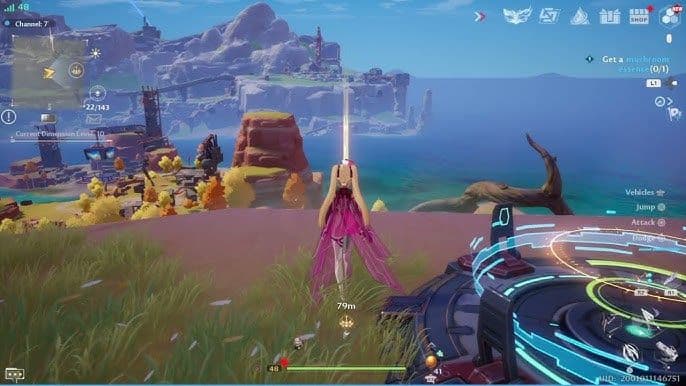
Traversal backs that up. Aida hands you a jetpack early, follows it with a cybernetic grappling arm for scaling cliffs and closing gaps in combat, and eventually opens up motorcycles and gliders for covering distance. None of this is dead time between quest markers the way it can be in some open-world RPGs — chaining a grapple into a jetpack burst to vault a canyon feels good on its own terms, and that matters in a game that expects you to cross the same zones dozens of times chasing daily content.
Character creation runs deep for the genre — sliders on nearly every facial feature, body proportions, voice, even a photo-import option on some versions — before the game drops you into a short tutorial fight and hands you your first weapon. That weapon matters more than it would in most competitors, because it's your first taste of the game's defining trick.
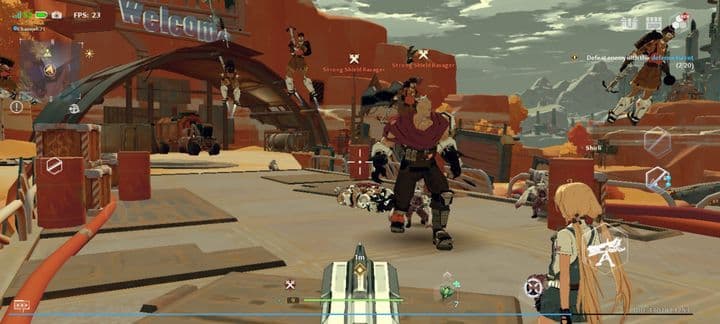
Instead of pulling separately for a character and their gear the way Genshin Impact does, Tower of Fantasy fuses the two. Every weapon in the gacha is attached to a named character — a Simulacrum — and winning the weapon means you've won the character; there's no second roll. Combat itself is real-time and reasonably physical for a mobile-first game: light and heavy attacks chain into dodges, dodging at the right instant triggers a brief slow-motion window, and each weapon carries a chargeable elemental finisher that does something different depending on the weapon's type. Within the first twenty minutes you're already swapping between two starting weapons mid-fight to break an enemy's shield with one and follow up with elemental damage from the other — an unusually assertive tutorial for a game people often assume is a simple button-masher.
The loop that emerges over the first several hours is straightforward on paper and fiddlier in practice. You carry up to three weapons at once, freely swapping between them in combat, and each one is tagged with a role — DPS, Defense, or Support — and one of four elements: Fire, Ice, Volt, or Physical (the non-elemental catch-all). Enemies and terrain obstacles both gate progress behind specific elements, so a well-rounded loadout isn't optional flavor, it's the price of admission to certain areas and certain bosses. Fire punishes healers and burns obstacles, Ice freezes and slows enemy charge rates, Volt strips buffs and disables them entirely for a stretch — learning the matchups is most of what "getting good" at Tower of Fantasy means early on.
Weapon variety comes almost entirely from the gacha, called Special Orders here, and it's worth understanding the odds before you get invested. The standard banner opens at a 0.75% chance per pull for an SSR weapon, climbing toward 2% as pulls accumulate, with a hard pity guaranteeing an SSR by the 80th pull — a pity counter that doesn't reset even if you get lucky early. Limited banners run on the same base odds but weight each SSR pull with a 50% chance of being the specific featured weapon rather than a random one from the pool, which softens but doesn't eliminate the sting of chasing a specific character. None of it is hidden: rates and pity mechanics are published in-game, which is more than some competitors bother with.
Group content unlocks steadily across this stretch too — Joint Operations and Void Rifts ask you to bring a team-appropriate loadout instead of just your favorite weapon, which is the game's quiet way of making Support and Defense weapons matter instead of letting everyone stack pure damage.
By the fifty-hour mark, the open world has mostly been mapped and the game shifts its weight onto repeatable systems: daily bounties, weekly Void Rift clears, Interstellar Exploration runs, and the Apex League, Tower of Fantasy's ranked PvP arena. This is also where the seams show. Weapon upgrading demands a steady diet of elemental ores and weapon batteries that scale up in cost as gear rank climbs, and augmenting past level caps requires materials that are gated behind time-limited farming windows. None of it is punishing exactly — it's the standard live-service RPG rhythm of small daily chores adding up to real progress over weeks — but players who want to push into Void Rift's harder difficulties or climb Apex League's ranks will feel the wall between "has fun weapons" and "has the specific weapons and matrices the current meta wants" more sharply here than they did in the campaign.
Power creep is the more pointed complaint from the community, and it's not an unfair one: weapons released in 2026 comfortably outperform 2022 launch-era Simulacra even at equal investment, which is common in the genre but stings more in a game where your favorite character's usefulness is tied directly to whether their weapon numbers still hold up. The Apex League adds another wrinkle on top: it's a real-time PvP arena rather than an asynchronous defense-team system, which means a well-drilled team of three swapping weapons on read is genuinely more fun to watch and play than most gacha PvP, but it also means raw reflexes only carry a player so far against an opponent with a deeper, better-augmented weapon pool to draw from.
The honest answer to is Tower of Fantasy still active in 2026 is yes, but smaller than it once was. Steam concurrent numbers have fallen a long way from their August 2023 peak of just under 4,000, and Steam user reviews sit at a "Mixed" rating — roughly 61% positive across its lifetime English-language reviews, with the most recent 30-day window holding in similar territory. That figure understates the picture somewhat: like most gacha titles, the bulk of Tower of Fantasy's population plays on mobile or through the standalone PC client rather than Steam, and Steam numbers alone have never been a reliable proxy for a Chinese-published gacha's real player base.
The publisher transition from Level Infinite back to Perfect World Games in early 2024 caused real turbulence — an account-transfer process in 2025 briefly deleted progress and purchases for a wave of players and dragged review scores down for weeks — but the studio's monthly update cadence never actually stopped, and Version 6.0 landed on schedule this past May. It's also worth noting that Hotta Studio's attention has partly shifted: the team shipped a spiritual successor, Neverness to Everness, on Unreal Engine 5 in April 2026, built on lessons learned from Tower of Fantasy's own cyberpunk Mirroria zone. That's not a death knell for the older game — both are still being supported — but it does mean Tower of Fantasy is no longer the studio's flagship, and its update pace and marketing push reflect that shift.
In PvE, not meaningfully — a patient free player can clear the overwhelming majority of the game's content with farmed weapons and enough persistence, and the developers have never gated story or exploration behind spending. In the Apex League and in weekly Void Rift leaderboards, the answer shifts: a fully invested paying account with augmented top-tier weapons and matrices will out-damage and out-survive a free account of equal playtime, and no amount of skill fully closes that gap at the highest brackets.
The currency chain runs through Dark Crystals, and the math is unglamorous: reaching the guaranteed SSR pity on the standard banner from zero takes roughly 12,000 Dark Crystals, in the neighborhood of $200 at standard exchange rates, and that's before chasing a specific limited character. Free-to-play income — story rewards, login bonuses, exploration milestones — keeps a non-paying account meaningfully progressing, just on a slower clock than someone buying Dark Crystal bundles. It's a familiar bargain by 2026 gacha standards: transparent rates, a working pity system, and a monetization model that rewards spending without strictly requiring it outside of top-end PvP.
Here's the uncomfortable truth about Tower of Fantasy in its fifth year: it never stopped being a good game, it just stopped being anyone's favorite new thing. The combat still holds up, the weapon-character fusion is still one of the smarter ideas the genre has produced, and Mirroria alone is worth the download for players who've never seen it. What it can't offer anymore is momentum — the sense of a game at the center of the conversation, pulling in new players and new content at a pace that outruns its own power creep. If you want that energy, look at whatever launched in the last eighteen months instead. If you're fine playing a well-built, quietly maintained RPG that isn't trying to be the biggest thing in the room, Aida is still there, and it's in better shape than its Steam numbers suggest.