 F2P · Live
Lineage 2
Aden's castles never stay in the same hands for long, and Lineage II has built an entire twenty-three-year…
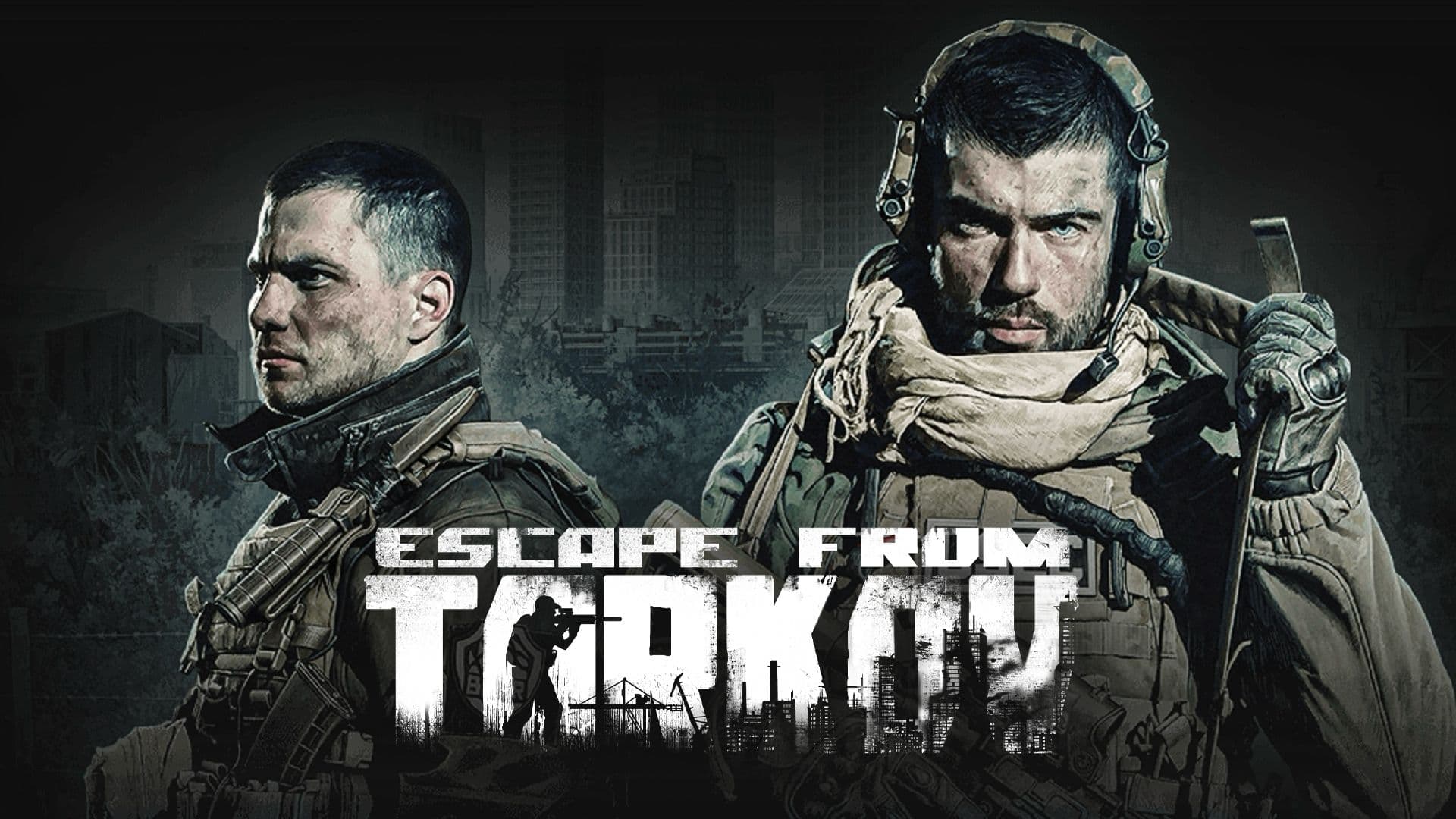
Escape from Tarkov is a hardcore extraction shooter where death costs you nearly everything you carried, except for whatever fits in a small secure container — a single rule that turns every decision ...
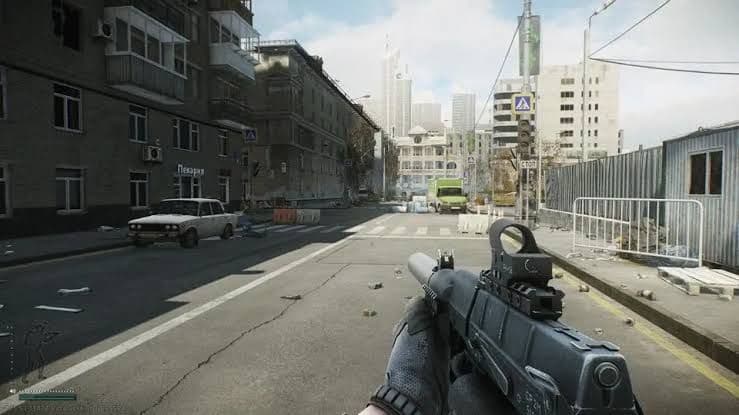
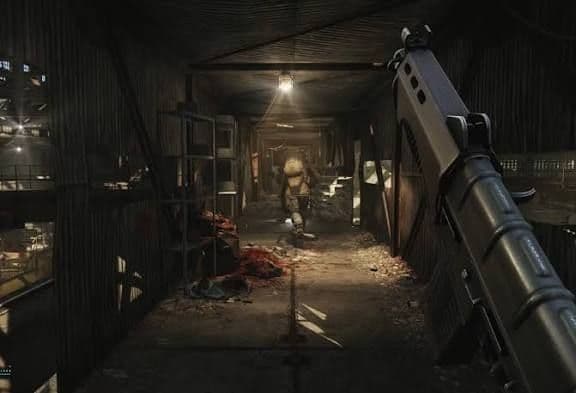
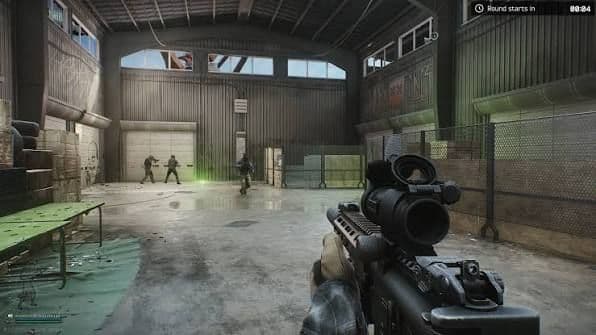
Escape from Tarkov is a hardcore extraction shooter with MMO-survival elements developed by Battlestate Games. It has been in development since 2017, and version 1.0 launched on November 15, 2025, closing out roughly eight years of open early access. The game is set in the fictional Norvinsk region in northwestern Russia, where a war between two private military companies has turned a shuttered economic zone into a battlefield.
Post-launch, Battlestate has spent most of its patch cycles on optimization and matchmaking rather than new content, and the approach appears to be working: Steam's daily peak hit 44,110 concurrent players on August 5, 2026, with the player base growing roughly 50% over the preceding month. That growth stands out against a genre where competitors are shrinking — ARC Raiders has slid from a May peak near 110,000 to around 33,000, and Bungie's Marathon has dropped from 40,000 to 5,000 over the same three-month stretch. Battlestate has published a roadmap through Q4 2026 under the working name "Tarkov 2.0," covering a knockdown-and-revive system, a new map arriving later this year, and a free companion project called Guncyclopedia for building and inspecting weapons outside a live raid.
The story here is thin by design, existing mostly to justify the shooting rather than to stand on its own. USEC and BEAR — United Security and the Battle Encounter Assault Regiment — are the two private military companies fighting over Norvinsk's special economic zone, and in practice the faction you picked barely changes how a raid plays out: on most maps, USEC and BEAR shoot each other exactly as often as they shoot anyone else in sight.
History gets delivered through notes, radio chatter, wall graffiti, and trader quests rather than cutscenes or dialogue trees. Piece it together and a picture forms of a city the government abandoned, private armies clearing ground under the pretense of an evacuation, and ordinary scavengers picking through whatever is left. It's not one character's story — it's the backdrop every individual raid plays out against.
Customs, with its factory floors and office blocks, is only one flavor on offer. Reserve is a former military base laced with bunkers and underground corridors, where short sightlines turn every room into a potential trap. Woods trades that claustrophobia for long, open lines of fire where a rifle scope decides an engagement before either side hears a shot. Streets of Tarkov is the largest map in the game — multi-story buildings, a metro system, and enough verticality that tracking floor level matters as much as tracking direction. Ground Zero, by contrast, is a deliberately compact, simplified starting point built for players who aren't ready for the scale of the rest of the roster yet. Each map effectively teaches a different skill, and veteran players pick their location by mood as much as by loot tables — a quiet sweep through Shoreline on one night, an aggressive sprint through Factory on the next.
Tarkov's reputation for brutality is not marketing exaggeration. Death in a raid means losing nearly everything you carried in, with the sole exception of whatever fits inside a small secure container — the game's version of a permanent, un-lootable stash. Combat resolves in fractions of a second, aiming is entirely manual with no auto-lock or target assist, and ballistics are modeled per round: one type of ammunition might punch straight through a ceramic plate, while another barely dents it. Wounds are zone-specific rather than abstracted into a health bar — a hit to the arm drags down your aim, a leg wound forces a limp, and untreated bleeding will kill you faster than most enemies will.
What sets Tarkov apart from other shooters that claim "realism" is that none of this is cosmetic. A player bleeding out in a treeline has to make a real decision — spend a bandage now, or push for one more kill first — and that decision usually determines whether they walk out with their gear or lose it all. Bleeding left untreated kills faster than most gunfights do. Dying itself triggers full loot loss: everything you carried into the raid except the contents of that small secure container is gone the moment your character drops, which is exactly why the choice to push for one more kill instead of retreating carries so much weight. The claim holds up: this is one of the few shooters where "one mistake" is not a figure of speech.
Every firearm in Tarkov breaks down into hundreds of interchangeable parts — barrels, handguards, sights, grips, muzzle devices — and each one has a measurable effect on recoil, ergonomics, weight, and noise. A lightweight build improves handling and aim speed; a heavier one adds stability across a sustained firefight. Get the balance wrong and even an expensive rifle can feel clumsy in your hands. Building a rig around a specific job — close-range clearing, long sightlines, quiet movement — is a genuine hobby inside the game, arguably as engaging as the firefights themselves.
Progression here is classless. There is no "assault" or "sniper" archetype to pick at character creation — only account level, trader reputation, and skills that improve through use. Fire a pistol often enough and pistol accuracy climbs; carry a loaded pack for hours and endurance follows; run heavy loads across long distances and strength training follows the same logic. That means a build in Tarkov is less a menu choice than a record of habits formed over months, and two players at the same level can end up with genuinely different characters depending on how they actually played.
A new player's first minutes on a map like Customs are not combat — they're reconnaissance by ear. Footsteps, a door creaking, a distant burst of fire all render with real direction and distance, and experienced players navigate by sound almost as reliably as by the map. Every choice carries weight: an open door might mean someone already cleared the room, a closed one might mean someone is waiting behind it. Small details reward attention — a flashlight helps you search faster but also gives away your position, and headphones pick up footsteps other players will miss entirely.
Hunger and thirst run in the background the whole time. Left unmanaged, they chip away at stamina and impose stat penalties, which means every backpack slot spent on food or water is a slot not spent on ammunition. Health is split into separate zones — head, chest, stomach, arms, legs — and each heals independently: bandages stop bleeding, splints fix fractures, and full medkits restore health outright but cost enough that carrying one is a real budgeting decision, not a default choice. None of this is explained through a tutorial pop-up — it's learned the hard way, usually more than once.
Between raids, players return not to a menu but to the hideout — a personal base built from functional modules. A generator supplies power, a workshop crafts ammunition and gear, a medical station produces first-aid supplies, and an illegal currency farm generates passive income while you're offline. Each module needs both resources and real build time, and the payoff scales with hideout level: more stash capacity, faster healing between raids, access to more advanced crafting recipes. A separate module lets players run as a Scav — an AI-controlled scavenger character they can take over personally, entering with different starting gear and no risk to their main character's progress. It's a low-stakes way to learn an unfamiliar map or bank a little extra loot without touching your real inventory.
Trading runs on two layers. Eight traders — from Prapor, who deals in weapons and ammunition, to Therapist, who covers medical supplies, and Fence, who moves stolen goods through the back door — hand out quests and sell gear for in-game currency and reputation, which rises separately with each of them and unlocks cheaper prices and rarer stock the further it climbs. Running errands for a handful of traders pays off faster than spreading effort thin across all eight. Alongside that sits the flea market, a player-driven central auction where prices shift by the hour. The flea market is what actually sets prices — a rare weapon part can outsell a full set of armor purely because demand for one specific build outpaces supply.
Beyond the main PvPvE mode, Tarkov ships a separate PvE option: the same maps, but every threat is AI-controlled, and progress runs on its own economy independent from the main mode. It's a meaningfully softer entry point for players who want to learn the systems without a sniper punishing every mistake.
Named bosses patrol specific maps with their own behavior and guard patterns — Reshala rolls through Customs with an escort of bodyguards, Killa is an aggressive lone wolf on Interchange, and Glukhar holds a checkpoint backed by machine-gun cover. None of them spawn on a fixed timer or in a fixed spot; players track their movements by ear and by rumor as much as by any in-game indicator. Running into one usually reshapes a squad's whole plan for the raid: skirt around for safer loot, or gamble on a fight for gear nobody else on the server has yet. Squads that choose to fight generally do it as a coordinated push rather than a straight firefight, since a boss backed by an armed escort punishes anyone who walks in without a plan.
Not in any meaningful sense, though the pricing structure has given that impression plenty of ammunition. The base game sells for $49.99, while upgraded editions — Left Behind, Prepare for Escape, and The Unheard — add extra stash space, a bigger secure container, an experience bonus, and cosmetics that work across both factions. The Unheard Edition tops out at $250 at full price, and that number is exactly what triggered real backlash when the edition launched: plenty of players read the progression perks as an advantage reserved for whoever pays the most, not just a one-time purchase.
The distinction that actually matters is that none of those perks touch a firefight directly — weapons, armor, and ammunition are earned or bought in-game by everyone under identical rules. What the higher editions buy is convenience and a faster climb, not a better gun. Whether that distinction satisfies a given player is, honestly, a matter of where they draw the line.
There is no formal guild or clan system — coordination happens over voice chat inside a squad and through external Discord communities where players arrange raids together. Group play still feels distinct from most shooters: in a two-to-four-person squad, roles fall out naturally on the fly — one covers the rear, another carries loot, a third tracks the extraction timer — and a breakdown in communication almost always costs the squad gear, if not lives. Voice itself carries positional information; hearing an unfamiliar squad talking through a wall, without ever seeing them, turns silence into a tactical resource in its own right.
Playing solo is entirely viable, and plenty of the game's most-watched streamers do exactly that, but it comes with a real disadvantage against organized squads: there's no built-in matchmaking to fill out a party, and a lone player facing four coordinated opponents is fighting a genuinely uphill battle regardless of skill. That trade-off is worth weighing honestly before committing serious hours to the solo route.
Tarkov is not a game you drop into for a relaxed half hour after work. It's closer to a second shift — one with preparation, real stakes, and a payoff that either justifies the time invested or gets wiped out by a single bad encounter. There's no consolation prize for effort here; there's only what made it to the extraction point, and what a faster or luckier opponent took from you instead. Seven years in, that unforgiving structure is still exactly what keeps players logging in — no gentler shooter can fake the adrenaline of a raid that actually goes right. Escape from Tarkov delivers real stakes in full, for anyone willing to trade nerves for them.
No. It's a paid game starting at $49.99, with several optional higher-priced editions adding convenience features rather than combat power.
Yes. A separate PvE option runs the same maps against AI-only opponents, with progress and economy kept apart from the main PvPvE mode.
Battlestate runs periodic full wipes every few months, and the 1.1.0 update added an optional early seasonal reset that players can trigger with in-game currency.
If a punishing learning curve and genuine loss aversion sound appealing rather than stressful, yes — the player base is growing while several competitors are shrinking.
No. Progression is entirely classless — your character is shaped by trader reputation, account level, and skills that improve through what you actually do in raids.