 F2P · Live
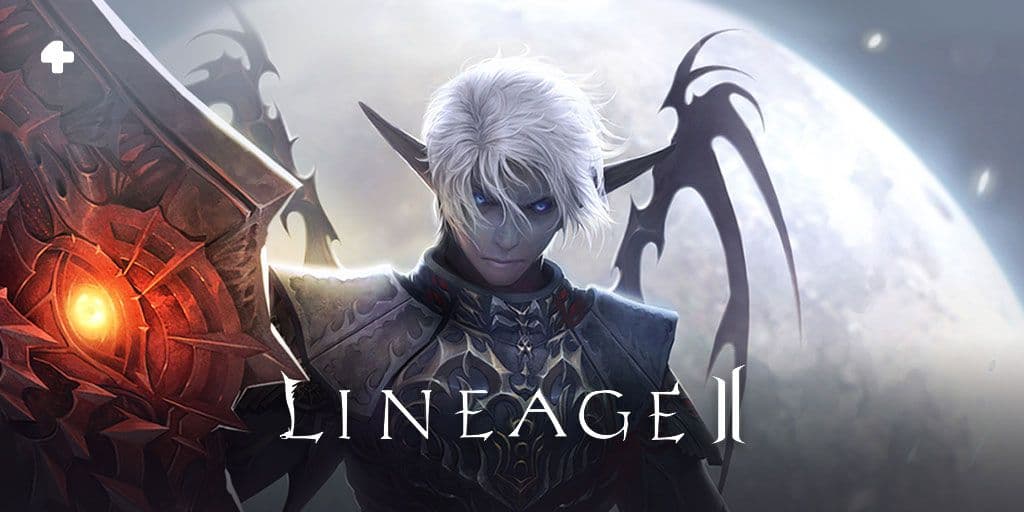
Lineage 2
Aden's castles never stay in the same hands for long, and Lineage II has built an entire twenty-three-year…
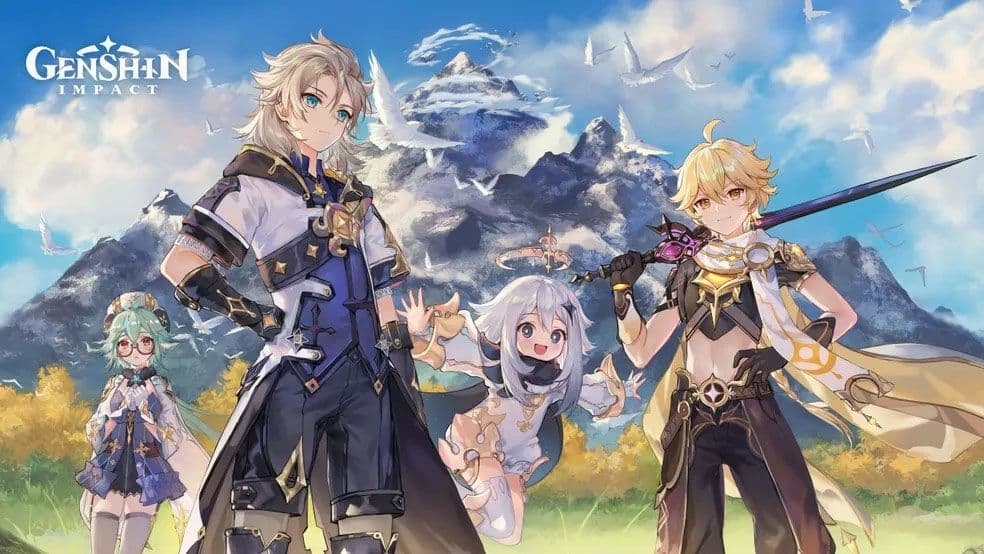
Genshin Impact is HoYoverse's open-world action RPG, built around a connected multi-region map, elemental-reaction combat, and a free-to-play story that never locks its best content behind a purchase....
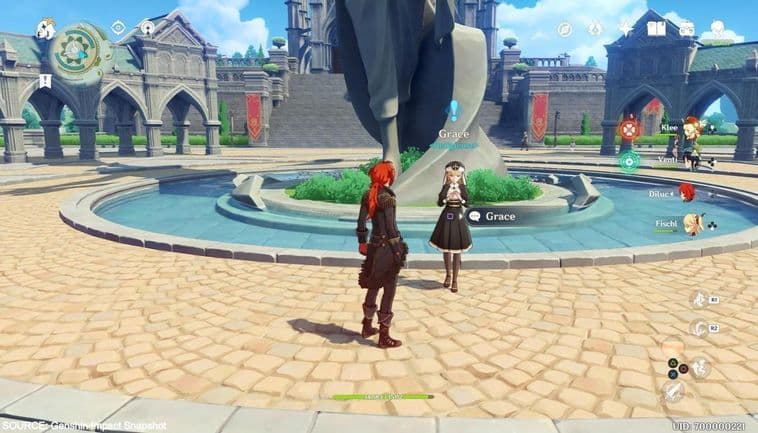
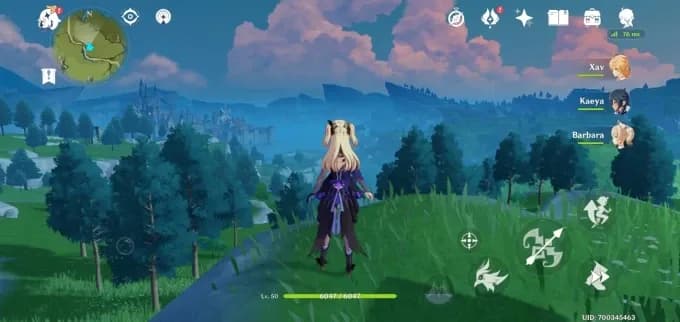
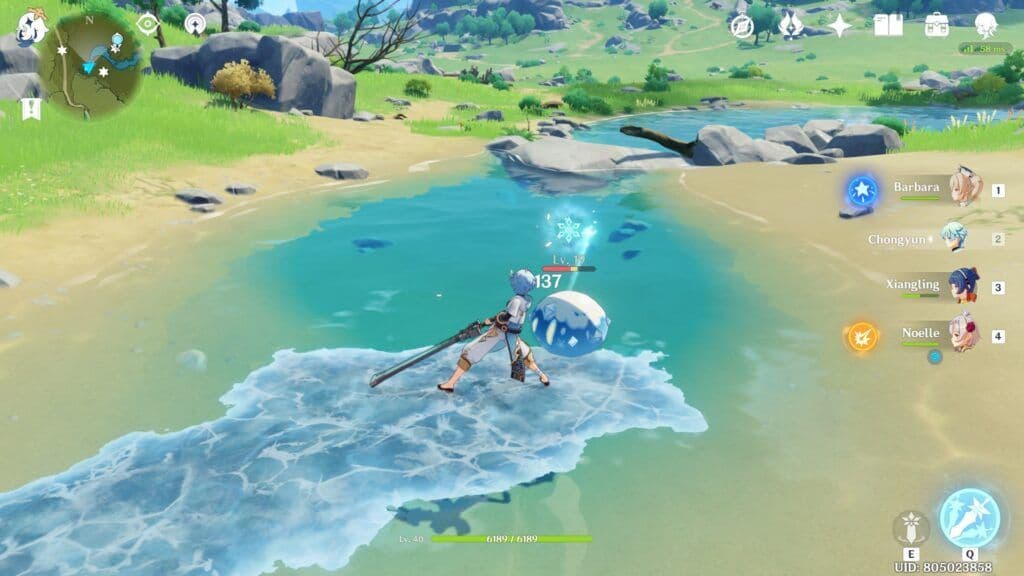
Genshin Impact is an open-world action RPG developed by miHoYo and published internationally as HoYoverse, released on September 28, 2020. Its identity rests on three things working together: a fully connected explorable world, combat built around elemental reactions rather than raw stat checks, and a gacha economy for characters that has pulled in more lifetime spending than almost any other game on mobile. Six years and seven playable regions later, with an eighth — Snezhnaya — arriving in Version 7.0 on August 12, 2026, Genshin Impact remains one of the most actively supported live-service RPGs on the market.
Quick take: Genshin Impact in 2026 is still one of the most content-dense free RPGs available, and none of that content sits behind a paywall — the story, the world, and most of the combat systems are playable to completion without spending a cent. The real cost lives in the gacha: chasing a specific character is a bet, not a purchase. Worth starting for the exploration and team-building alone; go in with a spending budget before the banners start making decisions for you.
A new account starts on Mondstadt's cliffs with a glider, a sword-wielding Traveler, and a floating companion named Paimon who explains the basics without over-explaining them. The first real task isn't combat — it's picking up an Anemoculus half-buried near a ruin, which is the game's way of teaching exploration before it teaches fighting. Within the first hour, a player has already glided off a cliff, solved a small elemental puzzle, and picked a fight with a wolf pack that requires switching characters mid-combo to survive.
The early game hands out characters faster than most gacha titles dare to, in part because miHoYo learned years ago that a locked-down new-player experience kills retention before it starts. By the time the Mondstadt Archon Quest wraps, a new account typically has four or five playable characters, a functioning elemental team, and enough Primogems from story milestones and beginner events to guarantee at least one meaningful gacha pull. Nothing about the opening hours feels like a demo version of the real game.
Returning players open the app to a checklist rather than a cliffhanger: four daily commissions worth Primogems, a resin bar for spending on farming runs, and whatever event is currently live. None of it is mandatory, but skipping it for a week means falling behind on the currency that eventually buys character pulls — the game's version of a subscription fee paid in time instead of money. Miss a month entirely and nothing is lost permanently; catch-up systems and generous welcome-back rewards mean lapsed players rarely feel punished for stepping away.
Genshin Impact's map is its strongest, least replicable asset. Seven explorable regions are live, with Snezhnaya arriving as the eighth in Version 7.0, and each one commits to a distinct visual language: Liyue's terraced mountains, Sumeru's rainforest-and-desert split, Fontaine's underwater courtroom city, Natlan's volcanic tribal war-states, and Nod-Krai's Baltic fjords and Slavic-coded capital of Nashgorod. None of them feel like reskinned versions of each other, and traveling between them on foot rather than through a loading screen is still the game's best trick six years in.
The tradeoff is scale without density in places — some open stretches exist mainly to be crossed rather than explored, and a returning player who skipped a region for a year can spend an entire evening just catching up on side content before touching the current patch's story. Nod-Krai, the most recent addition, leans into this with Kuuvahki — a polarized energy mechanic unique to the region that repels and attracts objects depending on charge, layered on top of the usual climbing and gliding toolkit rather than replacing it. Every region since Inazuma has introduced at least one mechanic like this: Sumeru's Dendro-triggered plant puzzles, Fontaine's underwater traversal, Natlan's Pyro-fueled aerial dashes. It keeps six-year-old traversal from going stale without asking the player to relearn the game from scratch.
World bosses sit at the edge of this exploration loop rather than inside a separate PvE queue — a Ruin Guard or a regional boss is something a player stumbles into while crossing the map, not something queued for. They're also the main source of high-tier artifact and talent-upgrade materials, so exploration and gearing end up feeding each other rather than existing as separate systems.
Combat runs on a party of four, swapped in real time, built around elemental reactions — Pyro melts Cryo, Electro and Hydro chain into each other for extra damage, Dendro triggers slow-burning damage-over-time fields. A competent team isn't four strong individual characters; it's four characters whose elements set up combos for each other, which means a five-star pull is only as good as the three-star support standing next to it.
This is where Genshin Impact separates itself from most gacha combat systems: build quality matters more than roster size. A well-built four-star team clears the same content a poorly built five-star roster struggles with, and the game rewards players who understand reactions over players who simply own more characters.
Weapon choice adds a second layer on top of characters — swords, claymores, polearms, bows, and catalysts each have their own upgrade tree, and a well-refined four-star weapon frequently outperforms an unrefined five-star in practical terms. None of this is explained upfront; the game trusts players to figure out synergies through trial, community guides, or the in-game Elemental Reaction glossary, which is a deliberate design choice rather than an oversight — Genshin Impact wants theorycrafting to be part of the appeal, not a wall between the player and the content.
Character power in Genshin Impact comes from three layers stacked on top of each other: level, talents, and artifacts — the last of which is where the actual grind lives. Artifacts drop from timed domains with randomized stats on every piece, so building one character correctly can mean dozens of domain runs hoping for the right main stat and substats to land together.
Resin caps out at 200, refilling one point every eight minutes, which functions as a soft daily play limit — burn through it in twenty minutes of domain farming and there's nothing left to spend until tomorrow. It's an unpopular system among veterans, but it also means the game rarely demands more than an hour or two a day to stay current.
Crafting in Genshin Impact is deliberately small in scope compared to survival or sandbox MMOs: a forging bench turns ore into weapon-ascension materials, an alchemy table turns gathered plants into potions and enhancement materials, and cooking turns ingredients into buffs that boost stamina regeneration, defense, or elemental resistance for a limited time before a fight. None of it is optional busywork — cooked food is genuinely useful before a tough domain run or boss fight, and cooking a dish perfectly on the first attempt grants a permanent quality upgrade to that recipe.
What's absent is any form of player-to-player economy. There's no auction house, no player shops, and no trading of items or currency between accounts — every material comes from gathering, farming, or events, never from another player's inventory. That keeps the gacha economy cleanly separated from crafting; nobody can buy their way into someone else's gathering grind, for better or worse.
The Archon Quest — Genshin Impact's central storyline — has grown from a fairly simple "find your sibling" premise into a multi-region political thriller involving gods, a shadowy Fatui organization, and the slow unraveling of what actually happened to Teyvat's original Archons. It updates in large chunks with each new region rather than in small weekly drips, so a returning player gets a genuine multi-hour story arc rather than a fragment.
Seasonal events run alongside the main story on a roughly three-week rotation, usually built around a minigame wrapped in a self-contained story that rarely touches the main plot. Quality varies — some events are genuinely inventive puzzle or rhythm experiments, others are thin excuses to hand out Primogems — but they're optional, and skipping a bad one costs nothing but currency.
Character-focused story quests fill the gap between Archon Quest chapters, giving individual party members several hours of dedicated narrative that occasionally recontextualizes their role in the wider plot. These are frequently better-written than the main story's slower stretches, since they're allowed to stay small and personal instead of carrying the weight of the entire world's politics.
Once the story and exploration taper off for the evening, Spiral Abyss is where Genshin Impact tests whether a player's builds actually work. Twelve floors of scaling combat challenges gate behind time and damage limits, splitting a roster across two teams that both need to clear their half. Its floors reset on a two-week cycle, with the deepest floors demanding genuinely optimized builds rather than raw character rarity.
Imaginarium Theater, added more recently, does something similar with a rotating cast of free-to-use characters each cycle — a rare case of the endgame being generous to players who haven't pulled every banner. It swaps in different characters, buffs, and stage modifiers every two weeks, which means a strategy that clears cleanly one cycle can fall apart the next simply because the free roster changed.
Between the two, Genshin Impact has real skill-testing content, even if most of the game around it is closer to a story-and-exploration RPG than a combat sim. Neither mode is mandatory — Abyss and Theater rewards are generous but finite, and skipping both entirely still leaves the story, exploration, and events fully intact.
Yes — every region, every Archon Quest chapter, and nearly all of the endgame content is completable without spending money. What isn't free is speed and certainty: pulling for a specific five-star character or weapon runs on a gacha system where the odds are published but the outcome isn't guaranteed until the game's pity system kicks in after enough failed pulls.
The mechanism is straightforward once explained: base odds for a five-star character sit under 1%, but the pity counter guarantees one within ninety pulls, and a coin-flip system on top of that determines whether the guaranteed five-star is the featured banner character or a random one from the standard pool. Miss that coin flip and the next guaranteed pull is locked to the featured character — meaning a genuinely unlucky run can cost close to 180 pulls to lock in one specific unit. That's the number that decides whether a player's monthly Primogem income is "comfortable" or "tight."
Clearing the Spiral Abyss, finishing Imaginarium Theater, and full-exploring a new region's map earns a dedicated free player roughly 60 to 75 pulls per six-week update — enough to guarantee one new banner character every patch or two without paying, though not enough to catch every limited release. The game has crossed $10 billion in lifetime player spending across platforms, and that revenue comes overwhelmingly from a small share of high-spending players rather than broad, shallow purchases — the F2P experience and the whale experience are close to two different games sharing one client.
Genshin Impact is built as a single-player experience with social features layered on rather than the reverse. The Serenitea Pot housing system lets players decorate a personal realm and invite others to visit, and four-player co-op is available for most open-world content and some domains — useful for farming help, largely irrelevant to the story, which locks to solo play.
There's no PvP, no guild system in the traditional MMO sense, and no server community to speak of beyond in-game co-op codes and external Discord servers. Players who want a social MMO should look elsewhere; players who want a well-built single-player RPG with occasional company will find exactly that.
Housing carries no direct combat benefit, which keeps it from feeling like a second grind — a player can ignore the Serenitea Pot entirely for years and lose nothing but decoration options. Visiting a well-designed friend's realm is one of the few moments the game actively encourages showing off rather than optimizing, and it's a deliberate contrast to how transactional the rest of the progression loop tends to feel.
Genshin Impact is less a single game than a very large house with a free front door and an expensive gift shop somewhere past the third floor. Anyone can walk through every room — the regions, the story, the fights that matter — without paying an entry fee, and the game genuinely doesn't gate its best content behind a purchase. The gift shop is optional, but it's designed well enough, and the merchandise desirable enough, that plenty of visitors leave with their wallets lighter than they planned. Six years in, with an eighth region about to open its doors, that house is still worth walking through — just know which rooms you're paying for before you reach for your card.
Yes. The entire story, all seven current regions, and most endgame content are completable without spending money; only the speed of acquiring specific gacha characters costs real currency.
No. A free player can build strong teams from four-star characters and weapons and clear the vast majority of content, including most Spiral Abyss floors.
Yes, especially with Version 7.0 opening a new region — new accounts also receive substantial catch-up rewards to skip much of the early grind.
No. Genshin Impact is entirely PvE, with co-op available for open-world content and some domains but no competitive combat modes.
Yes, and most players do — the story locks to solo play, and co-op is an optional layer for farming rather than a requirement.