 F2P · Live
Lineage 2 Essence
Lineage 2 Essence is NCSoft's free-to-play take on the classic Korean MMORPG Lineage II, built around faster…
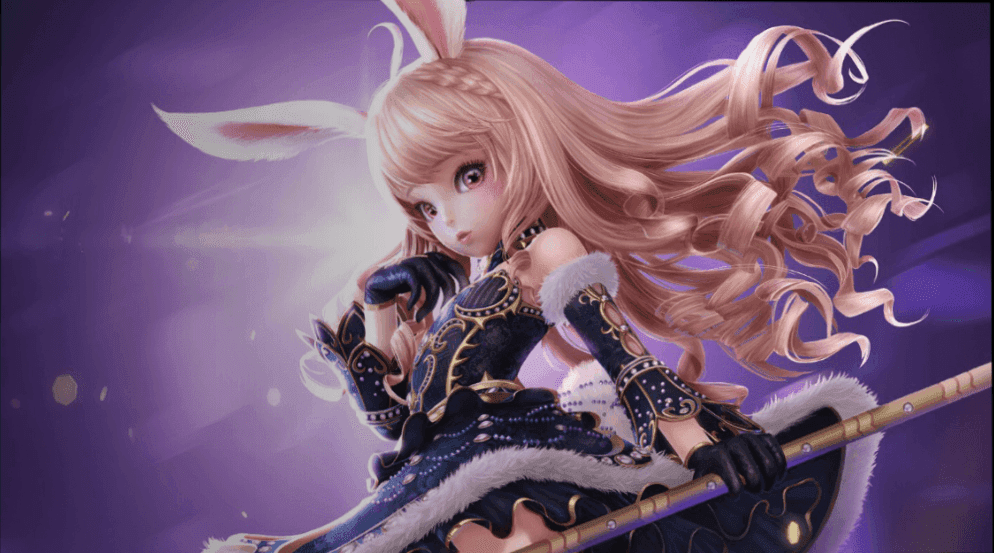
TERA 2 is Krafton and Bluehole Studio's sequel to the influential 2011 action MMORPG, currently in early development on Unreal Engine 5 under original TERA developer Kang Sang-wook. Confirmed so far: ...
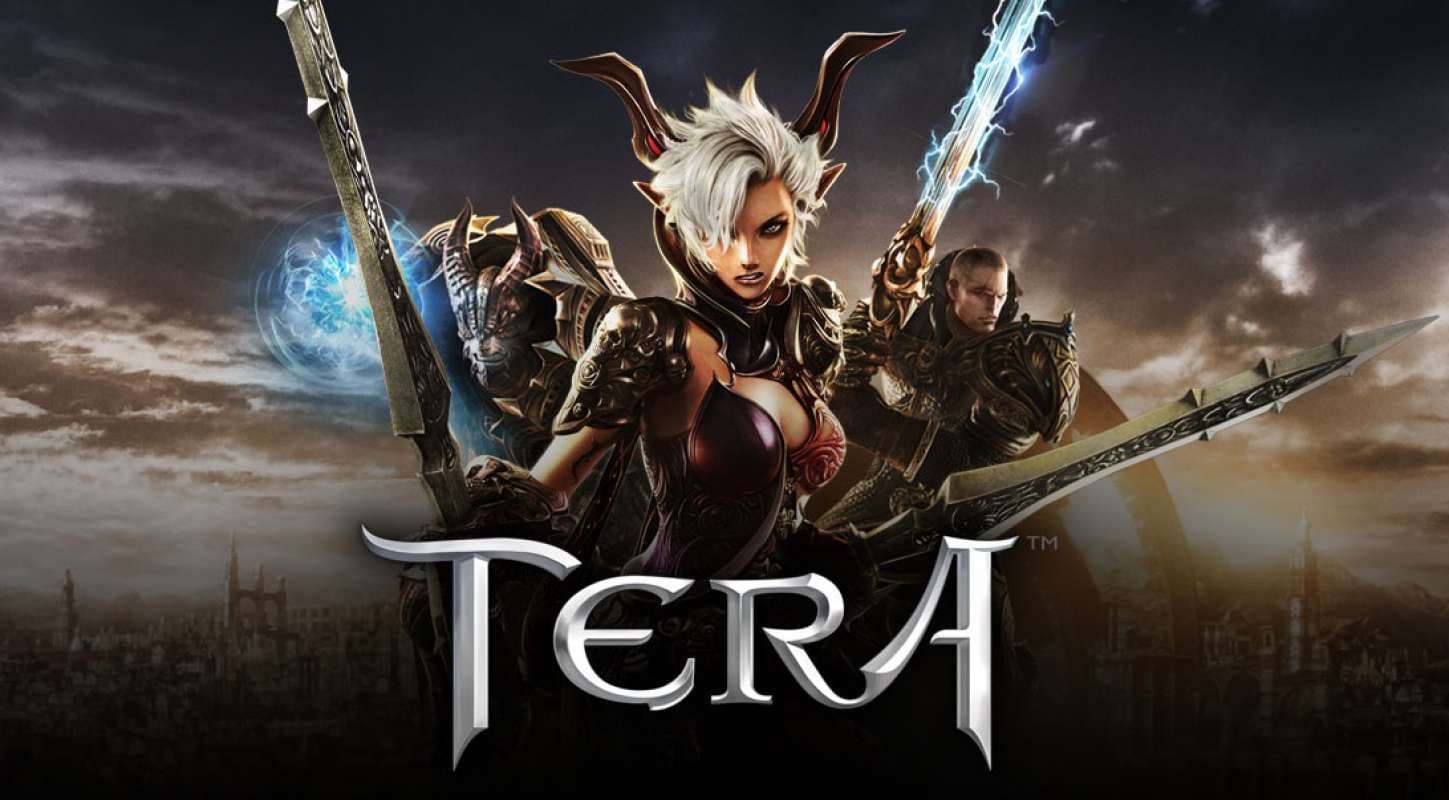
TERA 2 is a sequel to Bluehole Studio's 2011 action MMORPG, currently in early development under Krafton, Bluehole's parent company. Krafton confirmed the project in August 2025 through a small four-person team inside Bluehole's R&D division, and in April 2026 the studio opened public hiring for the sequel, confirming Unreal Engine 5 and a combat philosophy built around non-target action and group hunts against large monsters. No playable build has been shown publicly, no release window exists, and most of the game's identity — setting, classes, monetization, platforms — remains unannounced. This piece rounds up everything that's actually confirmed, separates it from reasonable speculation, and explains why the industry is watching a project that's still years from release.
To understand the interest around TERA 2, it helps to remember what the original meant to the genre. When TERA launched in Korea in January 2011, it was one of the first Korean MMORPGs built around genuinely manual, non-target combat — no auto-lock, no tab-targeting, just a reticle in the center of the screen and dodges the player had to time themselves. That was rare in a mass-market online game at the time, and TERA's success pushed other Korean studios toward the same style in the years that followed. The game shipped across Korea, North America, Europe, and Japan, drew more than 25 million registered accounts over its lifetime, and held on for eleven years before Krafton shut down the PC service on June 30, 2022. The console version, run directly by Krafton, is still active today, with regular balance patches as recently as mid-July 2026 — proof the franchise never fully went dark, even after the PC servers closed.
Krafton chairman Chang Byung-gyu has said in interviews more than once that MMORPGs remain personally important to him, despite the company's fortune having been built largely on PUBG. There was already one attempt to return to the genre — Elyon, formerly Ascent: Infinite Realm, which shut down in 2023 after a brief run. Since then Krafton hasn't had an active flagship MMO in its lineup, and TERA 2 looks like the studio's answer to that gap.
The one thing Bluehole has stated plainly, directly in its hiring materials, is that TERA 2 keeps non-target combat as its foundation. Aiming stays manual, hits land based on where the attack physically connects rather than on a locked target, and players are expected to move themselves out of danger rather than rely on a dodge stat. That was the signature of the original — TERA's boss fights leaned closer to an action-RPG in the Devil May Cry or Monster Hunter mold than to the timer-based ability rotations most MMOs of its era ran on.
There's no detail yet on the actual skill kits or combo systems, but the studio is separately recruiting for a Senior Action Designer, a role specifically focused on hit timing, animation readability, and the feel of combat rather than its systems on paper. That's a meaningful signal on its own — studios don't usually staff that position unless combat feel is being treated as a first-order priority rather than an afterthought layered onto a template. The original TERA earned a lot of its staying power from exactly that kind of tactile hit response and boss attacks with clearly telegraphed windups, so matching that bar would already put the sequel ahead of much of the current field.
What's genuinely open is the class structure. The original ran thirteen classes with rigid role specialization — tanks, healers, and both melee and ranged damage dealers. Whether TERA 2 keeps that framework, moves toward flexible role-switching through a weapon-swap system the way Chrono Odyssey does, or drifts further toward a classless design hasn't been said. Any of those choices would change how the game actually plays in practice, and it's likely to be one of the first concrete systems Bluehole confirms once the team is further along.
The second confirmed pillar is a design built around group fights against large monsters. Bluehole's job listings describe it as designing "around hunting parties taking on medium-sized creatures," phrasing that TERA veterans immediately recognized as a callback to BAMs — Big Ass Monsters, the internal shorthand the original team used for its oversized open-world bosses. These were several times the size of a player character, ran their own attack patterns and enrage phases, and demanded coordinated five-person parties to bring down. In the original game, BAM hunts were a strong but secondary activity; the wording from the sequel's job postings suggests Bluehole wants to make that loop a central, recurring part of the moment-to-moment game rather than an occasional set piece.
The word "medium-sized" is doing real work in that phrasing. The original sorted its threats into regular mobs, BAMs, and rarer world bosses. A stated focus on the middle tier reads less like "one giant boss an hour" and more like a steady cadence of coordinated encounters — a structure closer to Monster Hunter than to the raid-lockout model most Western MMOs use. If Bluehole follows through, TERA 2 would be filling a gap that's genuinely underserved on PC right now: a proper MMO built around party-versus-large-monster combat in an open world, without hard instancing or long queue times. Monster Hunter Wilds covers similar ground in a session-based co-op format rather than a persistent MMO space, and few Western titles are chasing this specific niche at all.
It's worth remembering what that loop actually looked like the first time around, since the sequel is explicitly building on it. A five-player group would pick a BAM's known territory, ride or portal in, and split roles on arrival — a tank holding aggro, a healer tracking health bars, damage dealers working the target's flanks. Fights ran anywhere from a couple of minutes to close to fifteen, with the monster cycling through phases and throwing out clearly telegraphed, high-damage attacks that punished a mistimed dodge. Whatever TERA 2 adds on top of that — monster weak points, weapons tuned against specific enemy types — will determine whether the sequel earns its own identity or just reruns the original's best system with better lighting.
Leading development is Kang Sang-wook, described inside Bluehole as the studio's "first employee after the founders." He started his career at NCSoft before joining the newly formed Bluehole in 2007 and became one of the key developers on the original TERA. After PUBG's breakout success, Kang worked on several internal projects, including the cancelled Project Cowboy, and more recently taught in Jungle, Krafton's internal developer training program. Putting him at the head of the sequel isn't a symbolic gesture — it's a fairly direct signal that Krafton wants TERA 2 to carry the first game's design instincts rather than hand the license to a team building something in name only.
As of early May 2026, the team is still small — a few dozen people following the first hiring wave. For a project of this ambition, that's a modest headcount: the original TERA had more than two hundred developers at its peak, and a modern Korean MMO like AION 2 runs into the hundreds as well. That gap means most of 2026 and likely part of 2027 will go toward building out the studio, prototyping, and reaching the first internal playable builds. An official release before 2028 looks unlikely, and some Western outlets covering the project have floated dates closer to 2030.
Technically, TERA 2 is a clean break from its predecessor. Unreal Engine 5 solves several problems the original ran into on Unreal Engine 3 — Lumen and Nanite lift the ceiling on environmental detail and dynamic lighting that limited the decade-old engine, the toolchain speeds up work that used to be done largely by hand, and UE5's scalability matters for an MMO genre where dozens of characters and ability effects can be on screen at once.
None of that is an automatic pass into the genre's front rank, though. Pax Dei runs on UE5 and looks the part but has struggled with mid-range GPU performance, and Chrono Odyssey, also on UE5, pushed its release into late 2026 partly over technical issues. Bluehole's own experience with UE5 is limited, since the original game was built on UE3, and a large share of the current hiring push is aimed squarely at closing that gap — senior client programmers, VFX leads, environment artists. That's a sound strategy, but it's not a guarantee the game will run cleanly on mid-tier hardware three or four years from now.
Visual direction is a separate open question. The original had a recognizable look — bright, ornate armor, exaggeratedly stylized elven features, oversized proportions on some races — that part of the Western audience found distinctive and another part found off-putting. UE5 gives the studio room to go anywhere from the near-photorealism of Black Desert Online to a more overtly stylized, anime-adjacent look, and open postings for both character artists and an art director suggest the final visual language isn't locked in yet.
The list of open questions is longer than the list of confirmed details right now, which is normal for a project at this stage. The biggest gaps:
Any one of these could reshape how the finished game actually feels, which is why it's more accurate right now to talk about a direction than a defined game.
Whenever it lands, TERA 2 will arrive in a crowded field of Korean MMORPGs. AION 2 is already live in Korea and Taiwan as of November 2025, with a global Steam release planned for 2026. Chrono Odyssey, published by Kakao Games, is targeting the fourth quarter of 2026. Throne and Liberty is already in its second year of live service. By the time TERA 2 actually ships, the market will be saturated with UE5 action-MMORPGs, and the sequel will need more than a familiar name to stand out.
The clearest path to differentiation is the monster-hunting focus. If Bluehole can make those encounters feel as tactile and deliberate as Capcom manages in Monster Hunter, TERA 2 has a genuine identity of its own. If that system ends up as set dressing over a fairly standard Korean MMO loop of quest markers and gear treadmills, it risks disappearing into a genre that already has plenty of entries chasing the same audience. Progression philosophy is the other open fork — some current Korean MMOs lean hard into vertical gear power with paid accelerants, while others, Chrono Odyssey among them, are explicitly marketing a rejection of that model in favor of horizontal progression. Which lane TERA 2 picks will shape who sticks around for the long haul, and any statement Krafton makes on monetization is likely to become an immediate flashpoint given how burned parts of the audience feel on pay-to-win systems in recent releases.
It's also worth noting that a slice of the original's community never really left. Official servers are gone, but private servers for the original TERA are still running with active player bases of their own. TERA 2 will have to make the case that it's worth leaving a game some fans have kept alive on their own terms for years — a harder sell than it might sound.
Whether TERA 2 deserves a spot on your radar today comes down to what you actually want out of it. Fans of the original have more to hold onto than most early announcements offer — a returning lead developer, a stated commitment to non-target combat, and a clear pivot back toward the monster-hunting design that made the first game distinct. That's a stronger starting signal than most sequels get this early, even without a single screenshot to show for it. Anyone hoping to play something new in the next year or two should look elsewhere; nothing here is close to a release, let alone a beta. And anyone whose attachment to the original runs specifically through its setting, its races, or its story should keep expectations in check, since Bluehole hasn't promised continuity on any of that — only on how the game plays. What's clear is that Krafton isn't rushing this one out with an early trailer or a premature release date, and after a genre littered with loud announcements followed by quiet cancellations, that restraint is itself a reasonably good sign. The realistic timeline points toward the first playable demonstrations sometime in 2027, with an open beta, in the most optimistic case, still a year or two beyond that.