 F2P · Live
Lineage 2
Aden's castles never stay in the same hands for long, and Lineage II has built an entire twenty-three-year…
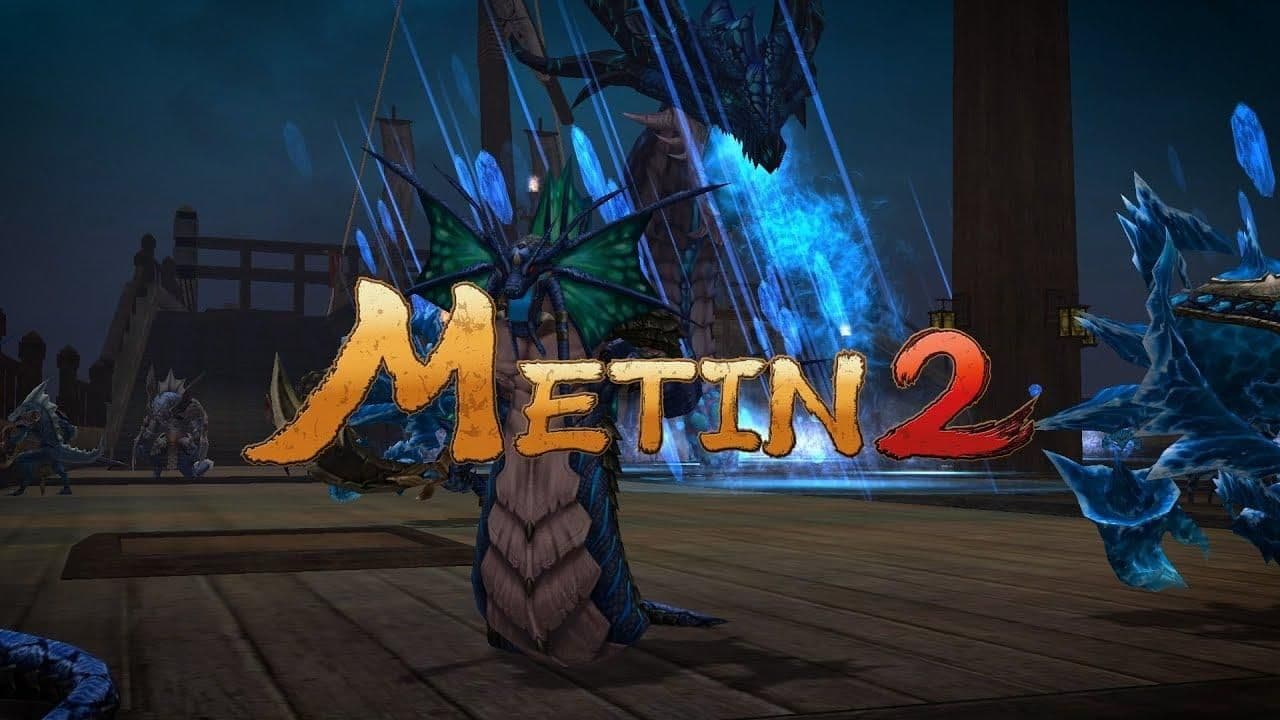
Metin2 is a free-to-play action MMORPG set in a fractured empire where three rival kingdoms fight over land corrupted by falling stones. Choose from five classes, smash Metin stones for loot, gamble y...
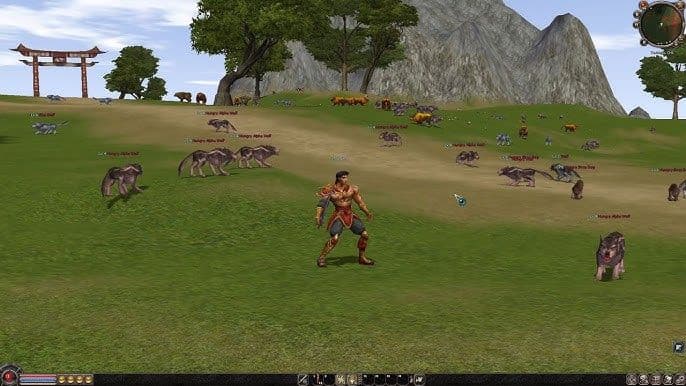
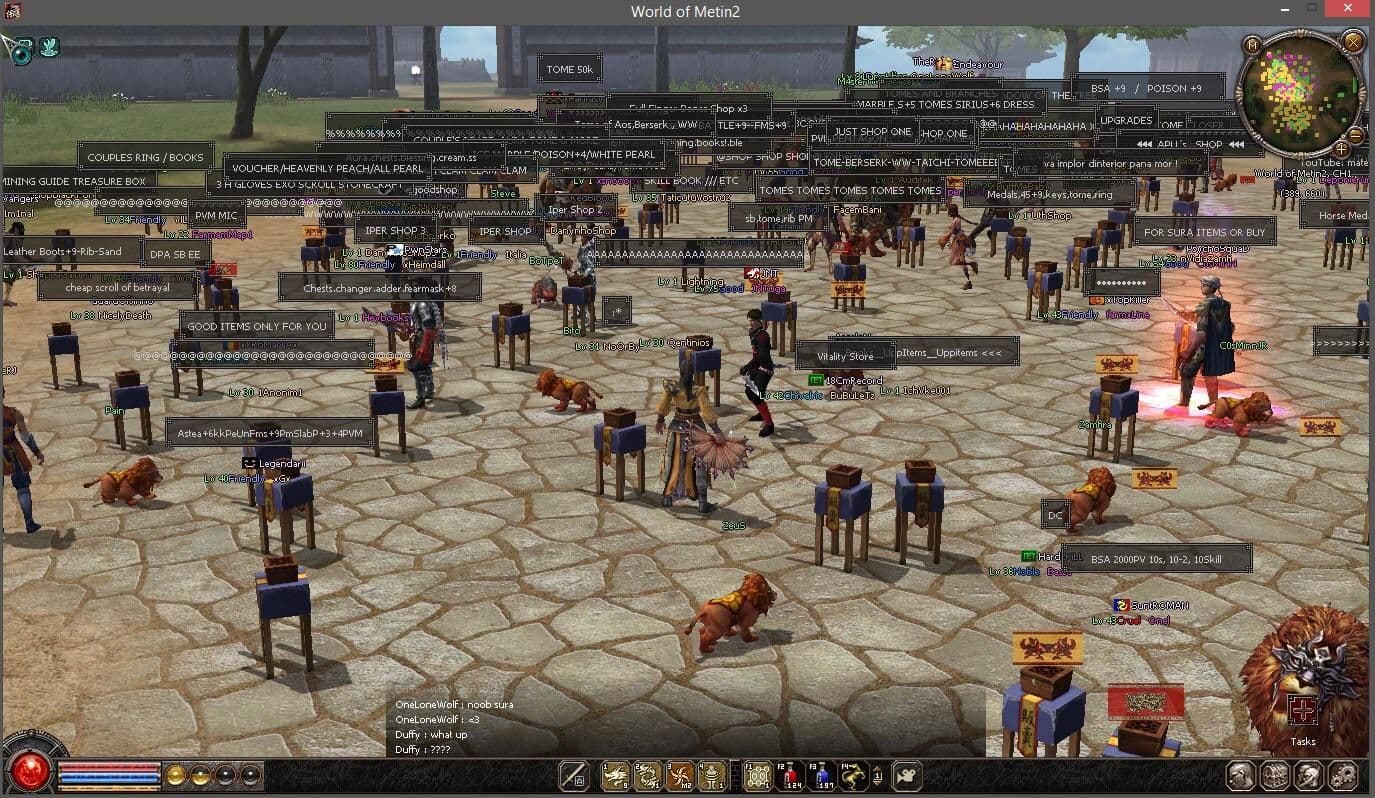
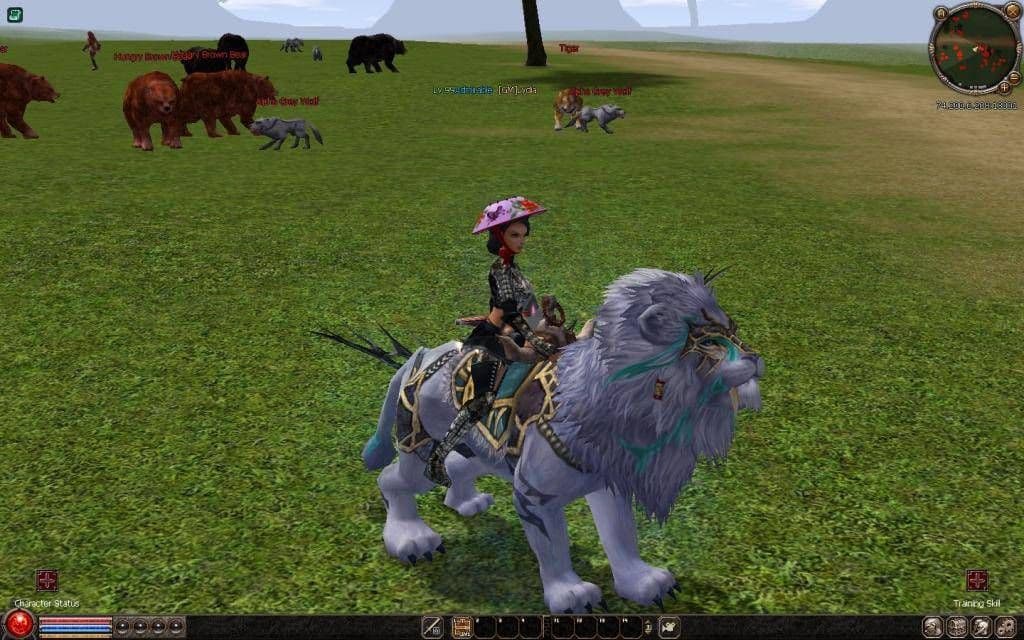
Metin2 is a Korean action MMORPG developed by Ymir Entertainment, released in South Korea in August 2004 and brought to Europe by Gameforge in December 2006. It made its name on hack-and-slash combat, three permanently hostile player kingdoms, and a countryside littered with corrupting stones that players smash for loot. More than two decades later it still runs, still receives content patches, and still sells upgrade materials in a cash shop.
Quick take: Metin2 in 2026 is a maintained, actively patched MMORPG built around a farming loop nothing else quite replicates — and a shop that sits directly on top of its progression system. Players who enjoy repetitive combat and a gambling-flavoured gear economy will find twenty years of accumulated content waiting for them. Anyone who bounces off paid advantage should look hard at the private-server scene before committing to Gameforge's servers.
The premise starts with the objects the game is named after. An old empire fractured after mysterious stones fell across the continent, warping the land and turning wildlife into something worse; what survived split into three successor kingdoms that have been at each other's throats ever since. Shinsoo wears red, Chunjo wears yellow, Jinno wears blue, and you pick one at character creation, permanently.
That choice is less about lore than about who you are allowed to kill. All three kingdoms are laid out identically — two main maps and a guild zone apiece, with the same monsters, the same ore veins, the same Metin stones in the same places. No kingdom has a farming advantage over the others.
The differences show up the moment you cross a border. Step onto enemy territory and you deal 10% less damage there, in PvE as well as PvP, and anyone from the other two kingdoms can attack you without taking the ranking hit they'd suffer for killing a countryman. Cross-kingdom chat arrives as gibberish unless you've obtained the relevant language book. It's a crude system by modern standards. It also does something modern faction design rarely manages, which is make a map feel genuinely unfriendly.
The opening hours are a quiet, unhurried grind through low-level fields, and the game does very little to dress that up. You spawn in your kingdom's starter village — Yongan, Joan or Pyungmoo, depending on your flag — take a handful of NPC quests, and go hit boars and wild dogs with a starter weapon. Levels come quickly at first. There is no cinematic, no voiced questline, no escort through a scripted tutorial zone.
What the early game does teach, quietly, is the routine that will define the next several hundred hours. You start noticing the stones: dark, humming pillars that sit in fixed spots on the map, surrounded by aggressive spawns, and drop materials when destroyed. You learn that they respawn on timers, and that the players who farm efficiently are the ones running a route between spawn points rather than camping a single stone.
Around level 20 the first instance opens — the Zodiac Temple — and the shape of the game clarifies. Grind fields, break stones, run a dungeon, sell what you don't need, feed the yang back into your gear. Everything after this is the same sentence with bigger numbers.
Metin2 offers five classes, four of which branch into two distinct skill paths that function as separate specialisations. The Warrior is the durable melee option, split between a defensive build and a heavier damage build. The Ninja goes dagger or bow, trading survivability for burst and, in the bow case, the most comfortable solo farming in the game. The Sura mixes swordplay with dark magic and has a reputation as the strongest duellist at high gear levels. The Shaman heals and buffs, or invests into damage and becomes an awkward hybrid that most groups still want along.
The Lycan arrived years later as the fifth class, a claw-wielding berserker built for clearing packs quickly. It plays differently enough from the original four that a lot of long-running private servers still refuse to implement it.
Yes, if you have a tolerance for repetition — Metin2's stone-breaking loop remains unusually good at the specific thing it does, which is producing a steady drip of small rewards with almost no downtime between them. You ride to a spawn, pull the guardian mobs, clear them, break the stone, pick up the drops, and move to the next marker on your route. A run takes seconds. The next one is already available.
Combat itself is unsophisticated and doesn't pretend otherwise. You click a target, you hold down attack, you cycle two or three area skills on cooldown, and you keep your potion supply topped up. There's no dodge roll, no combo system, no positional depth beyond "don't stand in the middle of eight monsters at low health." Compared to almost any MMO released since 2015, it's primitive.
What holds it together is pacing. The intervals between drops, level-ups, quest turn-ins and horse-training milestones are tuned tightly enough that an hour disappears without you deciding to spend it. Whether you call that good design or a slot machine with a fantasy skin depends largely on your mood, and on how many hours you're prepared to lose.
Supporting activities are more varied than the combat suggests. There's a Biologist who accepts collection items on a daily reset in exchange for progression rewards, ore veins to mine, fishing spots, a horse that trains up through its own mission chain into a proper mount, and a pet system with levelable companions. None of these are deep. Collectively they give you three or four things to do on a night when you don't feel like grinding.
The economy exists to feed one system: item enhancement, which is where most players' time and money eventually go. Gear improves in steps from +0 to +9, with some items continuing to +15 and elemental talismans running all the way to +200. Each attempt consumes yang and upgrade materials, and each attempt can fail.
Failure is the important part. Without protection, a failed upgrade destroys the item outright; with a Blessing Scroll applied, the item simply drops back one grade instead. Scrolls drop from higher-level stones and quests, they're tradeable between players, and they're also stocked in the item shop — which is precisely where the free-to-play question stops being theoretical.
On top of enhancement sits a bonus system: items carry up to five randomised attribute bonuses, added and rerolled with reinforce items and blessing marbles, with a sixth and seventh slot available once the first five are filled. Chasing a specific bonus spread on a specific piece can consume weeks of farming. Veterans treat rerolling as its own long-term project rather than a step on the way to something else.
Trade runs on yang, with a second denomination for large sums — one won equals 100 million yang — and on player-run stalls in the Bazaar rather than a central auction house. You open a shop with a bundle item, price your stock, and rely on other players browsing past. A premium option keeps a stall selling while you're logged out. It's a clunky market, and the search tools that scan nearby shops for a specific item are the only thing making it workable at all.
Endgame progression stacks in two tiers: a ladder of instances that runs alongside levelling, then a separate continent that opens only at the cap. The dungeon chain climbs from the Zodiac Temple at 20 through the Hydra at 90 and Jotun Thrym at 95 to Nemere at 100, with the Snake Temple and its associated weapon chase sitting near the top of the list for geared groups.
The cap itself is level 120, and reaching it unlocks the Yohara continent — added in 2020's Conquerors of Yohara, still the largest expansion the game has received. Yohara brought roughly ten new maps, a new equipment slot, a new skill for every class, new stones, ores and bosses, and a story arc built around the warlord Sung Mahi.
It also brought the ceiling that veterans actually care about. Champion Levels run from 1 to 30 and can only be earned on Yohara, with each one feeding a separate set of four attributes tied to Sung Ma's will. Champions display in blue above their heads, which is the entire point for a certain kind of player. The 2026 patch cycle has mostly polished around the edges of this: Update 26.0 added weekly guild-dungeon rankings with rotating rewards and randomised daily-quest payouts, alongside a stack of bug fixes.
Open-world PvP is constant and unstructured; the organised version happens once a month. Outside your borders you're a legal target at any time, which turns high-value farming spots in contested areas into ongoing low-grade warfare — someone breaking your stones, you breaking theirs, both of you eating the foreign-territory damage penalty.
The Kingdom War is the scheduled counterpart. A server announcement opens registration, players sign up with a War Dispatcher within the eligible level bracket, and each kingdom is teleported to its own entrance on a shared access map. Getting inside takes work: you kill a guardian spirit for a key, apply it to a seal, and open the gate to the Holy Land where the three armies meet.
It is not a sophisticated siege system, and the level brackets mean the version you experience at 90 looks very different from the one at cap. As a monthly reason for an entire server to log in at the same time, though, it does its job better than a lot of scheduled PvP built two decades later.
Guilds are the practical unit of play past the mid-game, and the game routes real mechanical benefits through them. Each kingdom has a dedicated guild zone, guild-versus-guild war is declared formally between groups, and the guild dungeon rankings introduced this year give organised rosters a weekly scoreboard to fight over.
Below that, group play is loose. There's no dungeon finder, no cross-server matchmaking, and no automatic party formation — you find people by shouting in chat or by knowing them already. For a returning player with old contacts that's fine. For someone arriving cold on an English-language server, it's the single biggest barrier to sticking around, and it's the reason most newcomers who quit do so somewhere between level 60 and the first instance they can't solo.
On Gameforge's official servers, yes — Metin2 sells items that directly affect combat power and progression speed, not only cosmetics. The item shop stocks Blessing Scrolls that protect the upgrade gamble, buff items, experience and drop-rate boosters, and randomised premium boxes; the official English forum's front page in late July 2026 is largely flash deals, premium buff announcements and random-box promotions rather than content news.
The nuance worth stating is that nothing is locked behind payment. Every item in the shop can be bought from other players for yang, and shop currency vouchers circulate on the player market, so a dedicated farmer can convert time into the same advantages a spender buys directly. Long-running community arguments on the official boards generally land in the same place: you can reach the cap and clear content without paying, and you cannot compete for the top of the ladder without either paying or farming on a scale that resembles a second job.
Costume items carry small stat bonuses on top of appearance, which is where the line blurs most for players used to strictly cosmetic shops elsewhere. It's a monetisation model designed in 2006, kept largely intact, and it shows.
Automation is the most persistent complaint in the community and has been for well over a decade. A commercial ecosystem of subscription bot tools openly advertises farming, fishing and levelling automation, multi-client support and captcha solving for both official and private servers — this is a paid industry with support tickets and refund policies, not a handful of hobbyist scripts. Gameforge runs an anti-cheat system called Cheatblocker; past enforcement waves have also produced reports of legitimate accounts caught by mistake, which did not help the game's reputation for support quality.
The private-server scene is the other half of the picture. Dozens of unofficial servers run in a legal grey zone, most of them advertising the things official servers don't have — cosmetic-only shops, strict anti-bot enforcement, classic level caps, or rates tuned for people with jobs. The community skews heavily Romanian, Turkish and Brazilian; the English-language options are noticeably thinner.
What can be said with confidence is that the game is maintained. Servers are up, maintenance is scheduled and communicated, an event calendar runs month to month, and Steam's user reviews have settled around 70% positive across more than 14,000 ratings — a "Mostly Positive" score built up over nine years on the platform, with the negative half dominated by the same two words: bots and shop.
The honest question to ask yourself isn't whether Metin2 has aged well — it plainly hasn't, and nobody involved is pretending otherwise. It's whether the specific rhythm this game invented still does something for you that newer games don't.
Because that rhythm is the whole product. Ride the route, pull the guards, break the stone, watch the drops, gamble the drops on a +9 attempt, lose the weapon, farm another one. Twenty-two years of expansions have added continents and Champion tiers and weekly rankings on top of that sentence without ever replacing it, and the players who are still here are still here because the sentence works on them.
So: does it work on you? If a stone respawn timer and an upgrade window sound like a reason to log in tonight, Metin2 will give you more of that than you have time for, and the private servers will give you a cleaner version of it. If reading that description made you tired, no amount of patching in 2026 is going to change your mind — and the game's own community would probably tell you the same thing.
Yes. The client is free, there's no subscription, and every zone and dungeon is accessible without spending money. An optional item shop sells consumables, boosters and cosmetics that affect progression speed.
The standard cap is level 120. Beyond that, Champion Levels 1 through 30 can be earned exclusively on the Yohara continent, feeding a separate set of attributes.
Extensively. Players from rival kingdoms can attack each other on sight in open territory, guilds declare formal wars, and a server-wide Kingdom War event runs monthly with level-bracketed entry.
For players who enjoy repetitive farming and a high-variance gear upgrade system, yes — the loop is intact and the servers are maintained. For anyone seeking modern combat depth or a level playing field against paying players, no.
Many advertise cosmetic-only shops and stricter bot enforcement, which addresses the two biggest complaints about Gameforge's servers. The trade-off is legal uncertainty, no guarantee of longevity, and communities that often operate in Romanian, Turkish or Portuguese rather than English.